Posted On:
27 AUG 2026 5:35PM by PIB Raipur
Paddy crops in Chhattisgarh have now reached around 45 days or more after transplanting, with major agricultural operations such as weed management, weeding and other field activities largely completed. Crop growth is reported to be satisfactory following the application of balanced quantities of fertilisers. With weather conditions likely to gradually become favourable for the incidence of various insect pests in the coming days, the Indian Council of Agricultural Research-National Institute of Biotic Stress Management has advised farmers to intensify field surveillance, particularly for leaf folder and, in the subsequent crop stage, yellow stem borer.
Director of the Indian Council of Agricultural Research-National Institute of Biotic Stress Management, Dr P. K. Rai, urged farmers to regularly monitor their paddy fields and identify pest infestation at an early stage. He advised against the indiscriminate and unnecessary use of insecticides, stressing that control measures should be adopted only when pest populations reach the economic threshold level. Regular monitoring and need-based intervention, he said, can help reduce production costs while protecting beneficial insects and the environment.
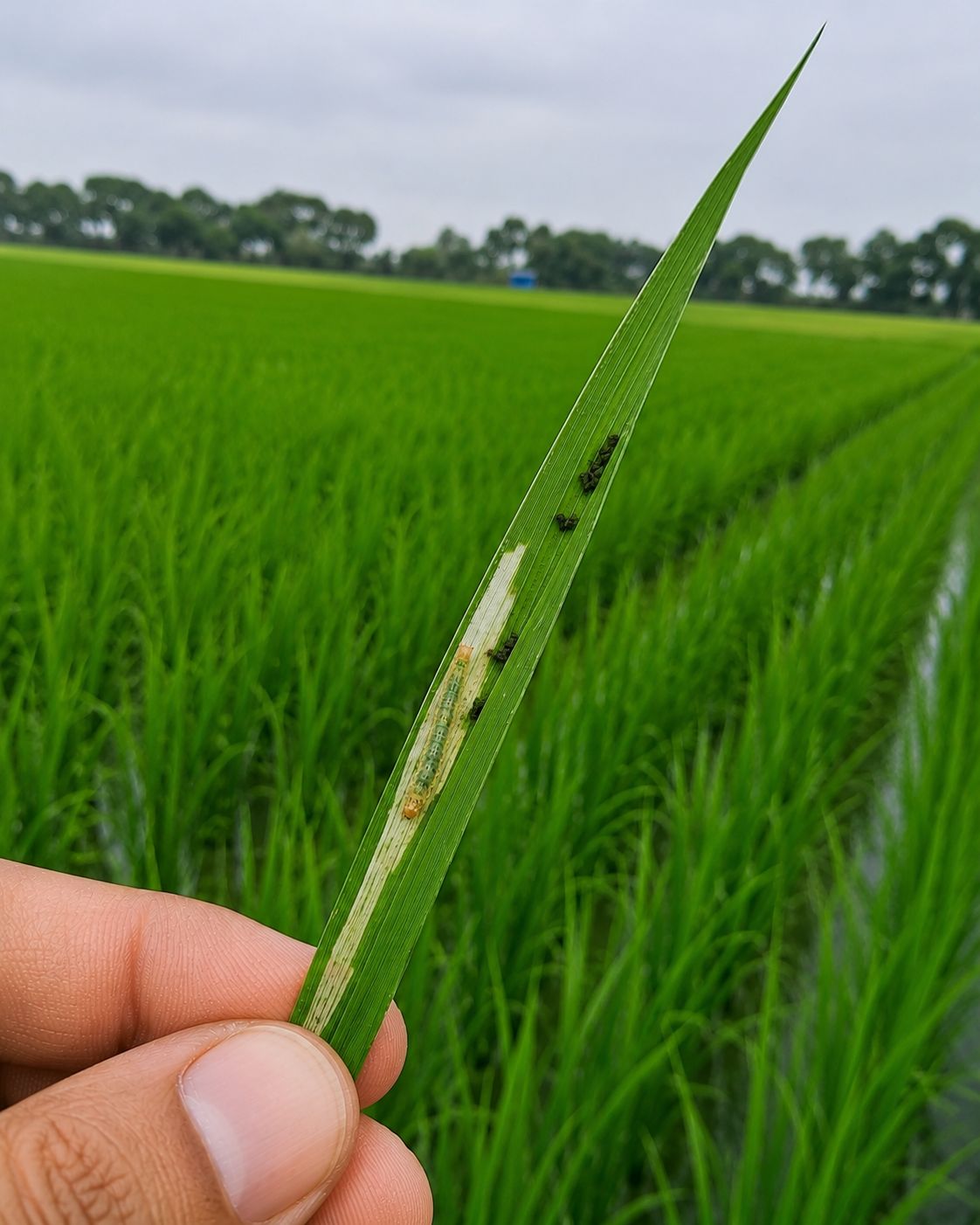
Joint Director Dr Pankaj Sharma said leaf folder is an important pest of paddy. Its larvae fold the leaves lengthwise and remain inside while scraping and feeding on the green tissues. Infested leaves develop characteristic white streaks, which reduce their photosynthetic efficiency. Severe infestation may adversely affect crop growth and yield. Farmers have been advised to regularly inspect their fields for folded leaves, larvae and characteristic damage symptoms and to initiate appropriate control measures only when the pest population exceeds the recommended economic threshold level.
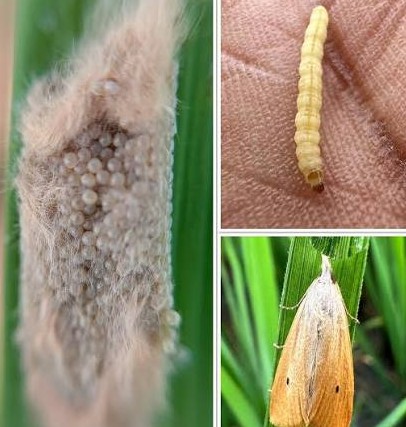
Dr Sharma said yellow stem borer could become an important pest as the crop advances to the next growth stage. Brownish egg masses of the pest are generally found near the tips of leaves. After hatching, the larvae enter the stems and damage the internal tissues. During the vegetative stage, infestation results in the characteristic “dead heart” symptom, while at a later stage it causes “white ear” or empty and whitish panicles. Early identification and timely management are therefore important to prevent crop damage.
Farmers have been advised to regularly monitor their fields, collect and destroy visible egg masses and install pheromone traps to monitor adult insects. Trichocards may also be used, wherever required, as part of biological control measures. Removing and destroying affected and severely damaged plants or tillers from the field can further help reduce pest incidence. Insecticides should be used only when necessary and strictly in accordance with the recommended pesticide, appropriate crop stage, label instructions and approved dosage.
Dr Rai said adoption of integrated pest management practices - including regular surveillance and mechanical measures, biological control, conservation of natural enemies and need-based use of insecticides - provides an effective and sustainable approach to pest management in paddy. Farmers have been urged to maintain heightened surveillance of their crops over the coming weeks and seek advice from agricultural experts if any unusual or severe pest incidence is observed.
*****
SK/BKT