Ministry of Health and Family Welfare
Union Health Minister Reviews Progress of Key Health Sector Projects Announced in Union Budget 2026-27
160 District Hospitals to be Strengthened in First Phase by March 2027; Focus on Expanding Emergency and Trauma Care Capacity
Review focuses on strengthening drug regulation, expanding allied healthcare workforce, enhancing mental health and trauma care, and developing medical value tourism infrastructure
Posted On:
27 AUG 2026 9:03PM by PIB Delhi
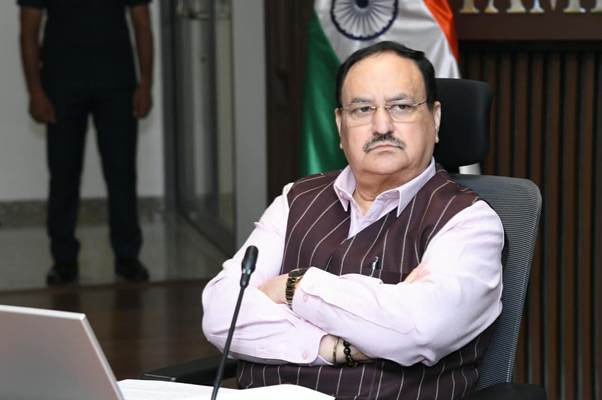
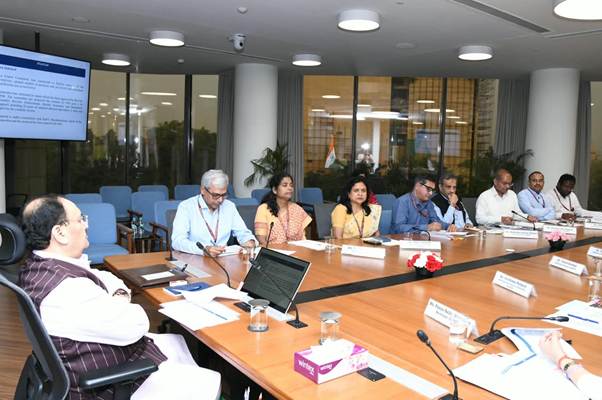
Union Minister for Health & Family Welfare Shri Jagat Prakash Nadda today reviewed the progress of key projects and initiatives announced for the health sector in the Union Budget 2026-27, with a focus on ensuring their timely implementation, effective inter-ministerial coordination and delivery of measurable outcomes. During the review, Shri Nadda took stock of the preparatory work undertaken by various departments of the Ministry and emphasised that Budget announcements should translate into concrete programmes, strengthened institutions and enhanced healthcare capacities within clearly defined timelines.
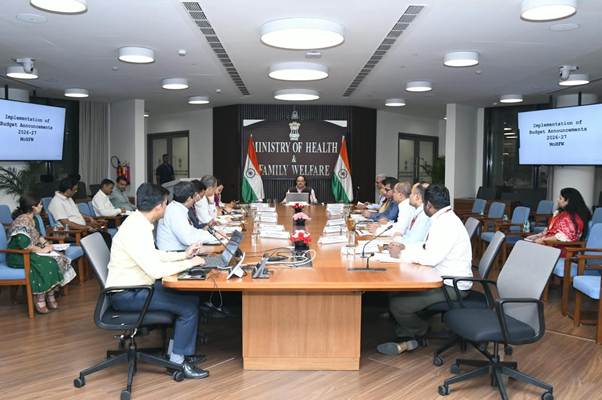
The Minister reviewed the progress of the initiative to increase emergency and trauma care capacity in District Hospitals by 50 per cent through establishment and strengthening of Emergency and Trauma Care Centres. He was informed that, following a post-Budget webinar, three committees were constituted to examine infrastructure, drugs, diagnostics and quality; human resources, academic expansion and skilling; and digital architecture and pre-hospital integration. A comprehensive gap analysis of District Hospitals against the Indian Public Health Standards (IPHS) has also been completed. Based on patient load, infrastructure and overall readiness, 613 District Hospitals have been categorised for phased implementation, with 160 District Hospitals identified for Phase I and targeted for strengthening by March 2027. Phase II will cover 203 District Hospitals and Phase III the remaining 250. Shri Nadda stressed the need for close monitoring so that the first phase progresses in a focused and time-bound manner.
The Minister also reviewed the progress of National Emergency Life Support (NELS) training, aimed at strengthening the emergency care skills and competencies of healthcare professionals and frontline personnel. The training is envisaged to enhance preparedness for timely assessment, stabilisation and management of patients with life-threatening conditions, thereby complementing the expansion of emergency and trauma care capacity in District Hospitals.
The Minister also reviewed progress on the Budget initiative to strengthen the Allied Health Professionals (AHPs) ecosystem, with the objective of adding 1 lakh AHPs over the next five years across 10 selected disciplines. He was informed that consultations have been undertaken with industry, State Governments, Central and State Government institutions and hospitals, implementing agencies and regulatory bodies. A draft Expenditure Finance Committee (EFC) note has been prepared and circulated to concerned Ministries and NITI Aayog. The Minister was further apprised of the meeting held under the chairpersonship of the Hon’ble Finance Minister on 27 July 2026, with discussions continuing on funding options, including a feasible Public-Private Partnership (PPP) model.
The Minister took a detailed review of the initiatives being progressed by the Department of Health Research, including Biopharma SHAKTI and the establishment of five Regional Medical Hubs. Under Biopharma SHAKTI, consultations with industry stakeholders, sensitisation meetings with medical colleges and clinical-trial training workshops have been undertaken towards creating a network of more than 1,000 accredited clinical trial sites. The proposed ₹500-crore initiative envisages a hub-and-spoke trial-site network, strengthened data and digital systems, a central trial facilitation agency and a site accreditation framework. Shri Nadda reviewed the progress and stressed the importance of building the requisite institutional and research ecosystem to support India’s biopharmaceutical and clinical research capabilities.
Reviewing the proposal for five Regional Medical Hubs, the Minister was informed that inputs have been shared with DPIIT and five priority disease areas—dyslipidaemia, generalized anxiety disorder, cardiovascular diseases, insomnia and osteoarthritis—have been identified for development of evidence-based integrative treatment protocols. ICMR and CCRAS nodal persons have also been identified for the proposed working groups. Shri Nadda emphasised the importance of coordinated efforts across relevant institutions to ensure that the initiative contributes meaningfully to India’s emerging medical value tourism ecosystem.
The Minister also reviewed the progress of the Budget proposal to strengthen the Central Drugs Standard Control Organisation (CDSCO) to meet global standards and approval timeframes through a dedicated scientific review cadre and specialist workforce. He was informed that the Expert Committee constituted to finalise the workforce structure, number of positions, pay levels and the permanent and flexible mix at different levels has submitted its report. Shri Nadda stressed the need to further strengthen regulatory capacity and scientific expertise to support an efficient, robust and globally benchmarked drug regulatory system.
The progress of initiatives for strengthening mental healthcare was also reviewed, including the establishment of NIMHANS-II and upgradation of the Central Institute of Psychiatry (CIP), Ranchi and Lokopriya Gopinath Bordoloi Regional Institute of Mental Health (LGBRIMH), Tezpur as Regional Apex Institutions. The Minister was informed that the Expert Committee on NIMHANS-II has submitted its report and that the proposed institute is envisaged with a capacity of 1,000 beds. The proposed strengthening of CIP, Ranchi and LGBRIMH, Tezpur includes advanced psychiatry, neurology and neurosurgery facilities, along with enhanced research, training and academic capacities. As an immediate institutional support measure, NIMHANS, Bengaluru will mentor both institutions to address identified gaps relating to administrative and institutional frameworks, academic flexibility, research development, clinical administration and community integration.
Shri Nadda further reviewed the proposal to support States in establishing five Regional Medical Hubs in partnership with the private sector to promote India as a global destination for medical value tourism. The proposed hubs are envisaged to integrate medical, educational and research facilities with AYUSH Centres, Medical Value Tourism Facilitation Centres, diagnostics, post-care and rehabilitation infrastructure. The Minister was apprised of consultations held with NATHEALTH, FICCI, Services Export Promotion Council, Invest India, NABH and QCI, as well as capacity-building workshops, including a regional workshop in Hyderabad. Actionable points emerging from these consultations will be forwarded to the National Medical and Wellness Tourism Promotion Board (NMWTPB), Ministry of Tourism, for appropriate action.
During the review, Shri Nadda underscored that the various Budget initiatives are closely interconnected and require sustained coordination between departments, Ministries, States, institutions and other stakeholders. He emphasised time-bound implementation, regular monitoring and inter-ministerial coordination, with particular attention to clearly defined deliverables and measurable outcomes. He also stressed that preparatory work, including expert consultations, institutional assessments, gap analysis and development of implementation frameworks, should be translated into visible progress on the ground.
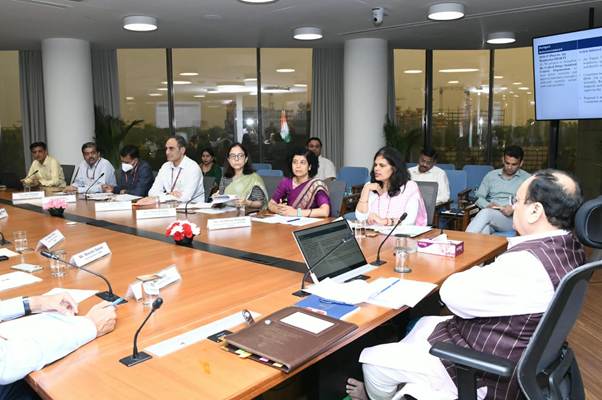
The initiatives reviewed by the Minister collectively seek to strengthen emergency and trauma care, allied healthcare and caregiving workforce, drug regulatory capacity, clinical research and biopharmaceutical capabilities, mental healthcare, medical education and specialised healthcare infrastructure. The first phase of strengthening 160 District Hospitals by March 2027, along with the ongoing training and planned skilling of 1.5 lakh caregivers, reflects the Government’s emphasis on converting Budget announcements into tangible improvements in healthcare delivery and workforce capacity.
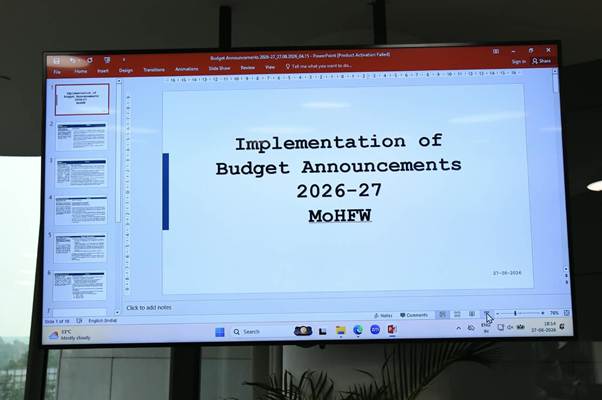
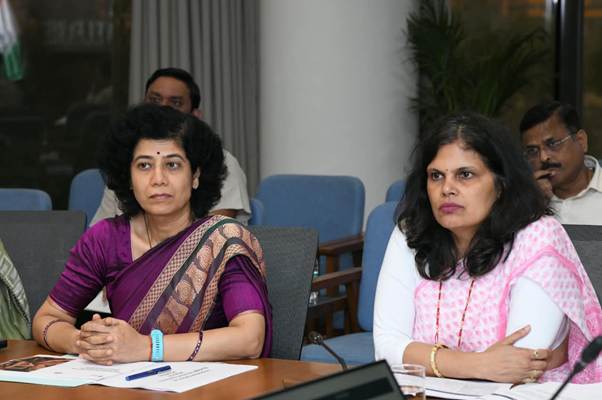
The meeting was attended by Union Health Secretary Smt. Punya Salila Srivastava; Secretary, Department of Health Research, Dr. Rajiv Bahl; Additional Secretary and MD (NHM), Smt. Aradhana Patnaik; Additional Secretary (Medical Education), Smt. Vinod Kotwal; Additional Secretary, Shri Vijay Nehra; and all Joint Secretaries and other senior officers of the Ministry.
*****,
SR
HFW/HFM Reviews Progress of Key Health Sector Projects Announced in Union Budget/ 27 August 2026/1
(Release ID: 2303957)
Visitor Counter : 2351