Ministry of Science & Technology
Century-old limit on turning heat into electricity surpassed, enabling ultrasensitive temperature sensing
Posted On:
31 AUG 2026 4:59PM by PIB Delhi
Scientists have stumbled on to a crystalline semiconductor that converts a temperature difference into an electrical voltage nearly a thousand times larger than textbook physics allows.
The thermoelectric voltage generated is so large that it rivals values normally seen only in liquid electrolytes and ionic gels, not in solid, particularly single-crystalline materials.
The discovery overturns a decades-old assumption about the ceiling on this effect in solids and opens a path to a new generation of ultrasensitive temperature sensors, heat detectors, and quantum sensing devices.
When one end of a junction between two dissimilar materials is heated while the other is kept cold, mobile charge carriers drift from the hot side to the cold side, building up a voltage across the junctions. This phenomenon, known as the Seebeck effect, was discovered two centuries ago and underlies technologies ranging from temperature sensors to thermoelectric generators that convert waste heat into electricity.
For decades, the size of this voltage, quantified as the Seebeck coefficient, places an upper bound of only a few millivolts per Kelvin on this effect in a crystalline solid. Most metals generate just tens of microvolts per Kelvin, and even good semiconductors rarely exceed a few hundred microvolts per Kelvin. Only liquid systems, such as ionic gels and electrolytes, in which charged ions rather than electrons carry the heat, have been known to cross into the millivolts-per-Kelvin range.
A group of researchers from the Jawaharlal Nehru Centre for Advanced Scientific Research (JNCASR), an autonomous institute of the Department of Science and Technology (DST), along with University of Sydney, Australia, and Indian Institute of Science (IISc), Bangalore, has now shown that this textbook limit can be shattered in a solid, epitaxial crystal.
The team led by Prof. Bivas Saha along with Renuka Karanje and Dheemahi Rao and colleagues Diksha Dadhich and Sourav Rudra from JNCASR, Ashalatha Indiradevi Kamalasanan Pillai and Dr. Magnus Garbrecht from University of Sydney and Prof. Subroto Mukerjee from IISc, grew thin films of scandium nitride (ScN), a refractory transition-metal nitride, on magnesium oxide substrates using ultrahigh-vacuum magnetron sputtering.
They deliberately doped them with magnesium to compensate the material's naturally occurring free electrons from oxygen dopants. This produced what is known as a heavily doped, highly compensated (HDHC) semiconductor, a material in which positively and negatively charged dopant atoms are scattered randomly throughout the crystal in nearly equal numbers.
X-ray diffraction and atomic-resolution electron microscopy confirmed that the films remained single-crystalline and epitaxial, with dopant atoms distributed uniformly and no secondary phases or precipitates.
In these HDHC ScN films, the team measured a Seebeck coefficient several hundred to over a thousand times larger than the value typically seen in inorganic semiconductors, and nearly a hundred times beyond the earlier known ceiling (exceeding –124.6 millivolts per Kelvin near room temperature, in a roughly 200-nanometre-thick film). This places it firmly above the range previously associated even with liquid electrolytes and ionic conductors such as hydrogels and ionic gelatin.
The researchers describe the result as a solid-state analog of electrolyte-like thermopower inside a fully crystalline semiconductor.
The effect grew even stronger as the HDHC ScN films were made thinner.
“We were not looking for a record-breaking number when we started this work; we were trying to understand how disorder and charge compensation reshape electronic transport in scandium nitride,” said Prof. Bivas Saha, who led the study. “What we found instead is that a fully crystalline, epitaxial, single-phase semiconductor can behave thermoelectrically like a liquid electrolyte. That was genuinely surprising, and it tells us that engineered disorder is a largely untapped route to extreme thermoelectric and sensing performance in solids.”
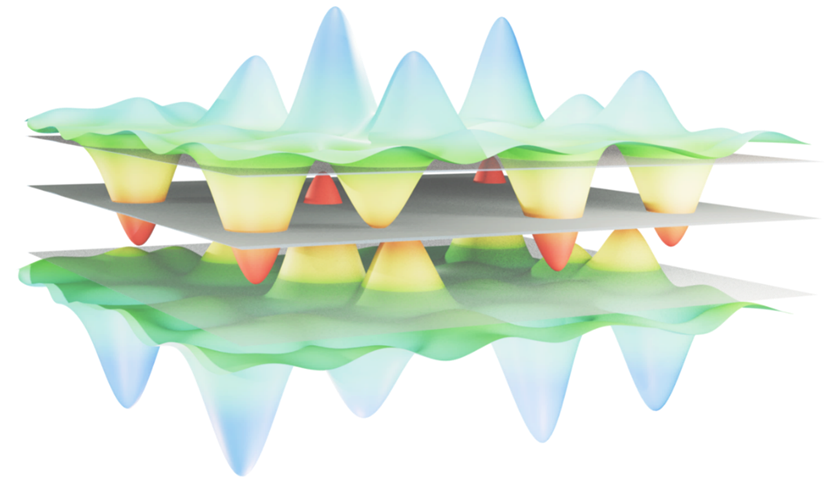
Fig 1: Schematic of the electronic band diagram of heavily doped, highly compensated ScN exhibiting thermopower exceeding the Boltzmann limit.
The team has built a preliminary prototype photon sensor using an HDHC ScN film with two chromium contacts. Illuminating one contact with a laser created a tiny, localized temperature difference across the device, and the resulting voltage translated to a Seebeck response of –102.4 millivolts per Kelvin, comfortably large enough for classical light detection and, the team suggests, potentially for single-photon-level detection near room temperature with further optimization. The voltage response was fast, repeatable over multiple illumination cycles, and left the material unchanged. An Indian patent application has been filed by the team on thermoelectric thin-film materials and sensors for temperature and photon detection based on this work.

Fig 2: (Left-to-right) JNCASR team, Prof. Bivas Saha, Sourav Rudra, Diksha Dadhich, Renuka Karanje and Dheemahi Rao
The findings published in the prestigious journal Science point to applications in ultrasensitive temperature sensing, low-noise thermal imaging, high-resolution heat-flux detection, bolometric devices, and Internet-of-Things sensors, as well as cryogenic thermoelectric single-photon detectors relevant to emerging quantum technologies. The team also notes that the steep, well-defined temperature dependence of the effect could enable temperature-controlled Seebeck switches for future device applications.
Publication Link: DOI: 10.1126/science.aef9458
Contact Information: Prof. Bivas Saha (bsaha@jncasr.ac.in)
*****
NKR/FT
(Release ID: 2305021)
Visitor Counter : 3169