Ministry of Environment, Forest and Climate Change
ZOOLOGICAL SURVEY OF INDIA DISCOVERS NEW DEEP-SEA SKATE SPECIES UNDER THE DEEP OCEAN MISSION
Posted On:
01 SEP 2026 2:20PM by PIB Kolkata
Kolkata, September 1, 2026
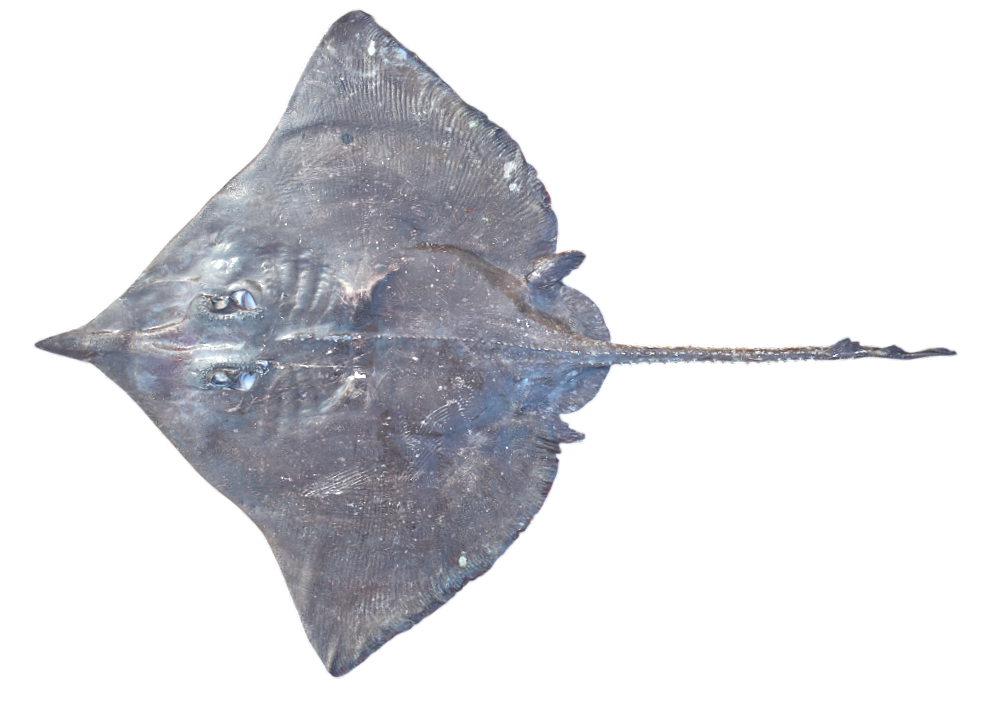
Scientists from the Zoological Survey of India (ZSI), in collaboration with the ICAR-Central Marine Fisheries Research Institute (CMFRI) and international experts, have discovered and described a new species of deep-sea skate, Dipturus dhritiae, from the southeastern Arabian Sea off India’s southwestern coast.
The breakthrough discovery occurred during exploratory investigations under the Ministry of Earth Sciences’ (MoES) flagship Deep Ocean Mission project, titled "Deep-Sea Chondrichthyans of India: Taxonomy, Distribution, Biology and Current Status."
Key Discoveries and Species Highlights
• Taxonomic Profile: Named Dipturus dhritiae (commonly referred to as the Arabian Skate), the species reaches a maximum known length of 131.5 cm. Morphologically, it is distinguished by five distinct rows of thorns along its tail.
• Habitat & Range: Collected at depths of 400–600 metres from deep-water habitats off Kerala and the Wadge Bank region.
• Genetic Divergence: Complete mitochondrial genome sequencing confirmed that D. dhritiae is genetically distinct from its closest relative, the Travancore Skate (Dipturus johannisdavisi), showing a sequence divergence of 3.8%–4.7%.
• Historic Confusion: The species had been misidentified as Dipturus springeri for over four decades while routinely appearing as incidental bycatch in commercial deep-sea shrimp trawls.
Nomenclature and Conservation Importance
The new skate is named in honour of Dr. Dhriti Banerjee, the first woman Director of ZSI, acknowledging her leadership in scientific research and biological diversity studies across the country.
"The deep sea remains largely unexplored, and every survey provides a crucial opportunity to expand our understanding of marine biodiversity," said Dr. Dhriti Banerjee, Director, ZSI, and Lead Principal Investigator of the Deep Ocean Programme. "Deep-sea sharks and rays possess biological characteristics that make them exceptionally vulnerable to overexploitation—including low reproductive output, slow population recovery, and high susceptibility to incidental capture in commercial fisheries. Identifying these species before their populations decline is essential for developing effective, targeted conservation strategies."
Mapping Critical Habitats
As a part of this initiative, the research team—comprising Dr. K. K. Bineesh and Anil Kasinath (ZSI), Akhilesh K. V. (CMFRI), and Dr. David A. Ebert (USA)—has mapped the Kollam Slope Important Shark and Ray Area (ISRA) within the Indian Exclusive Economic Zone. Identifying D. dhritiae within this region reinforces the urgent need to monitor and safeguard vulnerable deep-sea marine habitats.
ZSI continues its taxonomic and molecular evaluations under the Deep Ocean Mission, anticipating further discovery of novel chondrichthyan species from Indian waters.

*********************
SSS/Kol/1.9.26…….
(Release ID: 2305439)
Visitor Counter : 375