Ministry of Labour & Employment
“Rajdharma Is a Continuing Ethic of Public Office”: Arif Mohammed Khan addresses EPFO Officers, Calls for Integrity, Empathy and Non-Discrimination in Governance
Posted On:
01 SEP 2026 6:14PM by PIB Delhi
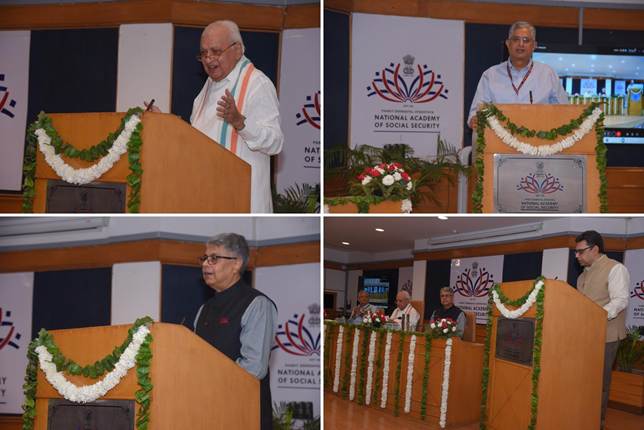
In a thought-provoking keynote at Reimagining Governance: Discourse for Excellence (RGDE), Shri Arif Mohammed Khan called for a deeper understanding of Rajdharma as an enduring ethic of public responsibility, emphasising integrity, empathy, fairness and non-discrimination in the exercise of public authority.
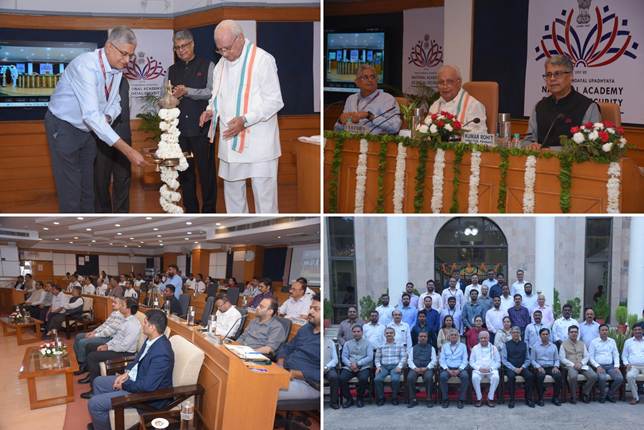
The session was organised by the Employees’ Provident Fund Organisation (EPFO) on 31st August 2026, under the aegis of the Pandit Deendayal Upadhyaya National Academy of Social Security (PDUNASS), as part of the second edition of Season Two of RGDE. Senior officers and officials from EPFO and PDUNASS, along with officers from Field offices of EPFO joining virtually from across the country, participated in the session.
Rajdharma and the Responsibility of Public Power
Shri Khan reflected on the continuity and distinctiveness of Indian civilisation and described Dharma as a principle of righteous conduct and moral obligation. He emphasised that Rajdharma is ultimately concerned with the responsibility of those entrusted with public power and with the manner in which that power is exercised. He underlined the importance of non-discrimination in public life and of cultivating an approach in which the official seeks to serve rather than merely exercise authority.
He connected this ethical foundation with the inner discipline expected of a person holding public office. Referring to the spiritual idea that the Divine is present in every human being, Shri Khan stressed that an officer’s conduct should be guided by sincerity, honesty, self-restraint and a consciousness that public responsibility carries a moral dimension beyond formal procedure.
Reflecting on governance in practical terms, he stressed that rules, systems and technology are important instruments, but they cannot substitute for the human qualities that ultimately determine how citizens experience an institution. He emphasised that sincerity, cultural awareness and ethical conduct must remain at the heart of administration, particularly when officials are called upon to exercise judgement in everyday situations.
Rajdharma in the Context of Social Security
Central Provident Fund Commissioner Shri Ramesh Krishnamurthi contextualised the discussion within EPFO’s responsibility for providing social security to millions of workers, pensioners and their families. He emphasised the importance of balancing legal compliance with empathy and citizen-centric service delivery as the organisation embraces technological transformation.
He highlighted the need for officers to approach their responsibilities with a spirit of selfless service, particularly while dealing with the real-life circumstances behind claims, pensions and grievances.
Civilisational Wisdom and Contemporary Governance
Director, PDUNASS, Shri Kumar Rohit, highlighted the enduring relevance of Rajdharma to contemporary public administration. Referring to the Bharat-Milap episode at Chitrakoot, he recalled how Lord Rama, while declining to return to Ayodhya, entrusted Bharata with the responsibility of governance through his Charan Padukas and imparted timeless counsel on righteous statecraft.
He emphasised that RGDE seeks to create a space where civilisational wisdom, institutional experience and contemporary administrative practice can inform one another, ultimately returning to the central purpose of public service: serving the citizen with fairness, dignity and responsibility.
Ideas to Institutional Practice
The session also featured an interactive exchange with officers, focusing on the practical application of ethical and civilisational values in everyday administration, including situations where officials must exercise judgement, balance rules with circumstances, and retain empathy while working in increasingly technology-enabled systems.
The session was moderated by Shri Prashant Sharma, RPFC-I, who facilitated the proceedings and the interaction with Shri Khan, connecting the philosophical idea of Rajdharma with the practical realities of public service.
The session concluded with expressions of gratitude to Shri Arif Mohammed Khan and the participating officers, reaffirming PDUNASS’s commitment to fostering a culture of learning, reflection and excellence in public service.
***
Rini Choudhury/Anjelina Alexander
(Release ID: 2305616)
Visitor Counter : 1362