Posted On:
03 SEP 2026 7:26PM by PIB Gangtok
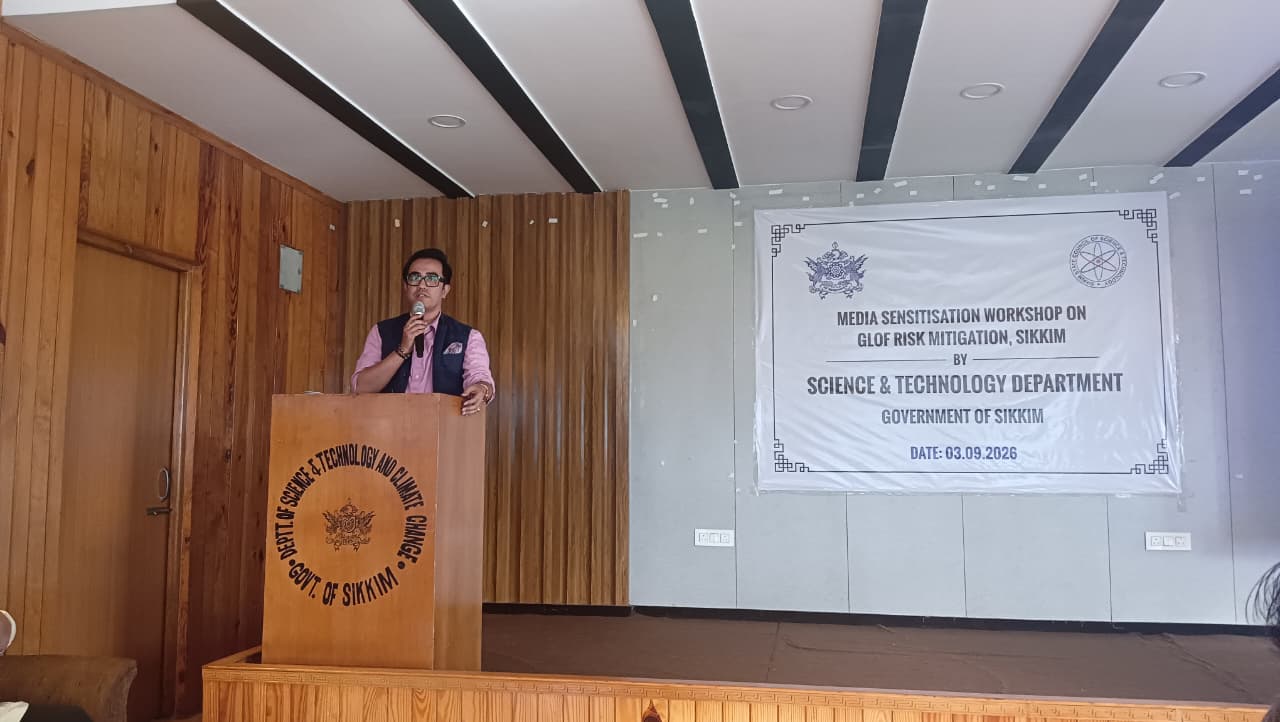
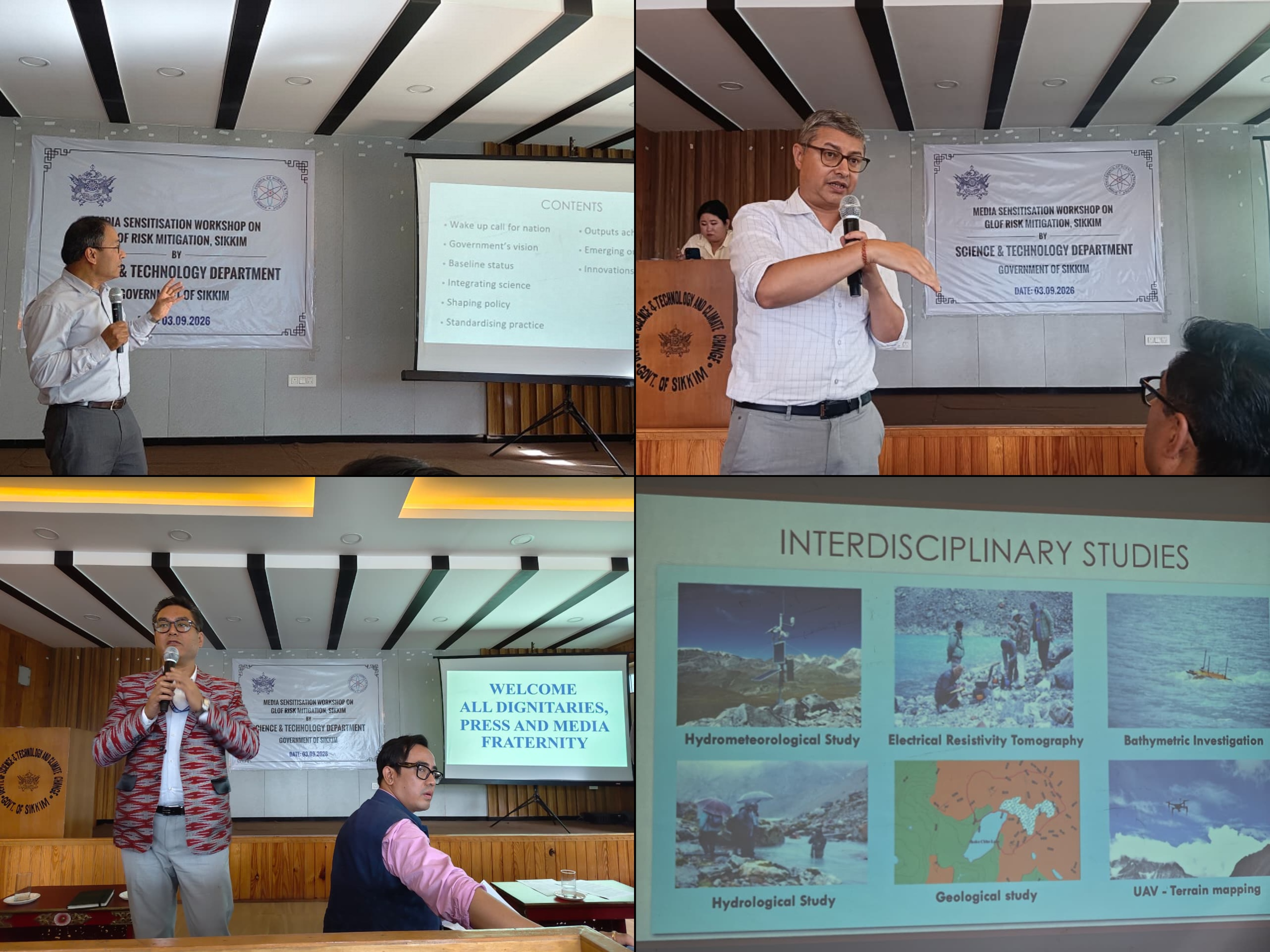
The Department of Science and Technology (DST), Government of Sikkim, organized a one-day media sensitization workshop cum press briefing today in Gangtok to share scientific findings and mitigation plans regarding Glacial Lake Outburst Floods (GLOF) in the state.
The workshop was aimed at sharing departmental scientific findings with the media fraternity and creating awareness on GLOF hazard risks, scientific activities undertaken by the department and proposed mitigation measures.
Delivering the welcome address, Dr. R. K. Sharma, Assistant Scientific Officer, DST, said Sikkim being a Himalayan state is prone to climate-induced hazards including GLOFs. He said DST has been engaged in scientific studies, field investigations and continuous monitoring of the glacier system and glacial lakes to understand risks and develop lake-specific mitigation measures. He underlined the vital role of media in translating scientific information into community perspective.
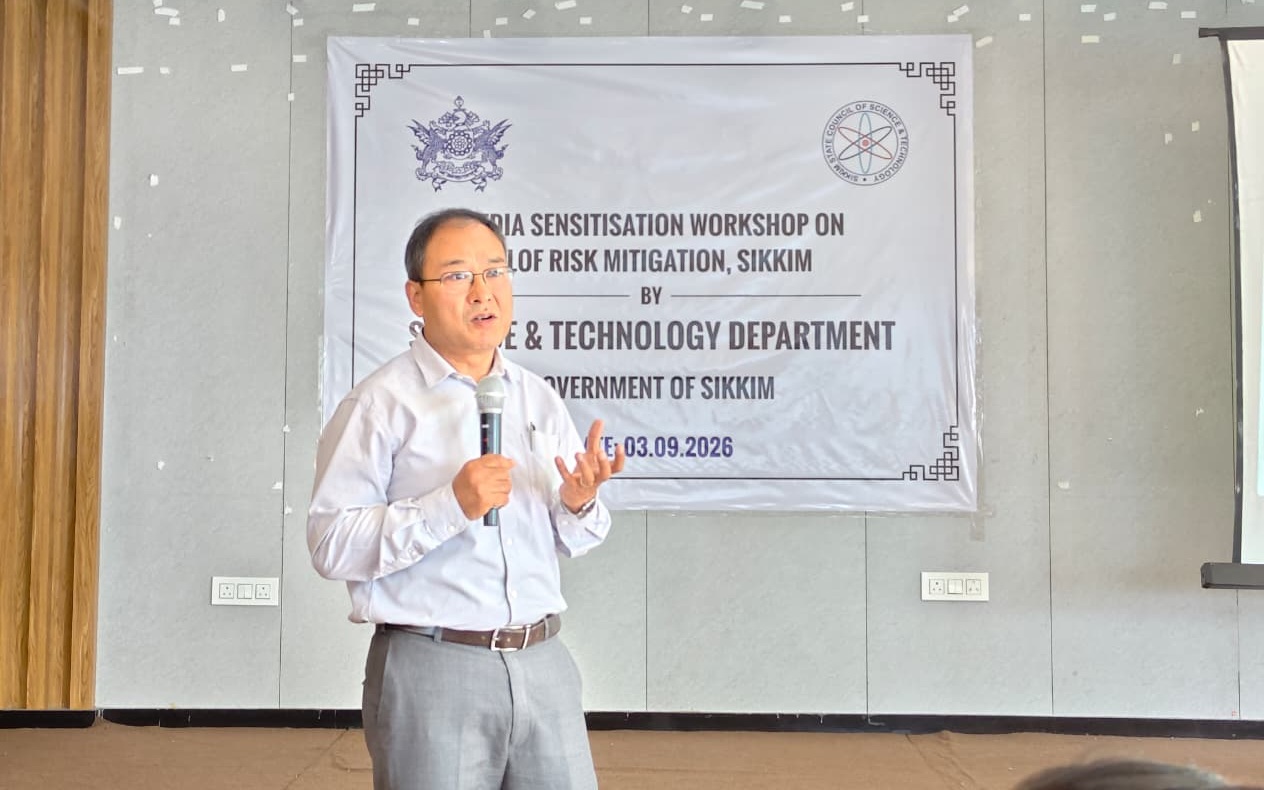
Presenting the GLOF studies undertaken in Sikkim, Shri DG Shrestha, Principal Director & Secretary, DST, said the sensitization workshop was organized to address queries of the media in detail and to ensure that clear, science-based information reaches the masses. He introduced the field teams from DST who have conducted hazard assessments of glaciers and high-altitude lakes, including in remote and inaccessible areas of North and West Sikkim, including Rathong glacier.
He recalled the GLOF event of 3rd-4th October 2023 as a wake-up call for the nation, noting that the damage assessment of Rs. 18,555 crore exceeded the state’s annual budget. Outlining the Government’s vision post-2023 event, he said the focus is on safeguarding Sikkim from future GLOFs through Early Warning Systems, protecting mountain infrastructure including roads, dams and bridges, developing urgent mitigation proposals and making Sikkim a leader in GLOF risk mitigation.
It was informed that while national-level studies had identified 189 vulnerable lakes in India, including 40 in Sikkim and 16 high-risk (Category-A) lakes in Sikkim, DST undertook detailed field verification and scientific assessment to prioritize vulnerability.
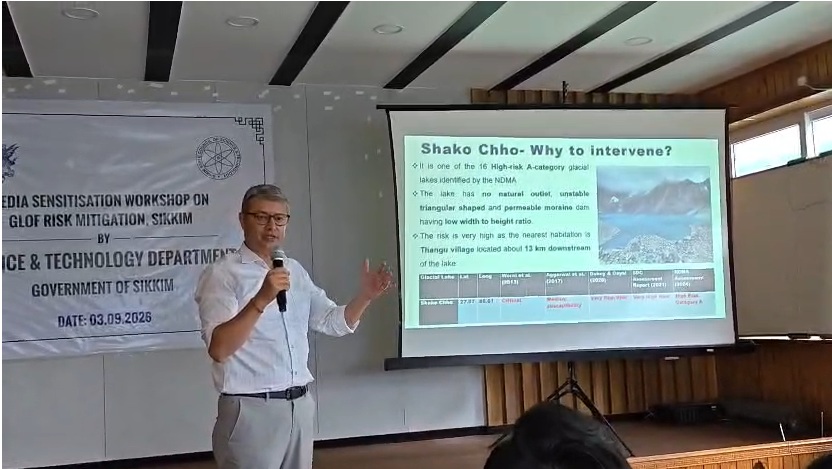
Shri Ashim Basnet, Chief Engineer, DST, presented the mitigation proposals. He informed that monitoring stations have been installed at lakes including South Lhonak and three major mitigation approaches have been proposed - reducing lake volume, stabilizing lake dams and watershed-level retention. He said while the State is working on Early Warning Systems, CWC is also proposing 10 EWS in the state and as per the Dam Safety Act 2021, all dam owners in Sikkim have already put in place their own EWS, including six installations by Teesta Stage III. Flood walls DPR is being prepared by Water Resources Department in collaboration with CWC, and the Government is also coming up with a Floodplain Zoning Act.
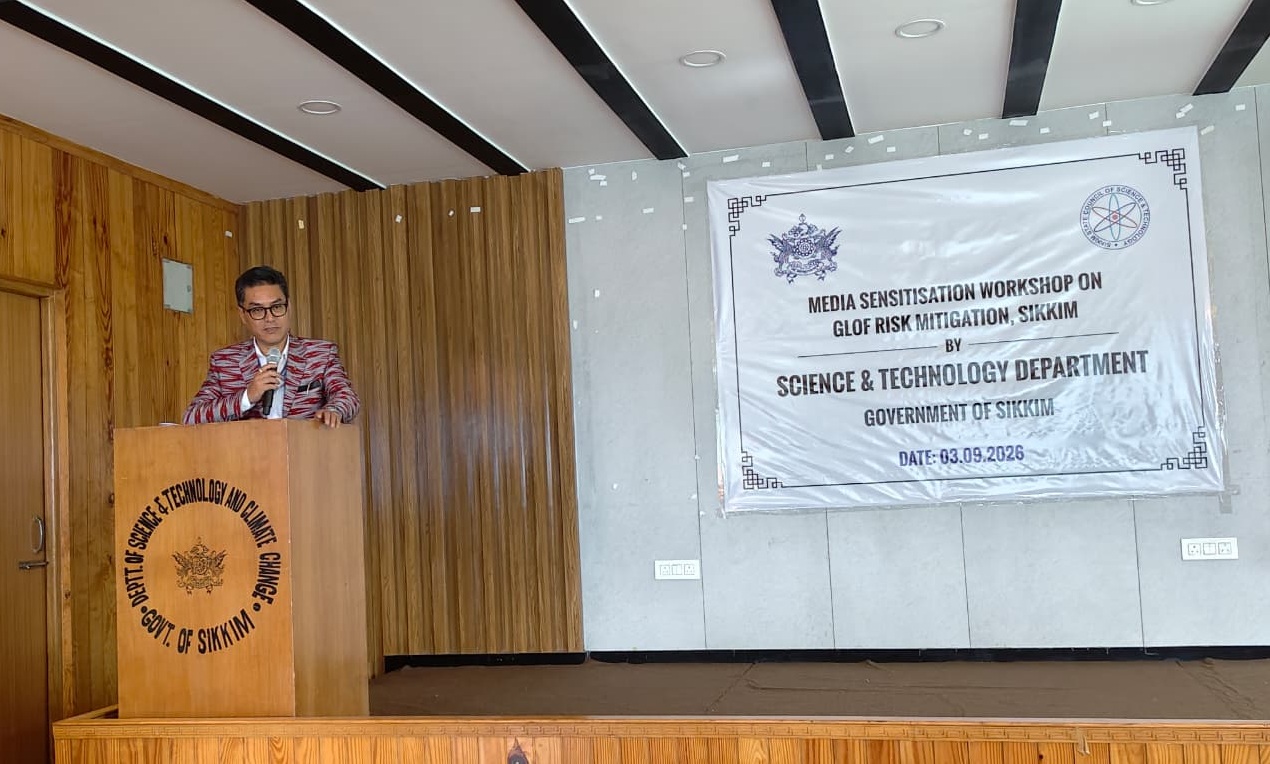
Shri Pravakar Rai, Special Secretary-cum-Director, Sikkim State Disaster Management Authority (SSDMA), shared the Authority’s preparedness and awareness activities. Recalling the 18th September 2011 earthquake and the 2012 ISRO alert on rise in water level of South Lhonak Lake, he said SSDMA in coordination with DST and with technical support from SECMOL, Ladakh had initiated siphoning of water from South Lhonak Lake using HDPE pipes to release pressure. He said inter-departmental coordination under the Whole-of-Government approach has significantly strengthened disaster mitigation efforts.
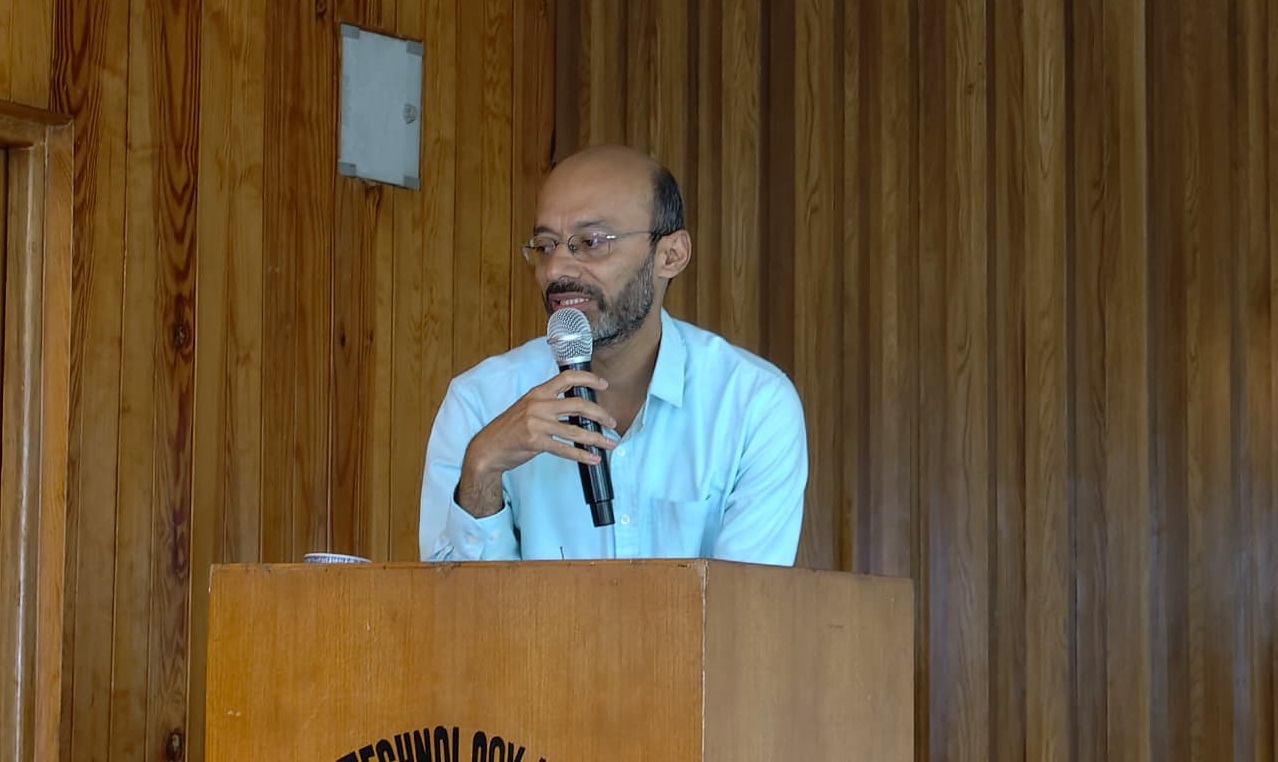
Principal Secretary, DST, Dr. Sandeep Tambe, in his address, termed GLOF as a complex and evolving science where Sikkim is pioneering mitigation efforts in the Himalayas. He informed that out of over 400 glacial lakes in Sikkim, 40 lakes requiring detailed investigation were identified jointly with NDMA through remote sensing based on growth pattern and downstream impact, and 16 were identified as high-risk. Detailed studies including bathymetry and geophysical studies of lake dams were conducted for 13 lakes, as 3 lakes including two above Gurudongmar and North Lhonak are inaccessible even on foot.
He said the studies were entirely ‘Made in Sikkim’ by scientists and engineers of the State without outside consultants, and the methodology has been published in the international peer-reviewed journal “Natural Hazards” - a first for the Northeast, which is usually known for nature and culture, now getting recognised for science and technology.
_20260903200514_da8cf2.jpg)
Explaining the approach as similar to a health check-up, Dr. Tambe said remote sensing is the preliminary screening and detailed investigation is like CT scan and X-ray to decide lake-specific treatment. He informed that three mitigation DPRs have been developed: for Shako Cho Lake (medium-sized lake with no outlet), for Lhonak complex (over 200 hectares coupled with North Lhonak) with a nature-based retention solution at Dolma Sampa - a 300-hectare flat area 25 km downstream which naturally slowed the 2023 GLOF, and for Gurudongmar Lake complex (over 320 hectares, 178 million cubic metres water) - the most sacred lake, with a retention structure at source to stop GLOF at origin.
He informed that Shako Cho DPR has been submitted to Government of India and other proposals are under development. The proposals were reviewed today itself in a meeting chaired by the Union Home Secretary, with assurance of support to Sikkim as the first state to develop GLOF mitigation proposals in-house.
Dr. Tambe noted that the 2023 Lhonak GLOF, which occurred at midnight, did not get adequate national and international media attention due to lack of visuals unlike the recent Nepal GLOF which occurred during daytime. He stressed that climate change is a global phenomenon with local impact and with glacier retreat, more and bigger lakes will form, requiring continuous advancement of science to safeguard Sikkim.
Shri Yougan Tamang, Press Secretary to Chief Minister, also addressed the gathering and applauded the work done by the team of DST and other departments involved in GLOF mitigation efforts.
The workshop also included an interactive session where media persons clarified queries from the expert teams.
**********
MC/SK