Posted On:
23 SEP 2026 9:03PM by PIB Bhubaneswar
A senior media delegation from Odisha, led by the Press Information Bureau (PIB), Bhubaneswar, as part of an interstate media exposure tour to Assam, visited the newly inscribed UNESCO World Heritage Site—the Moidams of the Ahom Dynasty at Charaideo along with the heritage complexes in Sivasagar. The visit offered the visiting journalists firsthand immersion into Northeast India's monumental heritage and the scientific conservation framework steered by the Archaeological Survey of India (ASI) in collaboration with the Government of Assam.
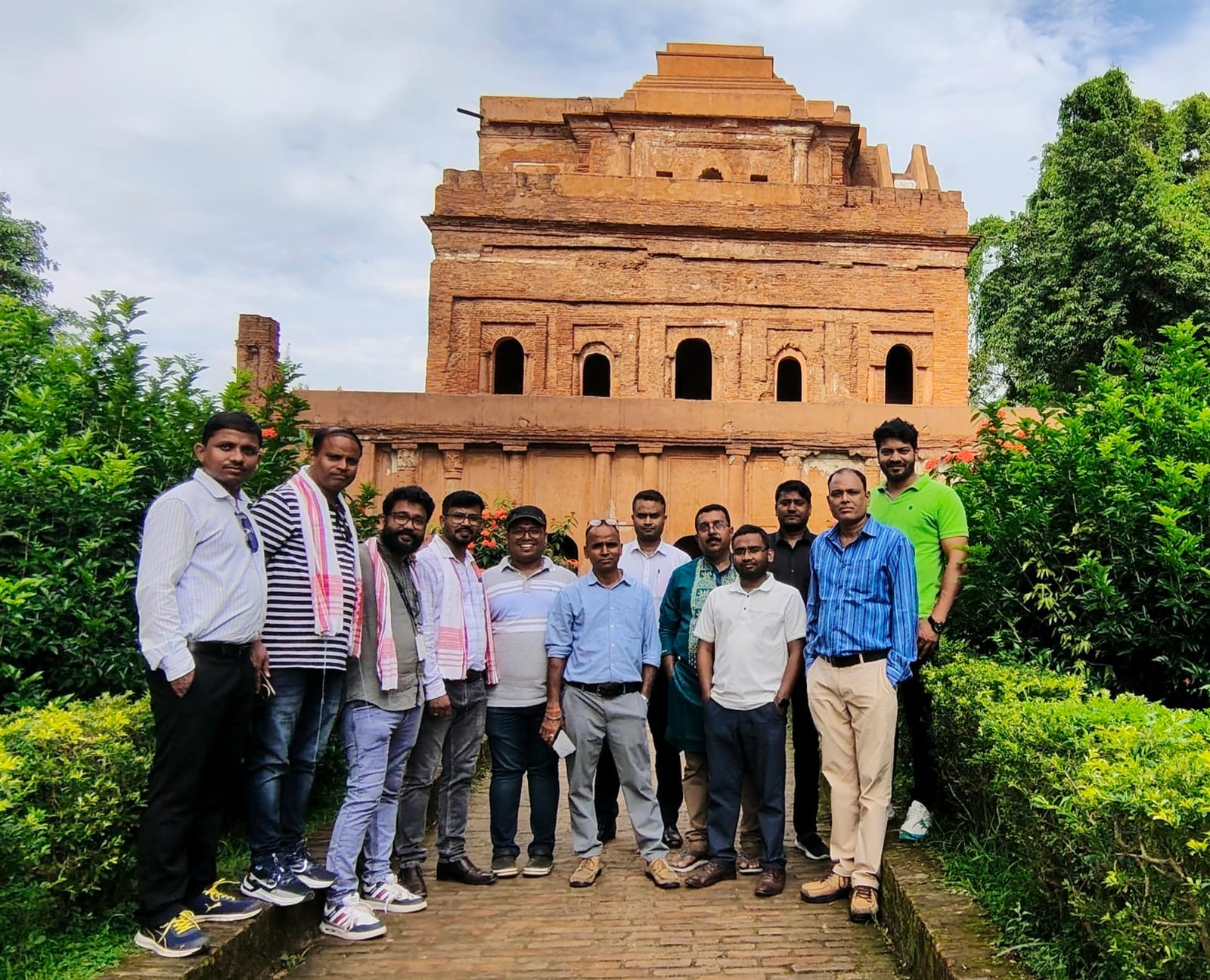
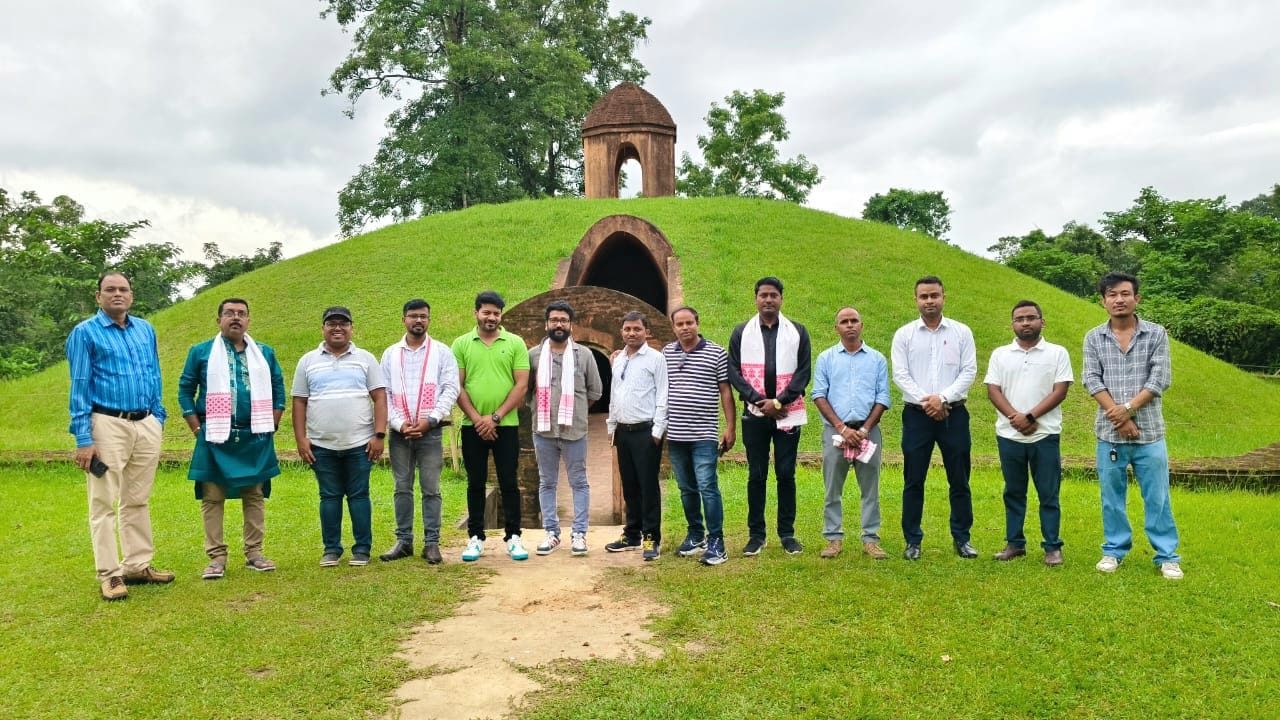
ASI officials conducted the delegation through the sacred necropolis of Charaideo, established in 1253 CE by Chao Lung Siu-ka-pha, the founder of the Tai-Ahom dynasty which governed the Brahmaputra Valley for six centuries. Inscribed as India's 43rd UNESCO World Heritage property and the first cultural site from the Northeast, the Charaideo Moidams embody an exceptional earthen tumulus mound-burial tradition. Officials delineated how each moidam features a subterranean vaulted crypt housing royal funerary remains, surmounted by a hemispherical earthen barrow and capped with an octagonal pavilion (chow-chali), reflecting unique funerary cosmology comparable to global royal sepulchres.
The delegation subsequently visited key monument complexes across Sivasagar, the historic capital (Rongpur) of the Ahom kingdom. At Talatal Ghar, journalists observed the palace's sophisticated military architecture, characterized by subterranean barracks and labyrinthine defensive escape tunnels. At Rang Ghar, Asia's earliest surviving secular sports amphitheatre, the team studied its two-storied, boat-shaped pavilion designed for royal sporting tournaments and cultural festivities. The tour concluded at the sacred precinct of magnificent Siva Dol and revered as one of the country's loftiest historic temple spires, alongside the Vishnu Dol and Devi Dol shrines.
The visiting journalists were also briefed on the organic mortar compositions documented in the Changrung Phukan (the canonical Ahom architectural treatise) and the cutting-edge scientific interventions—encompassing biocidal cleansing, geotechnical stabilization, and perimeter drainage mitigation—undertaken to ensure the enduring structural integrity of these national treasures.
******
Swadhin Shakti Prasad/Manoj Kumar Jali