Ministry of Jal Shakti
DDWS organises Eleventh Edition of Sujal Gram Samvad
Community Participation, Local Ownership and O&M of Rural Water Supply Assets Emphasised at the Multilingual dialogue
Posted On:
29 SEP 2026 2:43PM by PIB Delhi
The Department of Drinking Water & Sanitation (DDWS), Ministry of Jal Shakti, organised the 11th edition of the multilingual ‘Sujal Gram Samvad’ today, providing a platform for direct interaction with Gram Panchayat representatives and local communities on operation and maintenance of rural drinking water systems. This reinforces the government’s commitment to community-led water governance under the Jal Jeevan Mission 2.0.
The Samvad was chaired by Shri Ashok K.K. Meena, Secretary, DDWS, in the presence of Shri Kamal Kishore Soan, AS&MD, NJJM, along with Senior officers from the department.
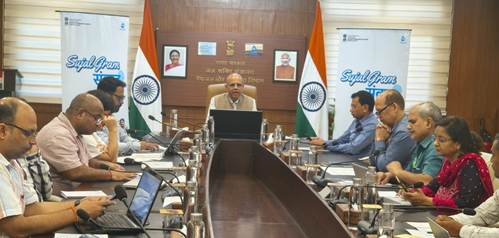
In his opening address, Secretary, DDWS, Shri Ashok K.K. Meena, underscored the critical role of Gram Panchayats in ensuring the sustainability and long-term functionality of rural drinking water systems. Describing Sujal Gram Samvad as an important platform for sharing innovations and good practices from the grassroots, he encouraged GPs to learn from each other's experiences and strengthen local water governance. He highlighted that the active participation of elected representatives, Village Water & Sanitation Committees (VWSCs) and local communities is essential for delivering regular, safe and reliable drinking water services to every household.
Emphasising the constitutional mandate of Panchayati Raj Institutions in the drinking water sector, Shri Meena stressed the need for greater ownership of operation and maintenance (O&M) by GPs. He called for strengthening user-charge collection mechanisms, improving financial sustainability of water supply schemes and undertaking source sustainability measures such as groundwater recharge and rainwater harvesting. He urged to effectively leverage State O&M policies and available resources to ensure sustainable service delivery and community ownership of drinking water infrastructure.
The 11th edition of Samvad featured grassroots interactions across 4 Gram Panchayat (GP) headquartered villages. The virtual Samvad witnessed a diverse range of participants including Gram Panchayat (GP) representatives, members of VWSCs, community participants, Jal Sahiyas, Anganwadi workers, students, teachers, and frontline functionaries from the GPs, along with JJM State Mission Directors, District Collectors/District Magistrates/Deputy Commissioners, DWSM officials, and senior officers from the States. The multilingual Samvad focused on key aspects of sustainable rural water service delivery, including uninterrupted operation of water supply schemes, skilling of local operators, water quality and disinfection, community participation in O&M, financial sustainability through user charges and convergence, protection of drinking water sources, Jal Arpan and the wider impact of reliable drinking water services on health, education, women’s empowerment and local livelihoods.
Voices from the Gram Panchayats
GP: Sakaria, District: Ujjain, Madhya Pradesh
During the interaction, representatives of GP Sakaria shared in Hindi that prior to Mission, villagers largely depended on wells and tube wells for drinking water. Today, every household in the village has access to piped drinking water and the village has achieved Har Ghar Jal status. The community informed that Jal Arpan was organised on 16 March 2026 and that drinking water services are being supported through regular collection of ₹150 per month as user charges, with payments and billing undertaken through digital platforms. Water quality is being monitored regularly, by weekly water quality testing, and trained local operators are supporting smooth operation of the scheme.
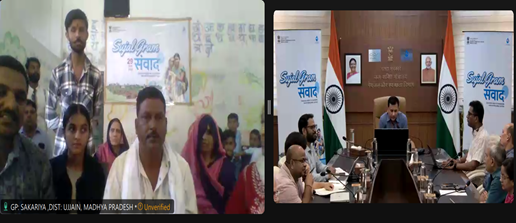
District and State officials emphasised the importance of sustaining service delivery in Har Ghar Jal villages through strong operation and maintenance systems, source sustainability measures and effective utilisation of available resources. Referring to the State O&M framework, AS&MD, NJJM asked to encourage Gram Panchayats to leverage the e-Gram Swaraj portal for planning and monitoring expenditure and to make effective use of 16th Finance Commission tied grants for strengthening drinking water infrastructure, source protection and long-term sustainability of water supply systems.
GP: Dashinpara, District: Alipurduar, West Bengal
During the interaction the GP representatives and community interacted in Nepali and said that shared that prior to Jal Jeevan Mission, the village faced significant challenges in accessing safe drinking water and depended largely on standposts and nearby wells. The Village Pradhan informed that today tap water reaches every household, school and Anganwadi centre, resulting in significant improvements in convenience, health and overall quality of life. Aangan Wadi Wotrker highlighted that the availability of safe drinking water has contributed to a reduction in water-borne illnesses and reduced the burden of fetching water. They also shared that safe drinking water is supporting nutrition, meal preparation and awareness activities among adolescent girls, pregnant women and lactating mothers. The Village Pradhan highlighted the role of the Pani Samiti in water quality monitoring, community mobilisation and awareness generation, with active participation of women.
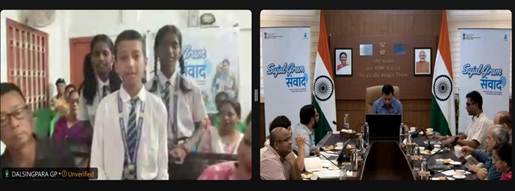
District and State officials appreciated the strong community ownership demonstrated by the Gram Panchayat and noted that preparations are underway for Jal Arpan, which will further strengthen local ownership and long-term sustainability of rural drinking water assets.
GP: Gorabali South, District: Bokaro, Jharkhand
During the interaction with village representatives in Hindi, they highlighted the transformational impact of Jal Jeevan Mission on drinking water access and quality of life. They shared that household tap connections have significantly reduced hardship for rural families and improved access to safe drinking water. Particular emphasis was placed on the success of the Jal Sahiya model, through which women are playing a leading role in community mobilisation, user-charge collection, grievance redressal and awareness generation. The Panchayat informed that regular user charges are being collected and utilised locally for operation and maintenance of drinking water systems. Community representatives also highlighted water quality testing through FTKs, active Gram Sabha discussions and efforts to strengthen source sustainability.
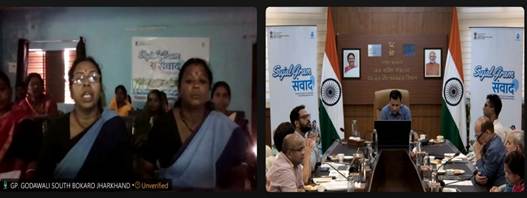
District officials informed that around 15 successful community-led models, including the Jal Sahiya model, are currently operational across the district. They also highlighted innovative outreach initiatives such as Jal Samvad, under which officials directly visit Gram Panchayats and interact with local communities, and “Hamare Gaon Hamare Log”, organised every Saturday to engage with villagers on water supply services, community participation and planning for utilisation of 16th Finance Commission tied grants.
During the interaction, AS&MD,NJJM suggested that States prepare simplified O&M Manuals in local languages to enable Gram Panchayat representatives and VWSC members to better understand their responsibilities in managing rural water supply systems.
GP: Partapur, District: Nubra, Ladakh
During the interaction, village representatives shared in Hindi, that before Jal Jeevan Mission, accessing drinking water during harsh winter months was extremely difficult and often required villagers to travel to distant sources or use melted snow. Following the provision of household tap connections, drinking water is now available at homes throughout the year. Community members highlighted that water supply continues even during winter when temperatures fall to nearly minus 30 degrees Celsius, owing to appropriate engineering measures adopted in the water supply infrastructure. Students, teachers and villagers also confirmed the availability of safe drinking water facilities in schools and public institutions and highlighted growing awareness regarding water conservation and water quality monitoring.
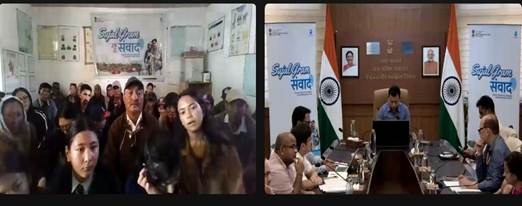
State officials informed that efforts are underway to further strengthen drinking water infrastructure through improvement of headworks, source sustainability measures and implementation of the recently notified O&M Policy. They also highlighted ongoing planning for additional household tap connections, preparation of DPRs related to source sustainability and infrastructure strengthening, and continued focus on ensuring reliable water services in the challenging terrain and climatic conditions of Ladakh.
AS & MD, NJJM, Shri Kamal Kishore Soan, emphasised that the long-term success of JJM 2.0 will depend on robust operation and maintenance systems, regular user-charge collection, source sustainability measures and active involvement of Panchayats and communities in managing drinking water assets.
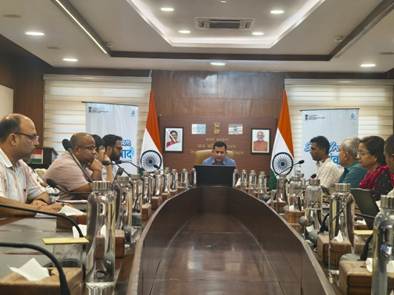
Shri Soan highlighted the importance of utilising the 2 October Gram Sabha as a platform for promoting water conservation, drinking water security, sanitation and community awareness. He encouraged Gram Panchayats that have completed the Har Ghar Jal certification process to organise Jal Arpan programmes and suggested that States develop and disseminate O&M Manuals in local languages so that Panchayat representatives and VWSC members can more effectively manage and sustain rural water supply systems.
*****
PS
(Release ID: 2316459)
Visitor Counter : 228