Ministry of Petroleum & Natural Gas
Union Minister of Petroleum and Natural Gas Shri Hardeep Singh Puri launches GOBARdhan Scheme to accelerate development of India’s Compressed Biogas sector
Integrated Central Sector Scheme brings assured offtake, stable pricing, capital assistance, pipeline connectivity, credit support and ecosystem development under a unified framework
GOBARdhan Handbook unveiled and Unified GOBARdhan Portal launched to support streamlined implementation of the Scheme
Posted On:
01 OCT 2026 8:27PM by PIB Delhi
The Union Minister of Petroleum and Natural Gas, Shri Hardeep Singh Puri, today launched GOBARdhan, the Central Sector Scheme for development of the Compressed Biogas (CBG) sector.
The Scheme, approved by the Union Cabinet on 6 August 2026 with an outlay of ₹23,731 crore, provides a ten-year framework from FY 2026–27 to FY 2035–36 for accelerating CBG development in India. The scheme aims to increase domestic CBG production nearly 10-fold (to around 5 MMSCMD) with a long-term framework that gives investors and lenders greater certainty.
The launch brought together stakeholders from across the CBG ecosystem, including representatives of Central Ministries, State Governments, CBG developers, oil and gas companies, City Gas Distribution entities, financial institutions, cooperatives, technology providers and other stakeholders.
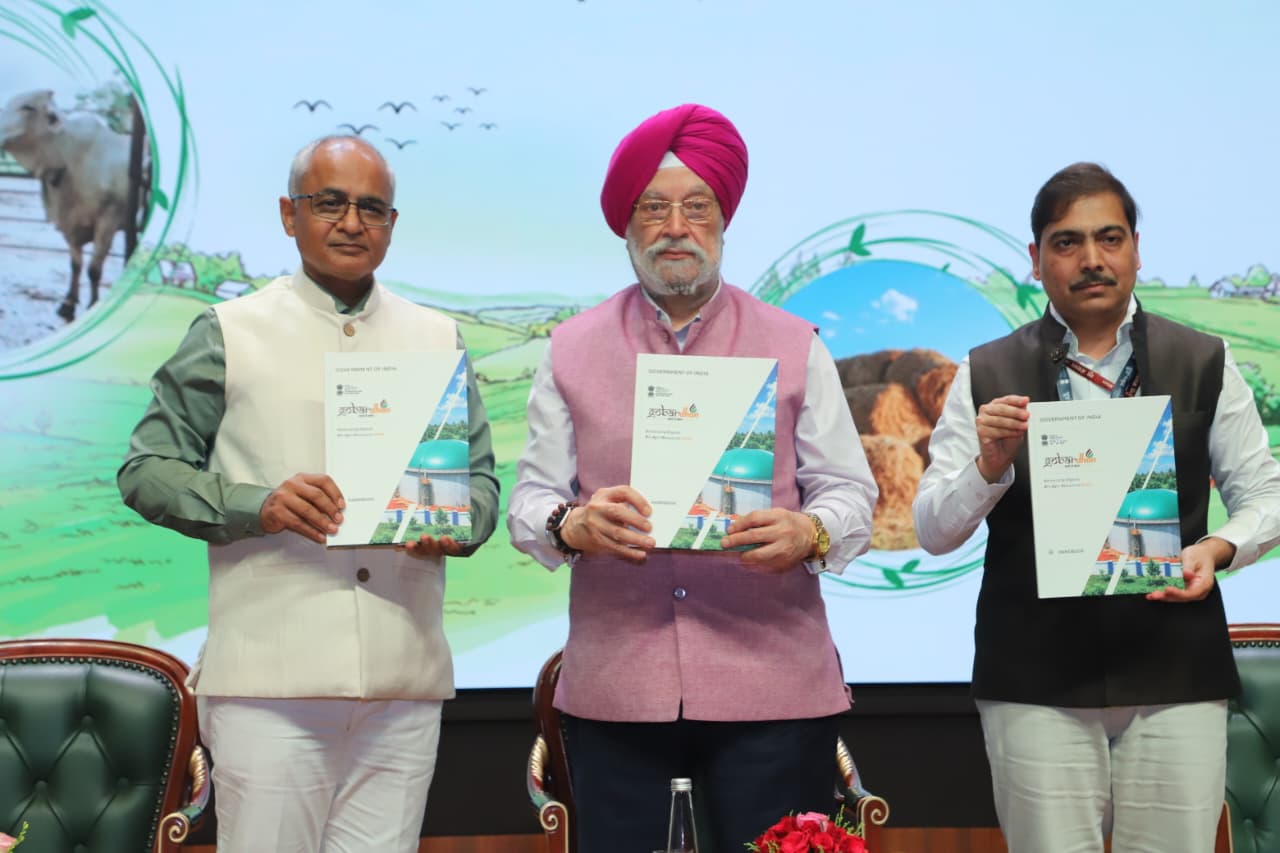
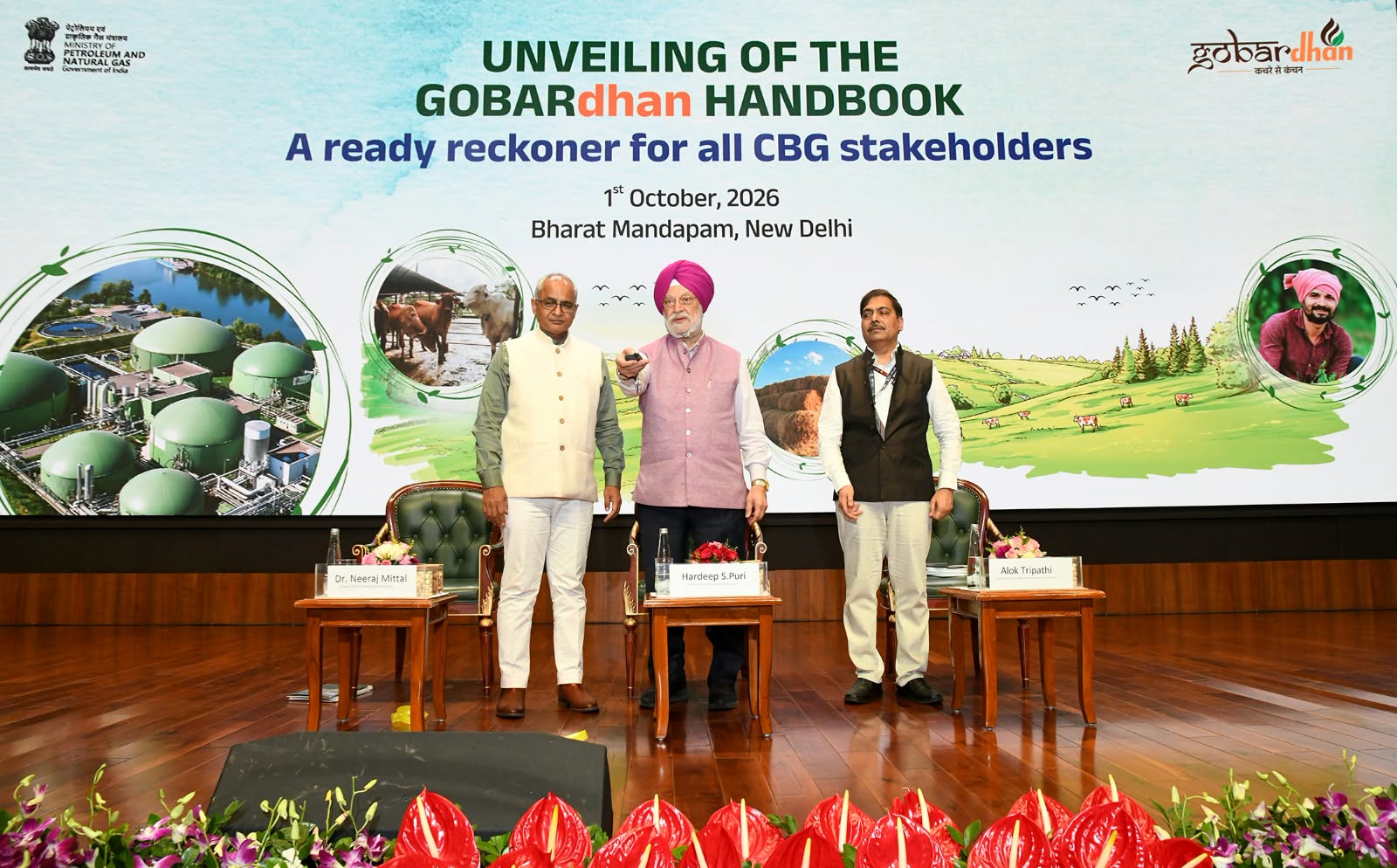
The launch featured the unveiling of the GOBARdhan Handbook, a comprehensive reference guide to assist stakeholders, project developers, State Governments and financial institutions in understanding the Scheme and navigating its CBG interventions, alongside the Unified GOBARdhan Portal, a centralised digital platform designed to streamline applications, eliminate multi-channel processes and enhance transparency throughout processing and implementation.
Speaking on the occasion, Shri Hardeep Singh Puri said that India’s growing energy requirements must be addressed through the combined objectives of availability, affordability and sustainability, with greater development of energy resources available within the country.
He said that CBG has particular relevance for India as it can convert crop residue, cattle dung and other organic resources into clean domestic energy, while generating organic manure and creating new economic opportunities in rural areas. Farmers, cooperatives, gaushalas and local enterprises can participate across feedstock collection, aggregation, transportation and processing, strengthening the circular link between agriculture and energy.
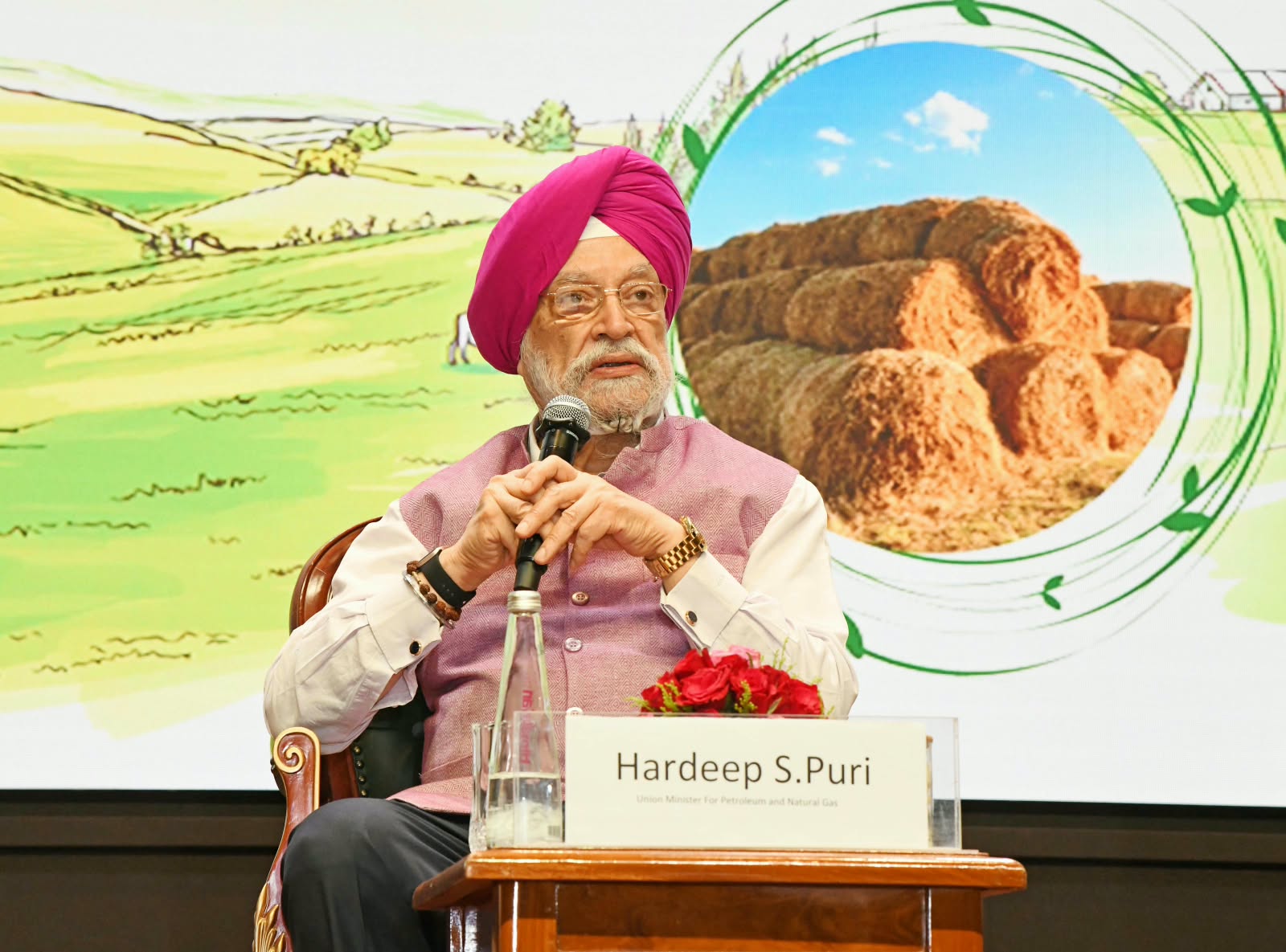
He called upon industry, financial institutions, States, cooperatives, technology providers and other stakeholders to translate the framework into operating plants and sustained CBG production, advancing India’s energy security, rural prosperity and the Prime Minister’s vision of Waste to Wealth and Annadata to Urjadata.
Addressing the gathering, Dr. Neeraj Mittal, Secretary, Ministry of Petroleum and Natural Gas, highlighted that India currently meets nearly half of its natural gas requirement through imports and that CBG provides an opportunity to convert domestic organic waste into a domestic gas resource.
He said that the experience of the sector had also highlighted constraints relating to volatile revenues, fragmented support, limited long-term policy visibility, feedstock assurance, organic manure offtake and access to finance. GOBARdhan addresses these issues through the Ministry of Petroleum and Natural Gas as the single nodal Ministry, predictable pricing, greater certainty of gas offtake, enhanced capital assistance, consolidated processes and greater use of digital monitoring.
The Secretary also highlighted the important role of State Governments in translating the national framework into projects on the ground, including through enabling State CBG policies, feedstock assessments, suitable land banks, faster approvals and infrastructure support.
An integrated framework for the CBG sector
A presentation on GOBARdhan outlined the Scheme architecture and the transition from multiple standalone interventions towards an integrated framework for the sector. GOBARdhan comprises six key interventions: CBG Offtake Assurance, CBG Pricing Framework, Capital Assistance for CBG Projects, Development of Pipeline Infrastructure, Credit Guarantee Support and the CBG Ecosystem Challenge Fund.
Under the offtake framework, CBG plants will be mapped to identified City Gas Distribution geographical areas or CBG clusters, enabling a dependable route to market. Under the CBG Obligation (CBO), the obligation to procure CBG rests with City Gas Distribution (CGD) entities. The procurement obligation has been prescribed at 3% in FY 2026–27, 4% in FY 2027–28 and 5% from FY 2028–29 onwards for the CNG (Transport) and PNG (Domestic) segment
The Scheme introduces an administered CBG price of ₹2,110 per MMBtu, providing greater revenue visibility to producers. Eligible greenfield projects can receive capital assistance of up to ₹2 crore per TPD of installed CBG capacity, including support for plant machinery, feedstock aggregation and FOM/LFOM processing and manure value-addition equipment.
To address gas evacuation constraints, support of up to 80% of eligible capital expenditure is available for pipelines connecting CBG clusters to trunk pipeline networks and up to 50% for standalone plants connecting to CGD networks.
A dedicated credit guarantee mechanism for eligible MSME-based CBG projects will cover up to 85% of the outstanding amount at default, subject to prescribed project limits. The guarantee cap is ₹20 crore per project for general MSME projects and ₹25 crore per project for women-led MSME projects, providing enhanced support to women entrepreneurs in the CBG sector.
The CBG Ecosystem Challenge Fund will support technology development, capacity building, feedstock assessment and aggregation, district-level ecosystem development and value addition in organic manure.
India’s CBG ecosystem has already established a foundation for further growth, with 217+ plants commissioned as of August 2026, with an installed capacity of more than 1,700 TPD. The Scheme aims to increase domestic CBG production nearly ten-fold over its ten-year implementation period.
The Scheme is expected to generate significant economic and environmental benefits, including more than ₹40,000 crore in foreign-exchange savings, over ₹75,000 crore added to GDP and more than 1.5 lakh jobs. It is also expected to replace 10 million tonnes of fossil fuel with clean gas, reduce more than 40 million tonnes of CO₂ emissions and support the production of 250 million tonnes of organic manure.
***
SJ
(Release ID: 2317937)
Visitor Counter : 276