Ministry of Micro,Small & Medium Enterprises
Khadi and Village Industries: Weaving the Fabric of an Inclusive and Sustainable India
Khadi emerges as a symbol of sustainable livelihoods, women’s empowerment and India’s rich cultural heritage
Posted On:
09 OCT 2026 12:02PM by PIB Delhi
Khadi and Village Industries (KVI) have continued to play a significant role in promoting rural livelihoods, generating employment and strengthening the vision of an Atmanirbhar Bharat. Rooted in India’s rich cultural heritage, Khadi combines traditional craftsmanship with sustainable production practices and provides livelihood opportunities, particularly in rural areas.
Khadi, being hand-spun and hand-woven, is based on the use of natural fibres and local production systems. Its labour-intensive and decentralised nature provides employment opportunities at different skill levels and contributes to sustainable rural development. The sector also supports the objectives of SDG 1 (No Poverty) and SDG 8 (Decent Work and Economic Growth).
Hand spinning remains the key differentiator between Khadi and handloom. Over the years, the Khadi and Village Industries Commission (KVIC) has supported Khadi institutions through skill development, capacity building and upskilling initiatives. Measures such as enhancement of spinning and weaving wages from April 2025, support for improved working tools and infrastructure, and strengthened marketing interventions have further contributed towards improving artisan incomes and making traditional livelihoods economically sustainable.
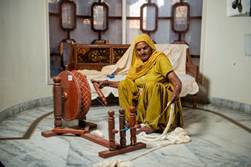
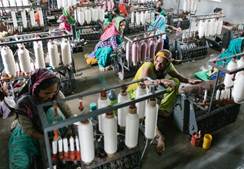
Khadi has also evolved into a contemporary fashion and lifestyle choice. New product categories such as Khadi denim, designer saris, bridal wear, contemporary shirts and trousers have expanded its appeal among new-age consumers. The Centre of Excellence for Khadi at NIFT, Delhi has developed 2,129 Khadi design collections across multiple categories. The launch of Navyug Khadi, featuring 710 new products, and the wellness and yoga wear collection ‘Svadha’ have further contributed to the contemporary positioning of Khadi.
The Government has been supporting employment generation in the Khadi and Village Industries sector through schemes including Khadi Vikas Yojana, Gramodyog Vikas Yojana and PMEGP. Assistance is provided through financial support, working capital facilitation, quality raw materials, training, toolkits, wage support, marketing interventions, promotion of digital payments and social security measures. An evaluation study conducted by EDII, Ahmedabad, reported that more than 75 per cent of artisans across the schemes experienced a measurable increase in income following the interventions.
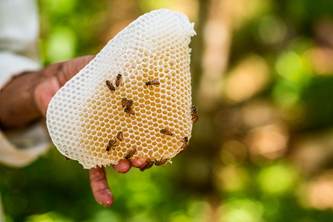
Khadi has also emerged as an important avenue for women’s economic empowerment and inclusive development. Around 80 per cent of approximately half a million Khadi artisans are women. Women’s participation has been particularly significant in areas such as Agarbatti, Handmade Paper, Honey Mission and Service Industries, providing them with greater opportunities for financial independence and sustainable livelihoods.
With growing global demand for handmade, traceable, natural and environmentally responsible products, Khadi and handmade products offer significant export potential. KVIC has registered as an Export Promotion Council (EPC) on the Trade Portal of the Consulate General of India in New York and has initiated efforts to facilitate greater international exposure for Khadi institutions.
The Government has also taken steps to strengthen the branding and market positioning of Khadi products. The GI tag awarded to Ponduru Khadi is expected to enhance the value realisation of its distinctive cotton and traditional spinning and weaving processes. Ponduru Khadi, Bharat Kasturi Cotton, Bengal Muslin and naturally coloured cotton products were also showcased at the inaugural BRICS MSME Forum held in Agra.
Technology upgradation and quality enhancement are being pursued alongside preservation of traditional practices. KVIC’s Central Sliver Plants are being modernised, with the plants at Chittadurga, Karnataka, and Kuttur, Kerala, having completed modernisation and becoming operational. The Chittadurga plant utilises solar energy for 50 per cent of its requirement, while wind power is being explored to further strengthen environmental sustainability. Technology upgradation of Khadi institutions and technology-based Common Facility Centres are also proposed to strengthen Village Industries clusters.
Khadi’s inherent environmental sustainability further enhances its relevance in the context of climate action and responsible consumption. Its energy-efficient and water-efficient production process, based on natural fibres and colours, contributes to a lower environmental footprint. KVIC, in collaboration with ICAR-CIRCOT, is exploring initiatives for developing naturally coloured cotton varieties aimed at reducing water use, chemical pollution and energy consumption associated with conventional dyeing processes.
Khadi also offers potential for recycling and upcycling through hand spinning, including the conversion of fibres and filaments that may not be suitable for mechanised spinning. Such initiatives have the potential to create additional employment opportunities while contributing to SDG 12 (Responsible Consumption and Production) and SDG 13 (Climate Action).
The journey of Khadi—from a symbol of Swadeshi and the freedom movement to a contemporary fashion and lifestyle choice—reflects its ability to adapt to changing consumer preferences while retaining its traditional character. By bringing together heritage and innovation, employment and entrepreneurship, women’s empowerment and social inclusion, and economic activity and environmental responsibility, Khadi continues to contribute to the broader vision of inclusive and sustainable development.
The continued evolution of Khadi demonstrates that sustainable solutions can emerge not only from modern technologies but also from traditional practices that have been preserved and refined over generations. Through its artisans, spinners and rural entrepreneurs, Khadi continues to represent a distinctive model of inclusive growth, sustainable livelihoods and responsible production.
***
Sunil Kumar Tiwari
E-mail - hipessi[at]gmail[dot]com
(Release ID: 2321195)
Visitor Counter : 181