Ministry of Information & Broadcasting
Bridge the Governance Gap Through Effective Public Dialogue: PIB ADG Urges OIS Officers to Connect with Citizens
Public Dialogue Is the Bedrock of Governance, Not an Administrative Afterthought: Akhil Kumar Mishra
Posted On:
09 OCT 2026 2:55PM by PIB Bhubaneswar
Communication is not an incidental postscript to administration but the very foundational prerequisite of effective governance, observed Shri Akhil Kumar Mishra, Additional Director General (ADG), Press Information Bureau (PIB) and Central Bureau of Communication (CBC), Bhubaneswar. Addressing Odisha Information Service (OIS) officers during an interactive Orientation Programme at Loka Seva Bhavan, Shri Mishra articulated the imperatives of modern government communication, ethics in public service, and the evolving paradigm of citizen engagement.
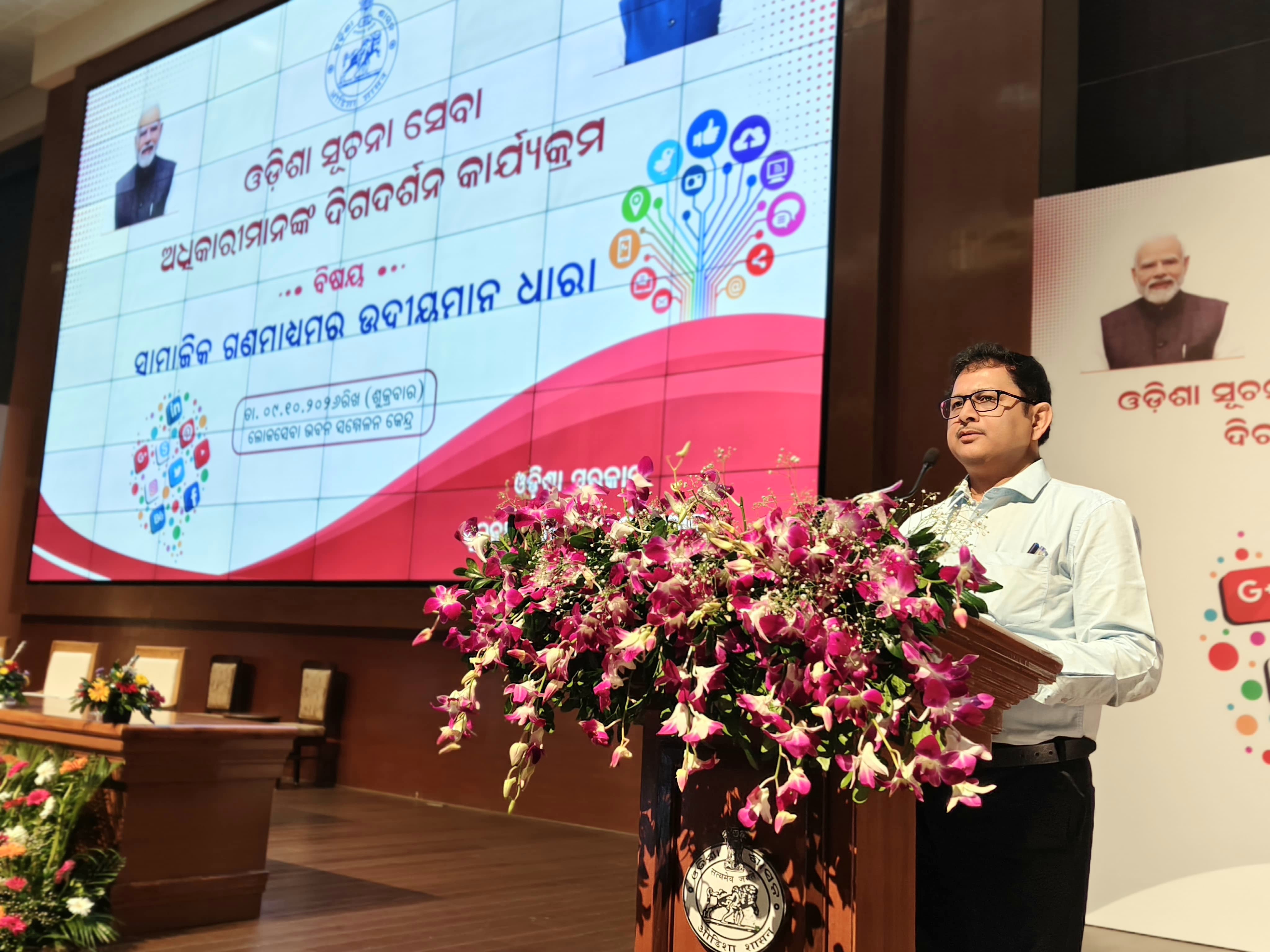
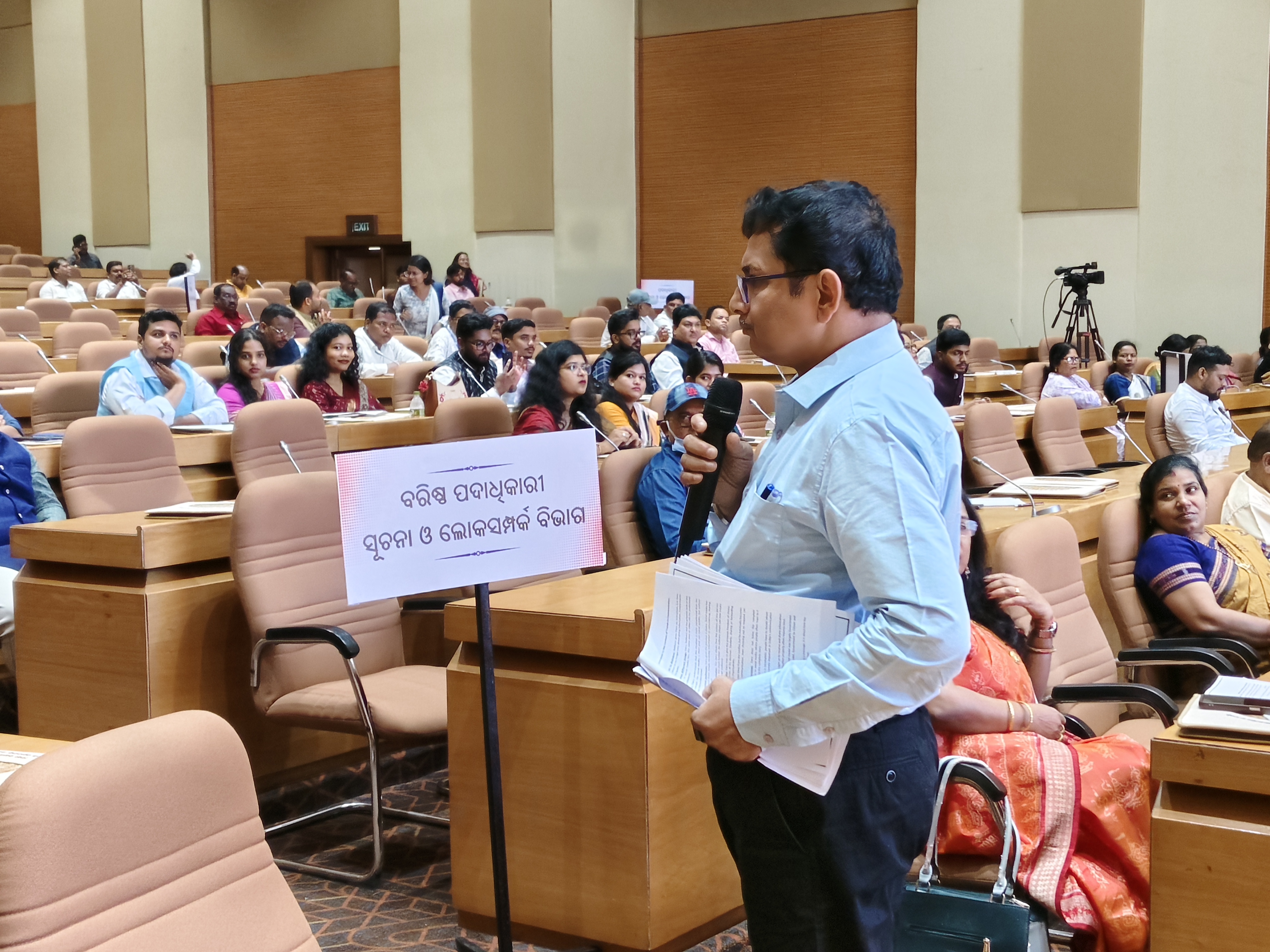
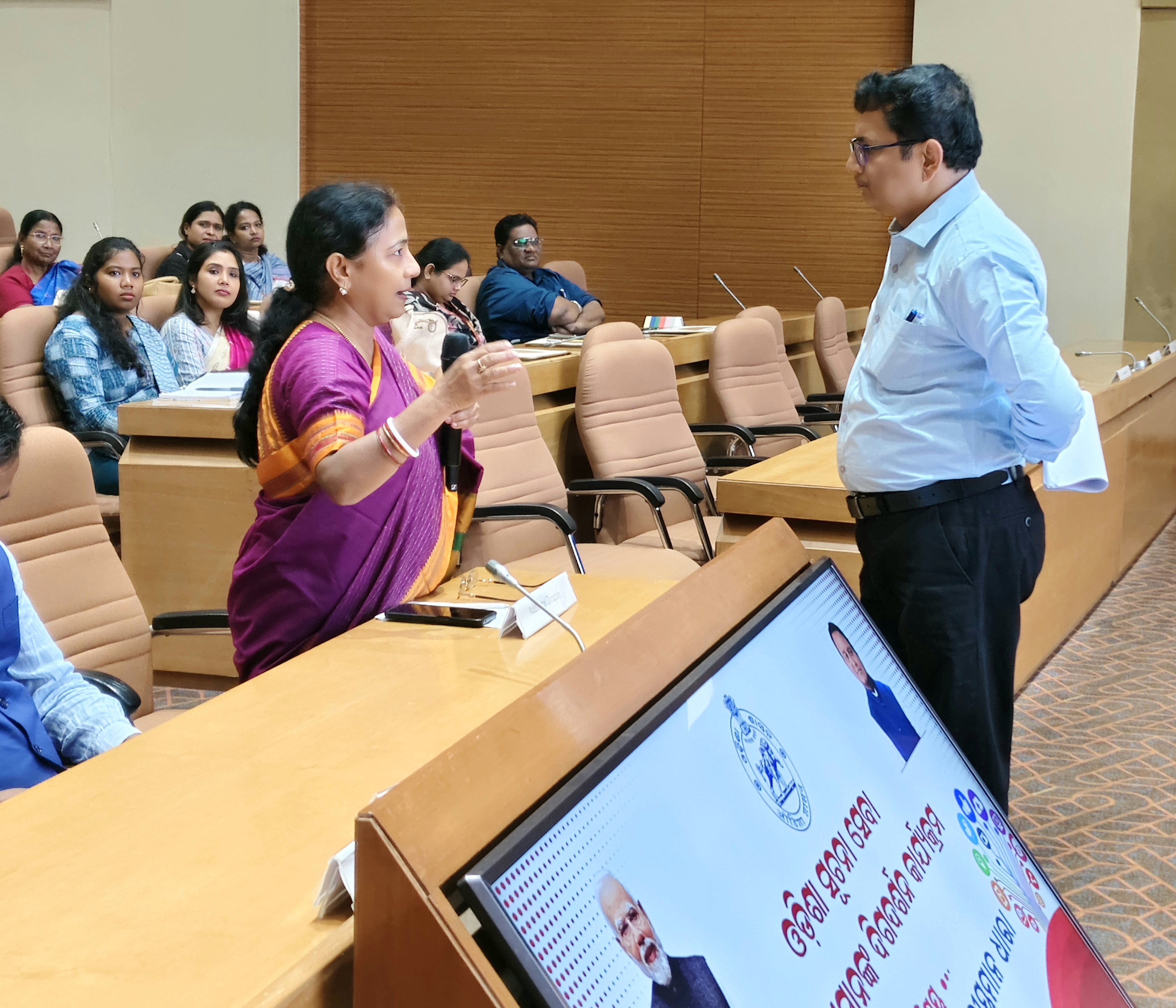
Drawing upon over three decades of observing state and central governance architectures, Shri Mishra underscored that the underlying challenges of reaching the common citizen remain largely identical across jurisdictions. “Barring critical sovereign concerns like national security, the core issues affecting governance at the Center and the State converge on the common citizen. The communication landscape has undergone a radical transformation, and officers must decipher and navigate this evolving process,” he stated.
Invoking philosophical and literary traditions, Shri Mishra posited that human dialogue is inextricably tied to civilization and societal cohesion. Citing classical dialogues such as Krishna–Arjuna in the Bhagavad Gita and Vashistha–Rama in the Yoga Vashistha, he highlighted that enduring administrative ethos and the concept of Ramrajya were constructed entirely upon communicative foundations. Referencing sociologist David Riesman’s seminal work The Lonely Crowd, he reminded officers that the words public servants choose hold immense social power: “Words do not merely affect us temporarily; they socialize or unsocialize us. Every piece of institutional communication either builds civic cohesion or deepens alienation.”
Delving into administrative accountability, Shri Mishra reflected on Albert Camus’ short story ‘The Guest’ to examine the inevitable moral dilemmas faced by public officials. Distinguishing the institutional position of civil servants from non-state actors, he asserted that public servants carry an unyielding burden of accountability to the state and its citizenry.
Emphasizing that the calling of statecraft (Rajakarya) must always transcend personal considerations (Pitrukarya), Shri Mishra observed that government employees entered the service by conscious choice. Consequently, an unwavering sense of duty, public trust, and institutional commitment must remain paramount. He noted that while skepticism and critique are convenient, constructive governance demands institutional fidelity, resilience, and profound accountability.
During the session, Shri Mishra conducted an interactive, experiential blindfold simulation to dissect the operational nuances of message transmission, leadership, trust, and directional ambiguity. Reviewing the exercise, he warned against the perils of reductionist communication: “Merely passing down a pamphlet, booklet, or hoarding is not communication—it is merely functioning as a postman. Genuine communication demands clarity of direction, actionable guidance, empathy, and active listening. It is inherently a two-way street.”
He urged the information officers to proactively equip their teams and downstream channels with comprehensive, lucid context to ensure welfare messaging reaches the last mile effectively without distortion or attrition.
The conference was attended by Shri Sanjay Kumar Biswal, Director, Information & Public Relations (I&PR) Department, Government of Odisha, along with several senior officers and representatives from the state administration.
***
Swadhin Shakti Prasad/Manoj Kumar Jali
(Release ID: 2321280)
Visitor Counter : 42
Read this release in:
Odia