Office of Principal Scientific Advisor to GoI
PSA Prof. Sood Chairs Fourth All S&T Clusters’ Meet in Chandigarh, Calls for Stronger Collaboration and Technology Deployment
संहतिः कार्यसाधिका - Fourth All S&T Clusters’ Meet Reaffirms the Power of Collaboration in Driving Innovation
Posted On:
10 OCT 2026 8:46PM by PIB Delhi
The Principal Scientific Adviser to the Government of India, Prof. Ajay Kumar Sood, chaired the Fourth All S&T Clusters’ Meet held on 9–10 October 2026 at Panjab University, Chandigarh, hosted by PU-IIT Ropar Regional Accelerator for Holistic Innovations Foundation (PI-RAHI). He was joined by Dr (Mrs.) Parvinder Maini, Scientific Secretary and Dr Vishal Choudhary, Scientist-F, Office of the PSA. Prof. Meenakshi Goyal, Vice-Chancellor, Panjab University; Prof. Rajeev Ahuja, Director, IIT Ropar; Prof. Avinash Kumar Agarwal, Director, IIT Jodhpur; Prof. Rajat Sandhir, and Dr Pushpendra P. Singh, Director, PI-RAHI; and representatives of the eight S&T Clusters participated in the deliberations.
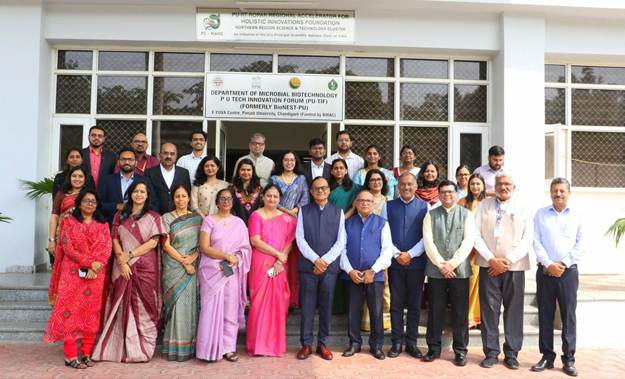
In his opening remarks, Prof. Sood noted that the Clusters have evolved into integrated ecosystems addressing regional, industrial, and societal challenges and increasingly functioning as “National Technology Accelerators.” He emphasised the need to strengthen inter-Cluster collaboration, stakeholder participation, coordination with RuTAG and RSVCs, and technology visibility. He also highlighted the growing global engagement of the Clusters, including the 12 international MoUs emerging from the First International Conference on S&T Clusters and subsequent partnerships with the University of Western Australia, India–Australia Smart Farm Network and UK Catapult Network.
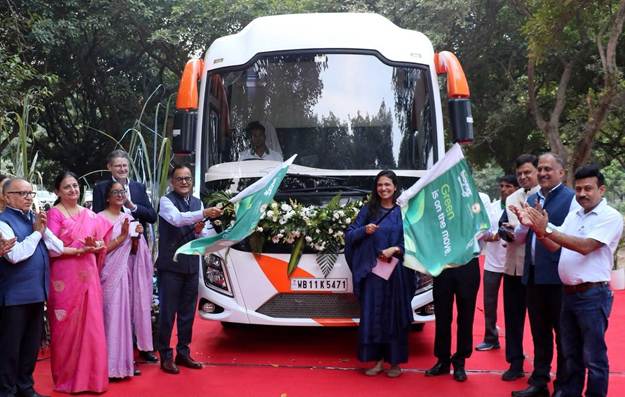
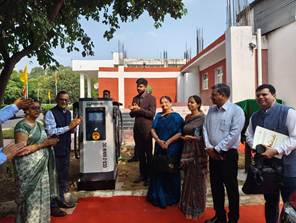
During the inaugural session, Prof. Sood launched an Automatic Weather Station, highlighting the role of technology-enabled solutions in strengthening climate-smart and data-driven agriculture. The Meet also highlighted key inter-Cluster initiatives in sustainable mobility and clean technologies, including the inauguration of an EV Charging Station in Himachal Pradesh and the EVChargex Battery Swapping Station in Panchkula. The Himachal Pradesh initiative brings together charging infrastructure, EV users, and digital services, leveraging collaboration between DRIIV and PI-RAHI to support the State’s transition to electric mobility. The Panchkula facility demonstrates the transition of indigenous battery-swapping technology from pilot to commercial deployment, integrating EVs, batteries, rider onboarding, and digital management on a common platform. Prof. Sood also launched the report on Phycotree – Microalgal Photobioreactor, highlighting DRIIV’s efforts to facilitate the transition of indigenous technology from identification to field validation and potential deployment, including its engagement with GMR for applications at New Delhi IGI Airport; Kalaanubhav portal for PI-RAHI, featuring traditional crafts and products of artisans from Punjab and Jammu & Kashmir, along with an exhibition showcasing the work of artisans from Northern India; SPARKS 2.0; IGNITE 2.0; GINI 2.0; the STI Ecosystem of Northern India Reports; and an MoU signing ceremony. The Meet further marked the announcement of the UK Catapults–S&T Clusters collaboration in Healthcare, Emerging Technologies, and Net Zero Technologies, strengthening opportunities for technology development and international collaboration.
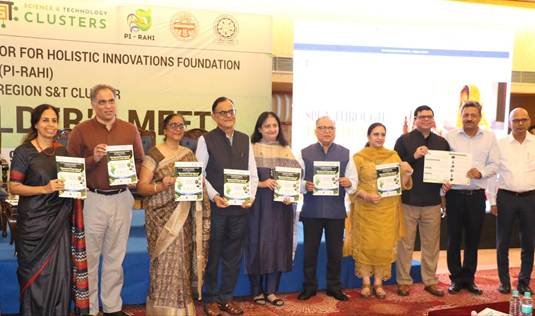
Scientific Secretary Dr Maini emphasised the need to build a connected National Cluster Network through sharing of technologies, infrastructure, expertise and industry partnerships. She highlighted inter-Cluster replication through D-PoC, Kalaanubhav and i-Passport, and called for stronger industry participation from R&D to validation, commercialisation, and scale. She urged the Clusters to focus on replication, collaboration and scale, translating successful regional solutions into larger national and global programmes.
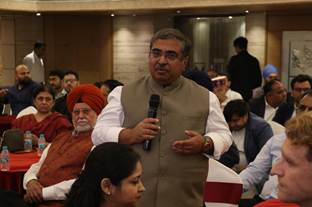
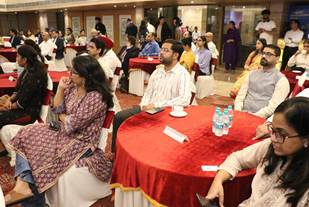
A dedicated Stakeholders Meet on Strengthening S&T Clusters was also organised in Chandigarh, bringing together industry partners, CSR partners, academic institutions, and government representatives for interaction with the leadership of the S&T Clusters. The interaction provided an opportunity to discuss greater stakeholder participation and strengthen partnerships for technology development, validation, and deployment.
On the second day, Prof. Sood inaugurated a Digital Podiatric Clinic at the Panjab University Health Centre, Chandigarh, established by PI-RAHI under a CSR partnership from HL Klemove. The clinic is described as Northern India’s first Digital Podiatric Clinic and deploys AI-powered foot-screening technology for early detection and preventive care of diabetic foot conditions, bringing advanced medical technology closer to community healthcare. The delegates also visited the facility following its inauguration.
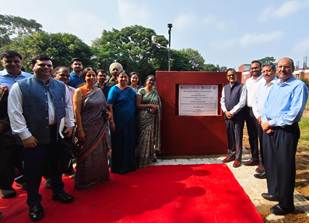
Prof. Sood also announced the 2nd International Conference on S&T Clusters, marking the next phase of the international outreach of the Cluster initiative. The announcement was followed by further deliberations on the present and future plans of the Clusters and discussions led by the Chair.
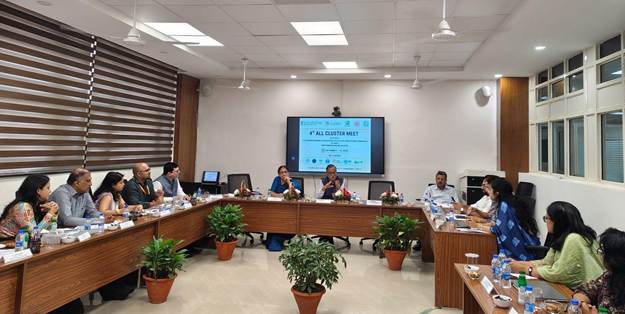
The two-day Meet provided a platform to review the progress of the eight S&T Clusters, assess their ongoing initiatives and discuss their present and future plans, with emphasis on technology translation, inter-cluster collaboration, industry engagement and strengthening regional innovation ecosystems. Cluster presentations and follow-up discussions were held across the two days covering the Pune Knowledge Cluster Foundation (PKCF), Jodhpur City Knowledge and Innovation Foundation (JCKIF), Bhubaneswar City Knowledge and Innovation Cluster (BCKIC), Delhi Research Implementation and Innovation (DRIIV), AMTZ-Vizag Cluster, Bengaluru Science and Technology Cluster (BeST), Research and Innovation Circle of Hyderabad (RICH), and PI-RAHI.
The Fourth All S&T Clusters’ Meet reaffirmed the importance of strengthening collaboration among the eight Clusters and building stronger linkages with industry, academia, government, and other stakeholders. The deliberations focused on taking forward Cluster-led initiatives, promoting technology deployment and creating greater opportunities for replication and scale-up of solutions across regions.
Conceived in 2020 following recommendations of the Prime Minister’s Science, Technology and Innovation Advisory Council (PM-STIAC), the Science and Technology (S&T) Clusters program of OPSA brings together academia, research institutions, industry, startups, government, and other stakeholders to address regional challenges through science, technology, and innovation. Over the years, the Clusters have evolved as regional innovation ecosystems focused on translating research and technology into solutions with societal and economic impact.
****
MJPS/SS/ST
(Release ID: 2321818)
Visitor Counter : 112