Ministry of Micro,Small & Medium Enterprises
India’s Coir Sector: Creating Livelihoods, Promoting Entrepreneurship and Driving Sustainable Growth
Over 21,000 coir units are registered on the Udyam registration portal, generating employment for 2.3 lakh people
Exports of coir products witnessed an increase of 305% in the last 10 years
Posted On:
14 OCT 2026 10:09AM by PIB Delhi
India, the world’s largest producer and exporter of coir, is rooted in tradition and driven by innovation. The coir sector is emerging as a vibrant, eco-friendly and sustainable driver of economic and social progress. It not only promotes the productive use of coconut husks but also generates livelihoods and supports the growth of rural and traditional communities. With its strong focus on sustainability, value addition and inclusive growth, the Coir sector is playing a crucial role in India’s journey towards Viksit Bharat @2047.
Made from coir, eco-friendly and sustainable products like mats, mattresses, ropes, brushes and other utility items are increasingly becoming a part of our everyday lives. But what exactly is coir?
Coir is a natural, fibrous material extracted from the outer, tough husk of coconuts. These natural fibres are processed and transformed into a wide range of commercial products. The Coir Sector, one of India’s oldest and traditional industries, represents an eco-friendly manufacturing sector that extracts, processes and converts coconut husk fibres into value-added products.
Coir sector in India:-
-
India is the world’s largest producer and exporter of coir and coir products, accounting for about two-thirds of global production. The Indian Coir Industry has a turnover of approximately ₹16,000 crore and contributes close to 1% to India’s GDP.
-
In FY 2025-26, India’s exports of coir and coir products were valued at ₹6,614.40 crore, with the US, China, Netherlands, Spain and the UK being the major export destinations. Coir pith, fibre, yarn and tufted mats are the major coir products exported by India.
-
The Indian Coir Sector has more than 21,000 coir units and provides direct and indirect employment to over 7 lakh workers, with 80% being women from rural households.
-
The Ministry of MSME runs a central sector scheme, “Coir Vikas Yojana (CVY)”, aimed at promoting the sustainable development and growth of the Coir Sector and providing support to coir artisans and the coir industry.
-
The CVY focuses on:
-
Development of new technologies, machines & products for Coir Industry.
-
Conducting skill training and promotional programmes
-
Promotion of sales of coir and coir products in domestic as well as international markets.
-
Creating awareness through publicity activities and participation in trade fairs, expos, etc.
-
Providing financial assistance to promote sales.
-
Facilitating the participation of coir exporters in international exhibitions.
-
Compiling and publishing statistics on the coir sector.
Key achievements during last 12 years (since 2014-15):
-
Export of coir and coir products has more than quadrupled, from ₹1,630.33 crore in FY 2014-15 to ₹6,614.40 crore in FY 2025-26, registering an increase of 305.70%.
-
Over 68,000 persons have been trained under various training programmes with more than 80% being women.
-
More than 150 innovative machines, technologies and value-added coir products in the coir sector.
-
Facilitated participation of more than 1,000 exporters in International Exhibitions abroad and financial assistance of more than ₹20 crores given to more than 850 entrepreneurs under Export Market Promotion.
-
1,400+ promotional programmes organised and 950+ exhibitions participated across India.
Coir Giving Wings to Dreams: Inspiring Stories of Enterprise & Success
-
-
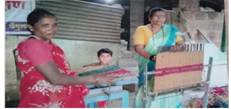
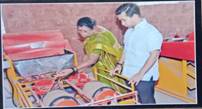
Smt. Ranjana Ramchandra Kadam, from Sindhudurg district, Maharashtra, turned her entrepreneurial dream into reality under the Prime Minister’s Employment Generation Programme (PMEGP), which enabled her to establish a coir unit with guidance from the Coir Board. She constructed a shed and procured the necessary machinery and equipment to start her business, with significant support from the Coir Board office. Her factory currently manufactures coir ropes, pillows and doormats. Through this venture, she has provided full-time employment to six people.
-
-
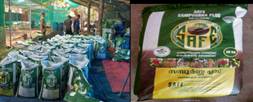
Sampoorna Plus Agro Fertilizer Enterprises, Kozhikode, Kerala, under Shri Surendran P., was strengthened through the training and technical guidance provided by the Coir Board, Sub-Regional Office, Kannur and the Central Coir Research Institute (CCRI), Kalavoor. He actively participated in hands-on training programmes, demonstrations, and awareness sessions on the production and effective utilisation of coir pith bio-fertiliser. Within a short period of one year, his enterprise has successfully built a customer base of more than 500 customers. The unit has also recorded impressive sales of more than 20 tonnes of coir pith bio-fertiliser. The enterprise currently provides employment to 5 workers, including 2 women workers.
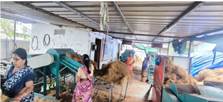
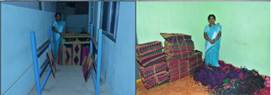
3. Smt. Allam Gowthamy from East Godavari District, Andhra Pradesh, five years ago underwent training at the Coir Board Training Centre. Motivated by the technical guidance she established her own enterprise, Adigo Coir Products. She availed financial assistance under the PMEGP. Today, the unit has achieved an annual turnover of approximately ₹35 lakh and generates an annual profit of around ₹10 lakh. The enterprise has also created employment for six women. She also actively conducting training programmes with the support of the Coir Board Regional Office, Rajahmundry and Mandal Parishat authorities, and nearly 120 women have been trained in coir mat weaving, rope making and handicraft production.
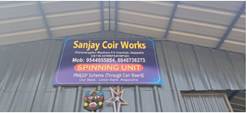
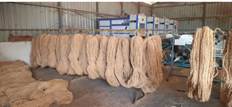
4. Shri G. Sabu, from Alappuzha, Kerala, has started the Coir spinning unit in the year 2024 under the PMEGP scheme and through Coir Board Regional Office, Kalavoor. Within two years of operation, the unit achieved steady production of coir yarn and rope supplied to local coir societies and manufacturers in Alappuzha. The enterprise generated direct employment for 8–10 local workers, predominantly women from nearby villages. The monthly turnover increased substantially, providing the entrepreneur with a stable income and creating regular wages for employees.
***
Sunil Kumar Tiwari
E-mail - hipessi[at]gmail[dot]com
(Release ID: 2323051)
Visitor Counter : 345