Ministry of Defence
India seeks an Indo-Pacific where all countries make their own choices, protect their interests & pursue development in peace: Raksha Mantri at 1st ASEAN-India Defence Think Tank Forum
“Need to build trust, respect each other’s sovereignty, follow international law & keep channels of dialogue open to tackle borderless challenges”
Strengthening maritime domain awareness, interoperability & underwater cooperation is key to a stable, rule-based maritime order, says Shri Rajnath Singh
“Self-reliance does not mean working in isolation; it can create opportunities for trusted partners to design, build, maintain & improve equipment together”
“Co-development, co-production, MRO, training and long-term technical support can build local skills, support industry & make supply chains more reliable”
Posted On:
14 OCT 2026 11:44AM by PIB Delhi
“India seeks an Indo-Pacific where all countries - large and small - make their own choices, protect their interests and pursue development in peace,” said Raksha Mantri Shri Rajnath Singh as he called for building trust, respecting each other’s sovereignty, following international law and keeping channels of dialogue open to tackle both emerging and conventional “borderless challenges”. He was addressing the maiden Association of Southeast Asian Nations (ASEAN) - India Defence Think Tank Forum at Manohar Parrikar Institute for Defence Studies and Analyses (MP-IDSA) in New Delhi on October 14, 2026.
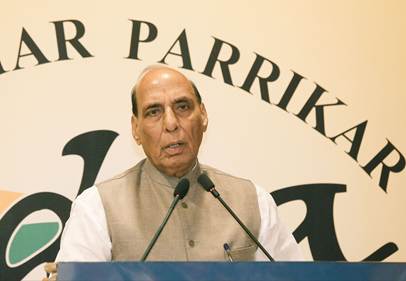
Raksha Mantri asserted that India and ASEAN share a clear interest in peace, stability, prosperity and an open & inclusive Indo-Pacific. He emphasised that India’s Act East policy and the vision of SAGAR (Security and Growth for All in the Region) and MAHASAGAR (Mutual and Holistic Advancement for Security and Growth Across Regions) advocate for an open and multipolar cooperation, and the nation aligns them through ASEAN-led mechanisms that are central to its Indo-Pacific vision. He noted that the region is witnessing rapid changes in the face of growing strategic competition and pressure & uncertainty created at times through actions at sea, in addition to threats such as terrorism, cybercrime, piracy, trafficking, illegal fishing, climate-related disasters and risks to vital supply chains. No country alone can address these challenges, he said.
Shri Rajnath Singh underlined the need to discuss differences early and peacefully, before they become disputes, and pitched for a regional order where countries work together without being forced to choose sides. “India believes that security is strengthened when countries build capacity together, respect international law and maintain trust through dialogue,” he said.
Raksha Mantri highlighted the centuries-old close ties between India and Southeast Asia rooted in shared history, culture, trade & ideas, reiterating that the Act East Policy is a long-term commitment to working with the region as an equal partner. “India’s approach and ASEAN’s outlook on the Indo-Pacific can complement each other. We should strengthen cooperation, not create competition between regional forums,” he said.
Shri Rajnath Singh stated that keeping the Indian Ocean and the waters of Southeast Asia safe is a shared responsibility as they are part of one connected maritime space, crucial for trade, energy, people and essential goods. Strengthening maritime domain awareness, interoperability, and collaboration in underwater awareness will be key to ensuring a stable, rule-based maritime order, he said.
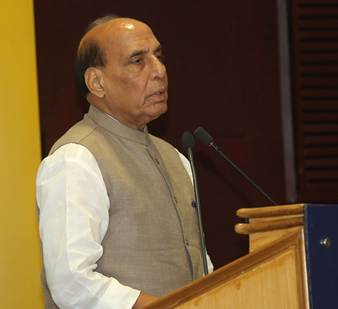
Raksha Mantri stressed that as 2026 has been designated as ASEAN-India Year of Maritime Cooperation, it is an opportunity to turn shared interest into practical action. “We should improve the sharing of maritime information, strengthen cooperation among our navies and coast guards, and build the ability to respond together to emergencies. We should also work against piracy, trafficking, illegal fishing and other threats, in accordance with international law,” he said.
Terming defence technology as another crucial area, Shri Rajnath Singh pointed out that Artificial Intelligence, drones, cyber capabilities and space-based systems are becoming increasingly important, with recent conflicts demonstrating that relatively low-cost drones can challenge expensive defence systems. He underscored the need to respond with practical, affordable and adaptable solutions.
“India believes that innovation should not remain limited to a few large organisations. Start-ups, universities, research institutions and smaller companies can all contribute. India’s initiatives like Innovations for Defence Excellence (iDEX) and Technology Development Fund (TDF) have created a way to collaborate with innovators for our defence needs,” stated Raksha Mantri as he called for exploring ways for innovators to work together on clearly defined problems, such as counter-drone systems, cyber defence, maritime surveillance and disaster response.
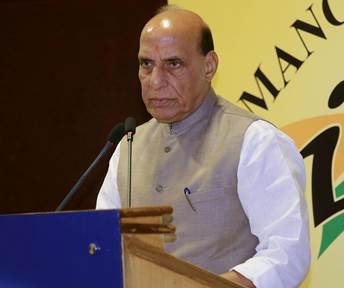
Shri Rajnath Singh called for joint research projects, shared testing opportunities, exchanges among young researchers and carefully designed innovation challenges, emphasising that such cooperation must also protect sensitive information, respect intellectual property and ensure that technology is shared responsibly. “The aim should be to develop useful capabilities while strengthening trust between our countries,” he said.
On defence industrial cooperation, Raksha Mantri asserted that India is ready to explore cooperation with ASEAN partners in areas such as patrol vessels, radars, air-defence systems, helicopters, drones and other technologies, according to each country’s needs and priorities. He said the ‘Aatmanirbhar Bharat’ initiative focuses on building stronger domestic capabilities, but self-reliance does not mean working in isolation. It can create opportunities for trusted partners to design, build, maintain and improve equipment together, he said.
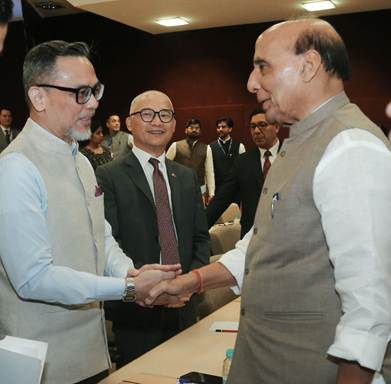
Underlining the importance of co-development, co-production, maintenance, repair and overhaul, training and long-term technical support, Shri Rajnath Singh said these arrangements can build local skills, support industry and make supply chains more reliable. “Our researchers need to look closely at what makes such partnerships work: clear requirements, reliable after-sales support, appropriate technology safeguards, fair sharing of responsibilities and benefits, and opportunities for local companies and skilled workers. Our goal should be lasting partnerships, not one-time transactions,” he said.
Calling for enhanced cooperation to deal with natural disasters, Raksha Mantri stated that Humanitarian Assistance and Disaster Relief (HADR) should be a regular part of defence dialogue as cyclones, floods, rising sea levels and extreme weather can damage ports, disrupt trade and threaten lives and livelihoods. “We can learn from one another, share best practices and improve coordination before a crisis occurs,” he said.
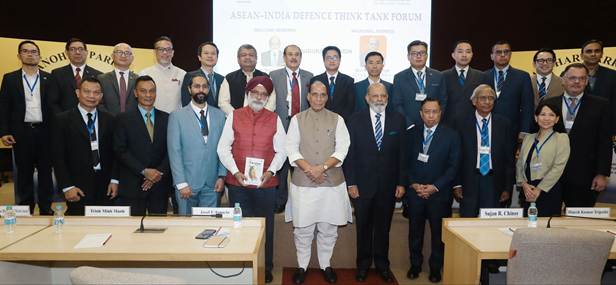
On the crucial role of Think Tanks, Shri Rajnath Singh said Governments need good analysis, but they also need ideas that can be put into practice. He suggested some practical outcomes from the forum, including development of a joint India-ASEAN research agenda on maritime security, cyber threats, emerging technologies, disaster response and defence-industry cooperation; regular exchanges among researchers, including young scholars, through fellowships, visiting programmes and joint publications; Identification of a small number of pilot projects such as a tabletop exercise on maritime disaster response, a joint study on counter-drone solutions, or a research project on secure maritime information sharing; Promotion of Track 1.5 and Track 2 dialogues for researchers, practitioners and policymakers to continue their discussions between formal meetings; and preparing a concise set of recommendations, identifying institutions that could take them forward, and reviewing progress at a future meeting.
In his welcome address, Director General, MP-IDSA Amb Sujan R Chinoy expressed gratitude to Raksha Mantri for his vision and support in strengthening India’s defence and security partnerships with ASEAN. Welcoming participants from all eleven ASEAN member states and India, he described the forum as an important institutional milestone in the evolution of ASEAN-India defence engagement. He expressed confidence that the forum would institutionalise enduring dialogue between India and ASEAN’s strategic communities and help identify practical areas for deeper defence and security cooperation.
About ASEAN - India Defence Think Tank Forum
Being held on October 14 & 15, 2026, the forum aims to strengthen strategic dialogue, promote joint analysis and identify practical avenues for enhanced defence and security cooperation between India and ASEAN. The initiative follows the announcement made by Raksha Mantri Shri Rajnath Singh during the second ASEAN-India Defence Ministers’ Informal Meeting in Kuala Lumpur on October 31, 2025, on the sidelines of the 12th ADMM-Plus.
Across a two-day programme, the forum will deliberate on strategic stability, regional geopolitics, maritime security, grey-zone challenges, HADR, maritime domain awareness, defence technology, artificial intelligence, cybersecurity, space, unmanned systems, defence industry collaboration and resilient supply chains. The discussions are expected to contribute to a stronger and more forward-looking ASEAN-India defence partnership.
*****
VK/SR/Savvy
(Release ID: 2323085)
Visitor Counter : 468