Ministry of Education
From Robotic Heart Scans to AI-Powered Fracture Detection: IIT Jodhpur Advances Intelligent Technologies for Healthcare Medical AI Systems Lab integrates Artificial Intelligence, robotics and simulation to support cardiac ultrasound, accelerate medical image analysis and transform clinical education
Posted On:
14 OCT 2026 5:13PM by PIB Jaipur
Artificial Intelligence and robotics are opening new frontiers in healthcare, and researchers at the Indian Institute of Technology Jodhpur (IIT Jodhpur) are exploring how these technologies can make medical imaging more consistent, support faster analysis of complex scans and create more interactive clinical learning experiences.
Through its Medical AI Systems Lab (MAISys Lab), led by Dr. Deepak Mishra, Associate Professor, Department of Computer Science and Engineering, IIT Jodhpur, the Institute is developing intelligent, technology-driven solutions across three important areas: AI-guided robotic ultrasound imaging, computational analysis of medical images, and simulation-based medical education.
The research addresses practical challenges in healthcare, including the demands placed on specialist medical professionals, the time required to analyse complex diagnostic images, and the need for accessible, realistic learning environments for medical students and healthcare practitioners.
At the heart of this work is a clear objective: to bring together Artificial Intelligence, robotics and medical expertise to develop technologies that can support clinical workflows and strengthen medical education.
Making Heart Ultrasound More Consistent Through AI-Guided Robotics
Ultrasound is widely valued for being relatively affordable, safe and portable. However, obtaining high-quality images depends significantly on how the ultrasound probe is positioned and operated. In echocardiography—the ultrasound examination of the heart—acquiring suitable images requires skill and experience, placing considerable demands on trained healthcare professionals.
To address this challenge, the MAISys Lab is developing an AI-guided robotic system for ultrasound imaging, particularly echocardiography. The proposed system combines a robotic mechanism that holds the ultrasound probe with an AI module designed to guide its movement and positioning.
The objective is to reduce dependence on manual probe manipulation and support more consistent image acquisition. The work is described by the research team as a first-of-its-kind effort in India.
If successfully developed and validated, such technology could support healthcare professionals in performing cardiac ultrasound examinations more efficiently. It may also contribute to future efforts to extend access to imaging expertise, although its clinical utility and suitability for different healthcare settings will require appropriate validation.
Turning Medical Images into Actionable Clinical Information
Medical imaging generates valuable information about the human body, but interpreting large volumes of scans can demand considerable time and specialist attention. Medical image computing uses computational techniques to extract and organise clinically relevant information from images, with the aim of supporting more efficient and consistent analysis.
At IIT Jodhpur, the research team is developing computational methods to analyse medical imaging data, including CT scans, MRI scans and ultrasound images.
One focus is rib fracture analysis. Examining multiple ribs individually across medical scans can be a time-consuming task for radiologists, particularly when several injuries need to be assessed. To address this challenge, the team is developing an Agentic AI-based solution designed to automatically identify the locations of different types of rib fractures and characterise them according to clinical standards.
The system aims to bring relevant findings together into a comprehensive view, helping clinicians review the information without relying entirely on repetitive manual examination.
By streamlining parts of the image-analysis process, the research seeks to help radiologists devote more attention to interpreting findings and making clinical decisions. The technology is being developed as a support for medical professionals, rather than a replacement for expert clinical judgement.
Bringing Clinical Procedures into Interactive Learning Environments
The third research area focuses on medical education, where students and healthcare professionals need opportunities to observe, understand and practise complex clinical procedures.
Access to realistic clinical environments and repeated demonstrations may be limited in some learning settings. Simulation-based technologies can offer an additional way to explore procedures, visualise different stages and understand how changes in a procedure affect its outcome.
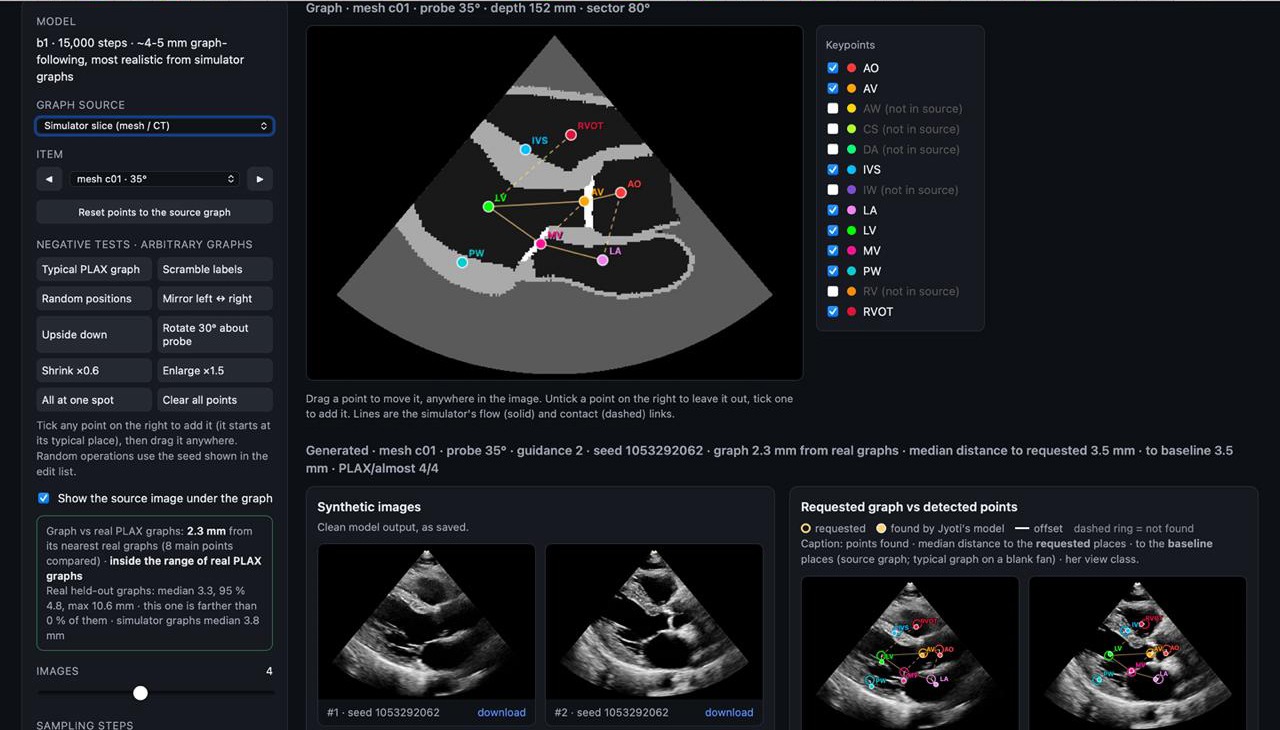
The MAISys Lab is developing interactive tools that include clinical scanning simulators and videos of ophthalmic surgeries. These systems are designed to allow different aspects of a procedure to be modified through simple user interactions or prompts.
Instead of relying exclusively on imagination or access to a live procedure, learners can explore variations, observe changes and develop a clearer understanding of complex clinical processes in a simulated environment.
The long-term objective is to create more interactive and accessible learning experiences that complement conventional medical education and practical training.
A Research Approach Connecting AI with Real-World Healthcare Needs
The three research directions address different stages of the healthcare ecosystem: acquiring medical images, extracting meaningful information from them, and preparing future healthcare professionals to understand and perform clinical procedures.
AI-guided robotics seeks to support image acquisition; computational analysis aims to make the interpretation of medical scans more efficient; and interactive simulation offers new possibilities for clinical learning. Their common thread is the application of computing and intelligent technologies to challenges that healthcare professionals encounter in practice.
Commenting on the broader vision of the research, Dr. Deepak Mishra, Associate Professor, Department of Computer Science and Engineering, IIT Jodhpur, said:
“Artificial Intelligence can make a meaningful difference in healthcare when it is designed around the real needs of doctors, patients and medical learners. At the Medical AI Systems Lab, our research brings together AI, robotics and computational methods to address challenges ranging from the acquisition of cardiac ultrasound images to the analysis of medical scans and the simulation of clinical procedures. Our aim is to develop technologies that can support healthcare professionals, improve the efficiency of medical workflows and create more interactive learning opportunities for future healthcare professionals. The ultimate goal is to ensure that technological innovation translates into meaningful support for medical practice and patient care.”
Advancing Technology for Better Healthcare and Medical Learning
Through the Medical AI Systems Lab, IIT Jodhpur is exploring how advances in computer science can contribute to healthcare beyond the conventional boundaries of computing research. By connecting intelligent algorithms and robotic systems with medical imaging and clinical education, the research aims to develop practical tools for healthcare professionals and learners.
The work also highlights the importance of interdisciplinary collaboration, bringing together technological innovation and domain expertise to address complex societal needs. Further development, testing and clinical validation will be important in determining how these technologies can be translated into practical healthcare applications.
As Artificial Intelligence continues to create new possibilities across scientific and professional fields, research initiatives such as these reflect IIT Jodhpur’s efforts to explore technology-driven solutions for real-world challenges.
(1)_20261014171530_57050d.jpeg)
_20261014171621_585e7b.jpeg)
0000000
(Release ID: 2323365)
Visitor Counter : 8