Posted On:
04 NOV 2026 6:11PM by PIB Delhi
Civil Aviation in India and the Need for New Rules
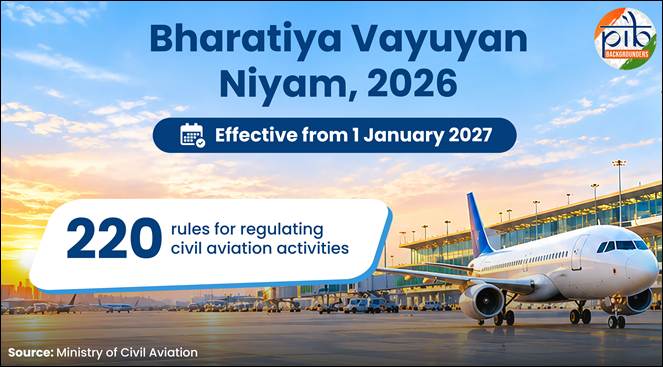
India is among the fastest-growing civil aviation markets in the world, with air travel increasingly connecting major cities, smaller towns and remote regions. The expansion of India’s aviation network is reflected in the rise in operational airports from 74 in 2014 to 166 as of October 2026. As the sector grows, its regulatory framework must keep pace with developments in aircraft technology, operations and financing, keeping a safety-focused approach at the pivot. Such growth needs a clear, modern and safety-focused legal framework. The Bharatiya Vayuyan Adhiniyam, 2024 provides the legislative basis for this modernization. Under it, the Government notified the Bharatiya Vayuyan Niyam, 2026, to replace the Aircraft Rules, 1937, which served as the principal rulebook for decades. Coming into force on 1 January 2027, the new Rules retain essential safety requirements while addressing developments in the aviation sector.
Among the notable provisions is a more defined framework for aircraft design and certification, including acceptance of designs and authorisation for component manufacture, strengthening India’s position as a State of Design. The Rules also cover fractional ownership, allowing an aircraft to be jointly owned while placing its operation and maintenance under clearly identified responsibility. Together with the Protection of Interests in Aircraft Objects Act, 2025, which implements the Cape Town Convention framework in India for aircraft leasing, the Irrevocable De-registration and Export Request Authorisation (IDERA) mechanism provides a time-bound process for deregistration and facilitates export of eligible aircraft. Over time, this may help reduce the cost of aircraft acquisition and leasing costs and ease pressure on airfares. The Rules seek to strike a balance between the commercial flexibility of airlines, ease of doing business and the protection of passenger interests. They strengthen passenger-centric safeguards by promoting greater transparency in airfares and associated charges, while enabling the Central Government to take appropriate measures in extraordinary circumstances.
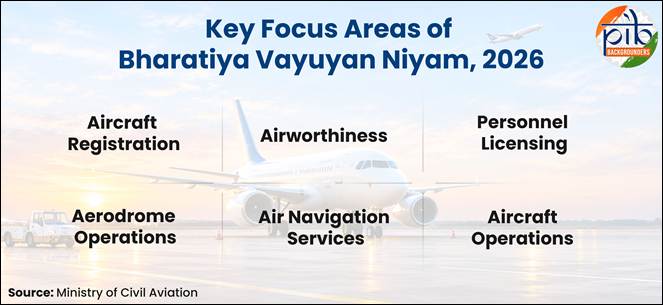
The Bharatiya Vayuyan Niyam, 2026 comprises 220 rules organized into eight chapters and six schedules. These cover aircraft registration, airworthiness, personnel licensing, aerodrome operations, air navigation services and aircraft operations. They further lay down requirements for regulatory oversight, safety management, enforcement and penalties. These rules replace the Aircraft Rules, 1937, and Part IX of the Aircraft Rules, 1920. They also repeal the Radio Telephone Operator (Restricted) Certificate and Licence Rules, 2025, subject to specified savings provisions.
Key Provisions of the Bharatiya Vayuyan Niyam, 2026
The Rules cover civil aviation from aircraft design and crew licensing to airports and daily flight operations. The key provisions are as follows:
General Safety and Public Conduct
The rules establish requirements governing aircraft use, registration, identification and safe operation.
- Aircraft Registration: Aircraft must be registered and display prescribed nationality and registration marks.
- Aircraft Documentation: Aircraft must carry a valid certificate of registration, certificate of airworthiness, operational and other prescribed documents onboard.
- Restricted Articles: The carriage of arms, ammunition, explosives and military stores requires prescribed permissions.
- Restricted and Prohibited Areas: Aircraft operations in designated areas are regulated.
- Photography and Videography: Photography at aerodromes and from aircraft in flight requires prescribed permissions.
- Flight Safety: Requirements cover safe flight operations, dangerous flying, emergency situations, aircraft in distress and compliance with prescribed aviation rules.
- Aircraft Security: Provisions address assault and interference with crew members, unlawful acts and conduct endangering aircraft safety.
- Other Operational Restrictions: Rules cover aircraft fuelling, dropping objects, parachuting, transportation of animals and other regulated activities. The rules also address noise-related restrictions, including the prohibition of civil aircraft operations generating sonic booms over India.
Aircraft Design, Manufacturing and Airworthiness
The Rules provide for the design and certification of aircraft and aeronautical products, including those designed in India, alongside requirements for manufacturing, airworthiness and maintenance.
- Type Certification: DGCA may issue type certificates for aircraft, engines and propellers where India is the State of design. It may also validate or accept foreign type certificates, subject to prescribed conditions.
- Airworthiness Directives: DGCA may issue directives when an unsafe condition exists and is likely to affect other products of the same type design. Draft directives are generally published on the DGCA website for 30 days to invite objections and suggestions, subject to specified exceptions.
- Indian Technical Standard Orders: Aircraft components not covered under Rules 27–33 must comply with technical standards specified by DGCA.
- Component Design and Manufacturing: DGCA may authorise the design and manufacture of aircraft components that meet prescribed airworthiness requirements.
- Airworthiness Certification: Provisions cover certificates of airworthiness, special certificates of airworthiness and airworthiness review certificates.
- Noise Certification: DGCA may issue aircraft noise certificates in accordance with prescribed requirements.
- Inspection and Maintenance: Provisions regulate aircraft inspections, periodic overhauls, modifications, repairs and maintenance certification.
- Maintenance Records: Aircraft, engine, propeller and other prescribed logbooks and logs must be maintained.
- Approved Organisations: DGCA may approve organisations engaged in aircraft design, manufacturing, maintenance and related activities, subject to prescribed requirements and oversight.
- Foreign Organisations: DGCA may accept foreign-approved organisations for aircraft, engine and component maintenance, subject to specified conditions.
The rules also prescribe requirements for aircraft equipment, radio apparatus, weight and balance, defective components and maintenance certification.
Aircraft Registration and Identification
The rules establish requirements for aircraft registration, identification, ownership changes and maintenance of registration records.
- Registration Categories: Aircraft may be registered under Categories A or B, based on prescribed ownership, citizenship, business registration and leasing criteria.
- Registration Certificates: Provisions cover applications and issuance of registration certificates, including temporary certificates for aircraft imported into India by air.
- Change of Ownership: Changes in aircraft ownership or lessor must be reported immediately. Further flying is restricted until registration requirements are fulfilled, unless DGCA grants written permission.
- Cancellation and Deregistration: Registration may be cancelled under specified conditions. Eligible applications from IDERA holders for cancellation must be processed within five working days, subject to prescribed requirements.
- Export and Aircraft Register: Provisions facilitate the export of aircraft following specified deregistration. DGCA maintains a register of Indian-registered aircraft, available for public inspection under prescribed conditions.
- Registration Marks: Aircraft must display the nationality mark “VT”, followed by a hyphen and three assigned capital letters. Registration marks may also be reserved for prescribed periods.
- State Marks and National Flag: Non-State aircraft cannot display marks reserved for State aircraft. National flags may be displayed in accordance with the Flag Code of India.
- Mode-S Address: DGCA may issue a Mode-S address for aircraft equipped with a Mode-S transponder and registered or proposed for registration in India, subject to prescribed requirements.
The rules also address aircraft registration and deregistration under applicable international aviation arrangements.
Personnel Licensing and Qualifications
The rules specify 23 categories of licences, ratings and certificates. They prescribe qualifications, medical fitness, training, experience and competency requirements for aviation personnel. The key provisions cover four personnel groups:
- Pilots and Flight Engineers
- Licensing requirements for student, private, commercial and airline transport pilots, along with flight engineers and flight navigators.
- Minimum age and educational qualifications.
- Medical fitness standards and periodic assessments.
- Flying experience, examinations and competency assessments.
- Aircraft ratings, licence validity and renewal.
- Validation of foreign licences.
- Flight crew logbooks and recording of flight time.
- Aircraft Maintenance Engineers
- Licensing, qualification and authorisation requirements.
- Validation of foreign aircraft maintenance engineer licences.
- Maintenance personnel logbooks and experience records.
- Air Traffic Controllers
- Licensing and unit-specific rating requirements.
- Training, experience and competency assessments.
- Medical fitness and periodic evaluations.
- Licence validity, revalidation and renewal.
- Maximum age of 60 years for exercising specified licence and rating privileges.
- Maintenance of experience records and competency standards.
- Radio-Telephone Operators
- Requirements for operating aircraft radio-telephone equipment.
- Eligibility, examinations and licensing for restricted radio-telephone operations.
- Recognition and renewal of applicable certificates and licences.
The First Schedule of the rules specifies aircraft personnel licensing requirements. The Second Schedule prescribes licensing and qualification requirements for air traffic services personnel.
Cabin Crew Requirements
Aircraft registered in India and operated for public transport of passengers must carry the prescribed number of cabin crew, based on seating capacity. If the manufacturer specifies a higher number, that number must be carried. Crew must complete approved safety training and refresher courses, and no member may serve on more than three aircraft types. The Rules prescribe a minimum of one cabin crew member for aeroplanes with 10–50 seats and helicopters with 20–50 seats, and two cabin crew members for aircraft with more than 50 seats, with one additional member for every 50 seats or part thereof beyond 99 seats.
Aerodromes and Ground Infrastructure
The rules prescribe requirements for aerodrome facilities, safety and operational management. Key provisions include:
- Lighting Safety: Aeronautical lights require approval. Potentially misleading lights are regulated within five nautical miles of aerodromes. Laser use within ten nautical miles requires written permission from the aerodrome operator.
- Aerodrome Licensing: Aerodromes may be licensed for public or private use. Eligible applicants include Indian citizens, qualifying companies, government entities, registered societies and trusts.
- Aerodrome Manual: Licensees must maintain an aerodrome manual and keep the aerodrome fit for safe aircraft operations.
- Changes to Facilities: Alterations to landing areas, buildings or structures affecting aircraft safety require prior approval from DGCA.
- Inspection and Access: DGCA-authorised personnel have unrestricted access to inspect aerodrome facilities, equipment, records and safety management systems.
- Charges and Fees: Aerodrome tariffs are regulated, with equal treatment for Indian aircraft and aircraft of other contracting States. Passenger service fees and user development fees may be levied at prescribed rates.
- Entry and Movement Areas: Entry into designated terminal areas requires an admission ticket or authorised pass, subject to specified exemptions. Access to movement areas requires permission.
- Wildlife Hazard Control: Slaughter, garbage dumping and wildlife-attracting activities are restricted within ten kilometres of aerodromes, subject to specified exceptions.
- Ground Handling: Airlines may engage eligible ground handling providers, subject to prescribed approvals, security clearance and safety requirements.
Air Navigation Services
The rules establish a regulatory framework for air navigation services, covering air traffic management and associated technical services. Key provisions include:
- Air Traffic Management: Provision of safe, efficient and continuous air traffic services, airspace management and duty-time and minimum-rest requirements for air traffic controllers.
- Communications, Navigation and Surveillance: Certification and maintenance of specified facilities, along with recording of voice communications, messages, signals and data.
- Meteorological Services: Provision of aviation weather information, with records retained for at least 30 days and made available for inquiries and investigations.
- Instrument Flight Procedure Design: Instrument flight procedures must follow DGCA-approved design criteria. Their publication, modification or withdrawal requires prior DGCA approval.
- Search and Rescue: Agreements with neighbouring States for coordinated search and rescue operations, along with assistance between rescue coordination centres.
The Third Schedule specifies requirements for aeronautical telecommunication facilities and their associated manuals.
Aircraft Operations
The rules prescribe operational requirements for scheduled and non-scheduled air transport services, private aircraft and specialised aviation activities. Key provisions include:
- Flight Permits and Passports: Indian-registered aircraft require prescribed permits for international flights. Persons entering India by aircraft must carry valid passports, as required under applicable immigration rules.
- Crew Fatigue and Fitness: Provisions cover flight and duty-time limits, minimum rest periods and fatigue management. Crew members are prohibited from consuming alcohol or specified intoxicants within 12 hours before a flight or during flight duties.
- On-Board Safety and Conduct: The pilot-in-command has final authority over the aircraft. Alcohol consumption is prohibited on domestic air transport services. Smoking and certain on-board activities are subject to prescribed restrictions.
- Air Operator Certificates: Scheduled air transport services require prescribed permissions and certification. Requirements include applicable ownership, control, safety and security conditions.
- Charter, Aerial Work and Foreign Airlines: Non-scheduled air transport and aerial work require prescribed permits or authorisations. Foreign airlines must comply with applicable permissions, agreements and operational conditions.
- Airfares and Tariffs: Airlines must establish tariffs based on factors including operating costs and publish them digitally. Scheduled operators must submit tariffs to DGCA for monitoring. Booking websites and tickets must disclose the total payable amount and a breakdown of fares, taxes, fees and other charges. In extraordinary situations, the Central Government may issue proportionate, time-bound directions in the public interest.
- Aircraft Ownership and Imports: Provisions regulate aircraft imports, fractional ownership arrangements and private aircraft operations. Private aircraft cannot be used for hire or reward except as permitted under the rules. The Rules recognise fractional ownership, allowing shared investment in an aircraft under arrangements that identify responsibility for its operation and maintenance.
- Engineering, Inspection and Manuals: Aircraft owners and operators must comply with applicable maintenance, inspection, record-keeping and manual requirements.
- Regional Air Connectivity Fund: The Central Government may establish a fund to provide viability gap funding for regional air connectivity. It may impose a levy on domestic scheduled flights, with possible contributions from State Governments and other specified sources.
- Fees and Levies: Provisions enable the collection of aviation security fees and prescribe fees for regulatory permits, authorisations, approvals and other services.
Regulatory Oversight, Surveillance and Enforcement
The rules establish requirements for regulatory oversight, aviation safety management, compliance and enforcement. Key provisions include:
- International Standards: DGCA may prescribe standards and procedures consistent with the Chicago Convention and its Annexes, subject to the Act and rules.
- State Safety Programme: DGCA must formulate and oversee an integrated programme of requirements and activities to improve aviation safety.
- Regulatory Directions: DGCA may issue directions through Notices to Airmen (NOTAMs), Aeronautical Information Publications, Aeronautical Information Circulars and Civil Aviation Requirements (CARs).
- Stakeholder Consultation: Draft CARs must ordinarily be published on the DGCA website for 30 days to invite objections and suggestions. The consultation period may be shortened or waived in the public interest through a written order.
- Safety Management Systems: Specified aircraft operators, aerodromes, design and manufacturing organisations, maintenance organisations, training organisations and air traffic service providers must maintain safety management systems.
- Safety Reporting: DGCA must establish mandatory and voluntary safety reporting systems. The voluntary system must be non-punitive and protect the confidentiality of persons submitting reports.
- Inspection and Access: DGCA-authorised personnel may inspect aircraft and aviation facilities, including through unannounced inspections, with prescribed access rights.
- Integrity of Records: Fraudulent logbook entries and lending of licences or approvals are prohibited. Prescribed documents must be produced for inspection when required.
- Suspension and Restrictions: Licences, certificates, authorisations and approvals may be suspended, cancelled or restricted under specified conditions, including non-compliance and unresolved safety concerns.
- Delegation and Exemptions: The Central Government may delegate specified powers and grant exemptions in accordance with the Bharatiya Vayuyan Adhiniyam, 2024.
Offences, Penalties and Appeals
The Rules reflect the Government’s continued emphasis on ease of doing business and a more proportionate, compliance-oriented regulatory framework, while maintaining stringent aviation safety standards. They prescribe 21 punishable offences attracting imprisonment of up to two years, a fine of up to ₹1 crore, or both, and 18 compoundable offences, reflecting a calibrated approach towards decriminalisation of regulatory contraventions. The Rules also introduce a graded penalty structure comprising ten severity levels, with monetary penalties ranging from ₹10,000 to ₹1 crore, depending on the nature of the contravention and the category and size of the offender. Further, provisions for appeals, opportunities for hearing and reasoned orders strengthen procedural fairness and transparency, reinforcing the Government’s commitment to simplifying regulatory compliance without compromising safety and accountability.
Advancing Safety and Standards in Indian Aviation
The Bharatiya Vayuyan Niyam, 2026 bring together key aspects of civil aviation within an updated framework, covering aircraft airworthiness and maintenance, personnel qualifications, aerodrome safety, air navigation services and flight operations. Provisions relating to safety management systems, fatigue management, mandatory and voluntary safety reporting, and regulatory oversight strengthen the mechanisms for identifying and managing operational risks. The Rules also provide for graded penalties, enforcement measures and appeals, promoting accountability and fair regulatory processes. Together, these provisions seek to support safe and reliable air travel, strengthen passenger confidence and facilitate the continued expansion of India's civil aviation sector.
References
Ministry of Civil Aviation
Bharatiya Vayuyan Niyam, 2026: A Modern Rulebook for India’s Skies
*****
PIB Research