Ministry of Micro,Small & Medium Enterprises
Posted On:
04 NOV 2026 6:17PM by PIB Agartala
Agartala, 4 November 2026: Against the backdrop of dynamic global trade shifts, establishing dependable economic partnerships, diversifying export destinations, and strengthening cross-border supply chains have become vital national priorities. Free Trade Agreements (FTAs) serve as pivotal instruments for unlocking market access, attracting strategic investments, and deepening global value chain (GVC) integration. With India’s expansive network of trade pacts covering economies that account for nearly USD 60 trillion in collective GDP and two-thirds of international commerce, the operational focus has decisively moved from merely concluding trade negotiations to maximizing practical utilization on the ground.
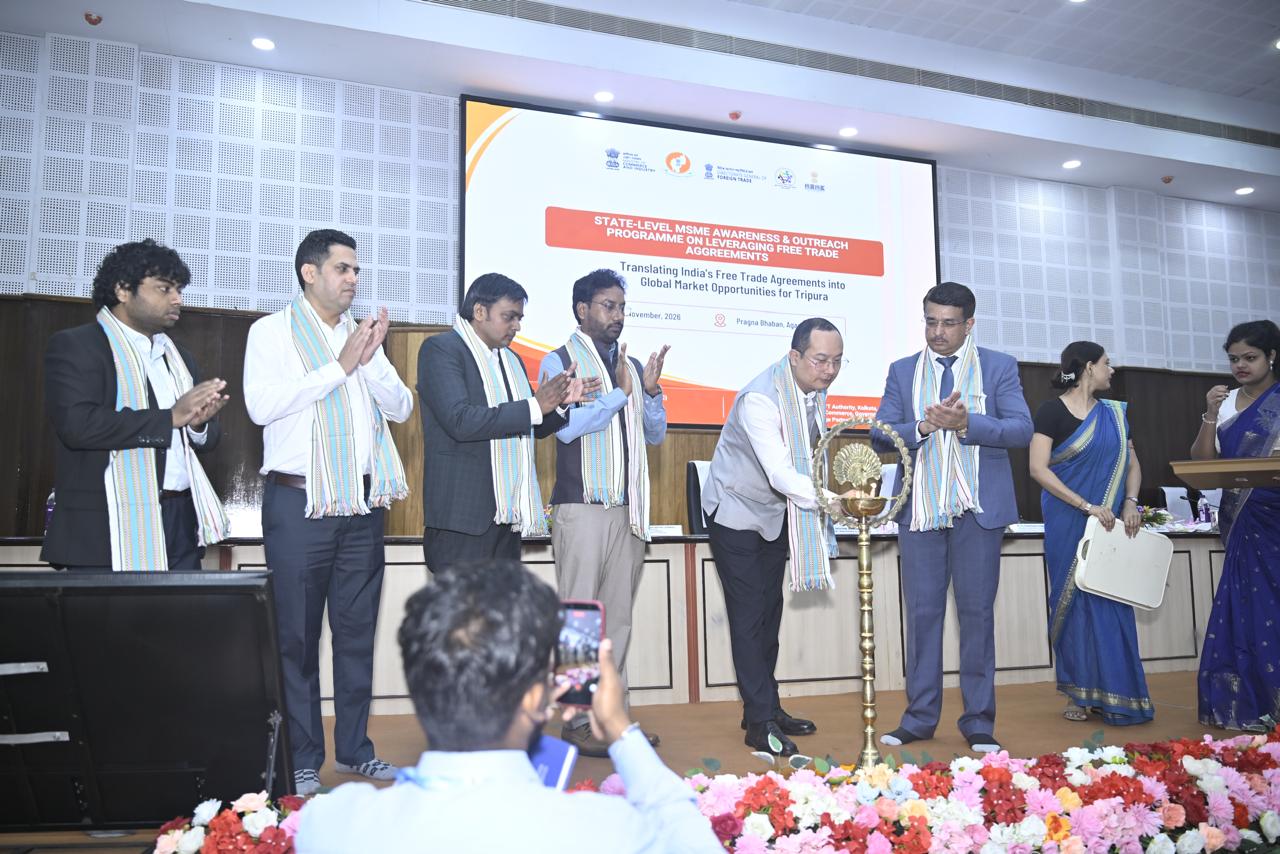
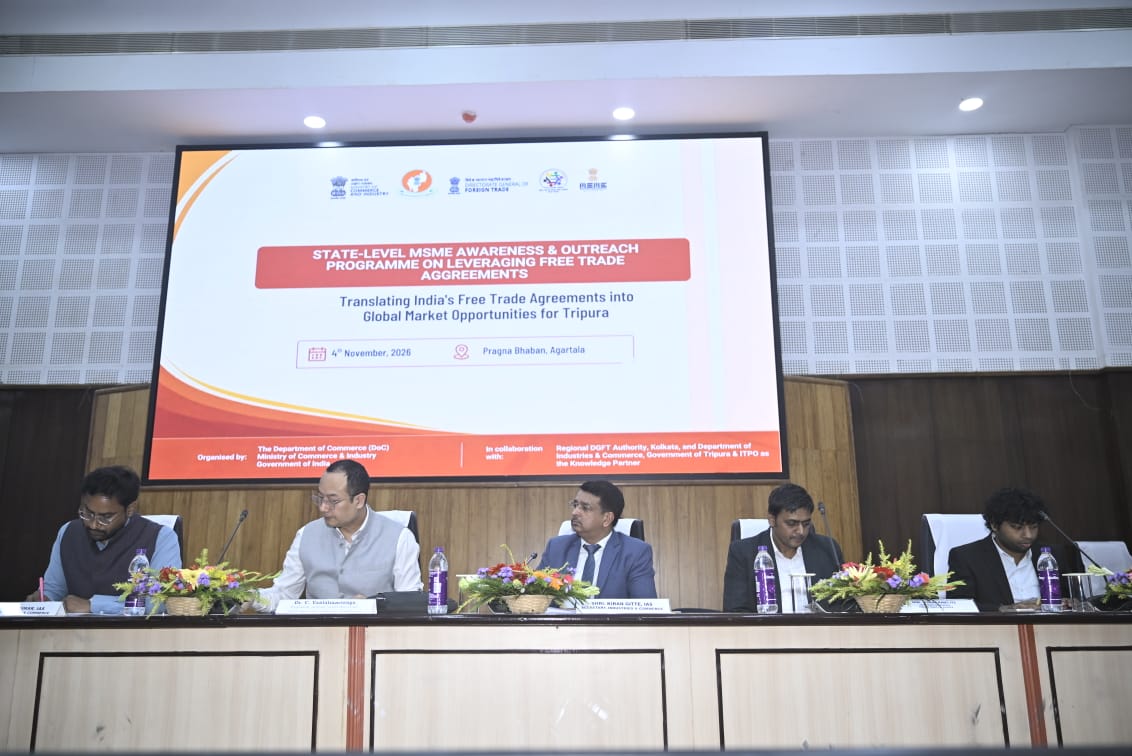
To translate these macro-economic opportunities into district-level realities, the Department of Commerce (DoC), Ministry of Commerce & Industry, Government of India, in collaboration with the Regional DGFT Authority, Kolkata, and the Department of Industries & Commerce, Government of Tripura—with ITPO as the Knowledge Partner—successfully convened a comprehensive State-Level Workshop on “Leveraging Free Trade Agreements (FTAs) – Outreach Programme” today at Pragna Bhavan, Agartala. The high-level outreach brought together central and state policymakers, sectoral specialists, export promotion councils, and local micro, small, and medium enterprises (MSMEs) to establish a coordinated institutional framework for export competitiveness.
Converting Market Access into Ground-Level Economic Dividends
Delivering the context-setting address as Chief Guest, Shri (Dr.) C. Vanlalramsanga, Economic Adviser / Joint Secretary, Department of Commerce, Government of India, emphasized that the ultimate benchmark of an FTA's success lies in converting tariff preferences into domestic industrial expansion, sustainable livelihoods, and widespread enterprise formalization.
“International trade is no longer the exclusive preserve of large conglomerates. A small farmer, a women-led producer group, a handicraft artisan, or a rural micro-enterprise can now directly participate in global markets under preferential trade regimes. The outreach mission is structured to ensure that FTA benefits reach every district, cluster, and aspiring entrepreneur across Tripura and the North Eastern Region.”
— Shri (Dr.) C. Vanlalramsanga, Economic Adviser / Joint Secretary, Department of Commerce, GoI
Shri (Dr.) C. Vanlalramsanga further observed that Tripura occupies a strategic geographic position as a natural economic bridge linking the North Eastern Region with Southeast Asian supply corridors. By effectively harmonizing FTA preferential provisions with the Act East Policy and multimodal transport networks, Tripura can emerge as a vital regional trade hub.
Strengthening MSMEs as the Backbone of Tripura’s Export Architecture
Addressing the workshop as Guest of Honour, Shri Kiran Gitte, IAS, Secretary, Industries & Commerce Department, Government of Tripura, delivered the keynote address underlining the crucial role of micro, small, and medium enterprises in sustaining the state's economic architecture. With approximately 2.1 lakh MSMEs employing nearly 2.95 lakh people across Tripura, local micro-enterprises represent an immense reservoir of productive capability.
Shri Kiran Gitte stressed that because Tripura has a relatively compact domestic consumer market, sustainable economic growth is inextricably linked to geographic expansion, aggressive value addition, and integration into export supply chains. He outlined the state’s proactive integration of FTA capacity-building with formalization initiatives under the Raising and Accelerating MSME Performance (RAMP) programme, Udyam registrations, and quality standardization schemes. Local producers were urged to target partner markets across the UAE, ASEAN, Australia, the United Kingdom, and the European Free Trade Association (EFTA) bloc by adopting international compliance standards and export-grade packaging.
Earlier, Shri (Dr.) Deepak Kumar, IAS, Director of Industries & Commerce, Government of Tripura, welcomed the gathering and articulated the state government’s resolve to build a streamlined, single-window facilitation ecosystem for emerging exporters. The inaugural session concluded with a formal Vote of Thanks delivered by the Additional Director of Industries & Commerce, Government of Tripura, acknowledging the collaborative synergy between central and state authorities.
Technical Deliberations: Districts as Export Hubs & The Export Promotion Mission
Providing foundational insights into the state's productive capacity, Shri (Dr.) P. B. Jamatia, Director of Agriculture, Government of Tripura, presented a detailed overview of the production potential and current status of agriculture in Tripura, emphasizing high-yield horticultural varieties and organic crop cultivation. Complementing this, Shri Anumoy Debbarma, Joint Director and Officer-in-Charge (MSME), Government of Tripura, outlined the production strengths and future trajectory of the manufacturing sectors, highlighting cluster-level interventions required to scale local micro and small units into export-ready entities.
Shri Vishnu Kant, ITS, Joint Director General of Foreign Trade, RA Kolkata, conducted a dedicated technical session on the 'Districts as Export Hubs' initiative. He outlined how identifying and nurturing district-specific product clusters enables decentralized export ecosystems, empowering local producers in every district of Tripura to tap into zero-duty and concessional tariff lines available under India's FTAs.
Elaborating on institutional trade mechanisms, Shri Manoj Singh, ITS, Assistant Director General of Foreign Trade, RA Kolkata, presented the operational blueprint of the Government of India's Export Promotion Mission. He explained that the mission is anchored on ten strategic interventions specifically designed to handhold exporters and maximize the practical utilization of FTAs. These interventions encompass dedicated end-to-end guidance for first-time and rural entrepreneurs, clear demystification of FTA tariff concessions and schedules, and rigorous capacity building on Rules of Origin and value-addition criteria. The initiative also focuses on streamlining digital compliance through the paperless e-CoO 2.0 electronic Certificate of Origin portal, bridging critical quality certification and sanitary/phytosanitary standards gaps, and encouraging export-grade packaging, branding, and value addition to command premium global pricing.
Furthermore, the interventions ensure the timely delivery of real-time trade and market intelligence to local clusters, institutionalize regular on-ground export clinics for grievance redressal and mentorship, facilitate access to affordable export credit and collateral-free trade finance, and drive the direct integration of MSMEs and artisans into global value chains and cross-border e-commerce networks. Shri Manoj Singh emphasized that these ten interventions collectively serve as an operational bridge, turning theoretical tariff concessions into concrete commercial shipments, lowering logistics overheads, and establishing sustainable international competitiveness for Tripura’s industrial ecosystem.
The technical modules were complemented by a live interactive demonstration of DGFT Headquarters' digital trade architecture via video conferencing, showcasing the Trade e-connect portal and digital trade facilitation modules designed to deliver faceless, user-friendly services to exporters.
Focus on Value Addition: “Local to Global – Brand Tripura”
A central theme of the deliberations was shifting Tripura's trade composition from raw commodity supply to high-value, branded manufactured products through specialized breakout tracks. In the multi-product track, representatives from the Federation of Indian Export Organisations (FIEO) guided participants on export competitiveness, quality certifications, global market penetration, and technology upgradation.
In the handloom, textile, and handicraft session, Shri Bhaskar Barua from the Export Promotion Council for Handicrafts (EPCH) outlined targeted strategies for product design adaptation, modern branding, export-grade packaging, and capitalizing on Geographical Indication (GI) products to forge direct linkages with international buyers.
The agriculture, plantation, and forest-based produce session witnessed comprehensive technical discussions featuring leading domain experts. Representatives from the Agricultural and Processed Food Products Export Development Authority (APEDA) addressed food safety standards, processing protocols, and market diversification for flagship produce such as the GI-tagged Queen Pineapple, scented lemons, and organic ginger and turmeric. Shri N. Sali, Joint Rubber Production Commissioner, Rubber Board, elaborated on value-added natural rubber production and technical quality enhancements. Shri Prasad Rao Vaddarapu, IFS, Conservator of Forests and Managing Director of Tripura Rehabilitation Plantations Corporation Limited (TRPCL), discussed sustainable forest produce and high-value commercialization of agarwood and resin extracts. Shri Rajesh Das, Managing Director, Tripura Tea Development Corporation (TTDC), outlined export avenues for specialty orthodox tea, while Shri Anil Debbarma, prominent Bamboo Industry Entrepreneur and Processor, shared ground-level insights into contemporary bamboo decor, furniture manufacturing, and cross-border supply chain integration.
Institutional Roadmap and Actionable Next Steps
In the valedictory session, Shri Vishnu Kant, ITS, Joint Director General of Foreign Trade, RA Kolkata, noted that extensive deliberations by participating EPCs and Commodity Boards had yielded concrete actionable recommendations. Emphasizing the vital importance of continuous handholding, he stressed that experienced exporters and expert bodies like Rubber Board, Tea Board, APEDA, and FIEO must actively mentor emerging entrepreneurs to help them capitalize on FTA benefits. Key priorities outlined include establishing an FTA Utilization Cell within the State Industries Department, organizing regular cluster-specific export clinics across district hubs, and conducting targeted capacity building on international standards and digital trade procedures.
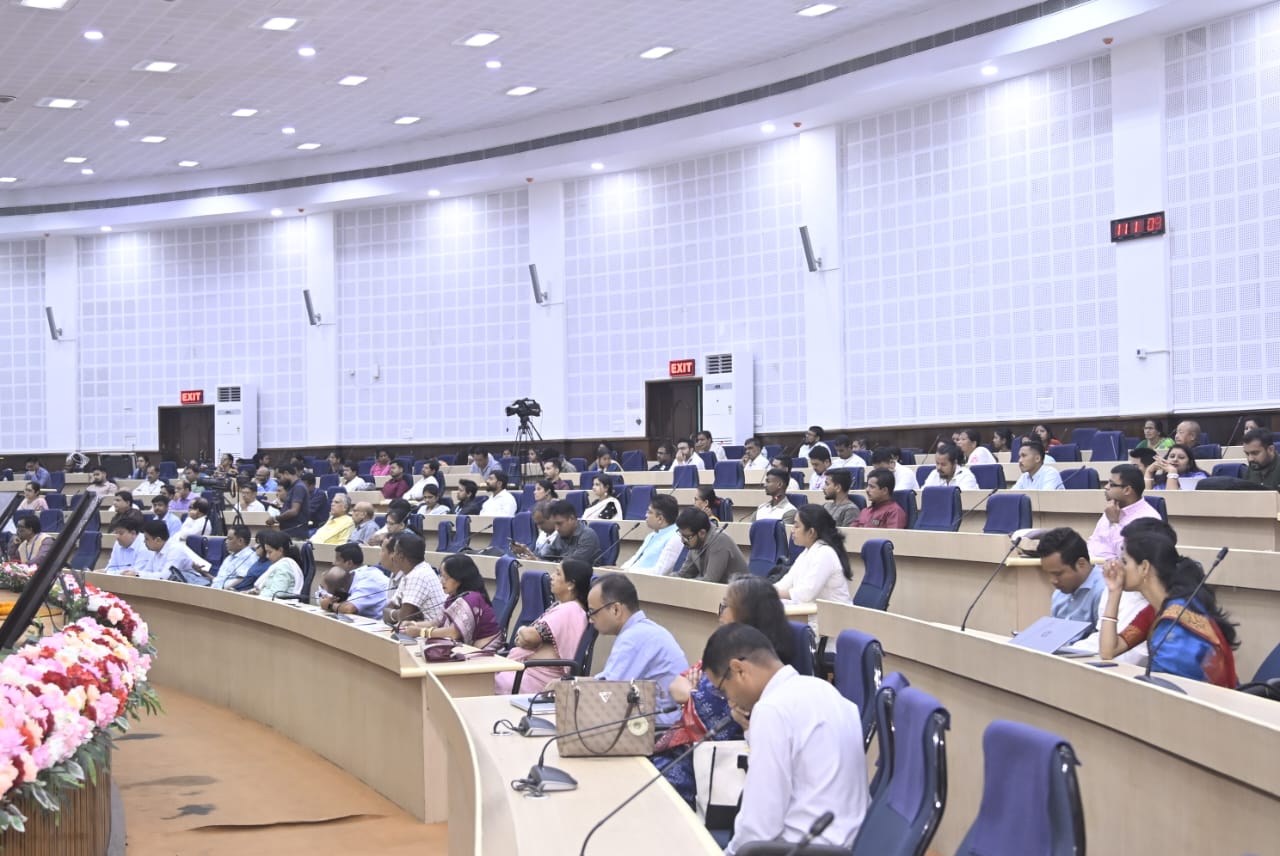
Shri Swapan Mitra, Joint Director, Department of Industries & Commerce, Government of Tripura, delivered the Closing Address, summarizing the workshop deliberations and thanking the central and state delegations, technical experts, and industry participants for their proactive engagement. The outreach programme witnessed an enthusiastic turnout of over a hundred local entrepreneurs, Farmer Producer Organisations (FPOs), industry associations, and administrative officials, marking a decisive milestone toward realizing the vision of 'Local to Global: Tripura to the World.'
***
PS/KMD