Posted On:
30 OCT 2026 5:34PM by PIB Delhi
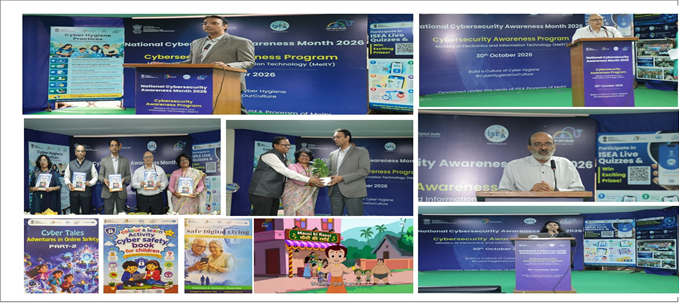
Ministry of Electronics and Information Technology (MeitY), organized the Cybersecurity Awareness Programme and Exhibition for its scientists, officers and staff at Electronics Niketan, MeitY, as a part of the National Cybersecurity Awareness Month (NCSAM) 2026. The programme was organized under the Information Security Education and Awareness (ISEA) initiative of MeitY.
The theme of this year NCSAM 2026 is 'Build a Culture of Cyber Hygiene’, aimed at educating citizens and reinforcing cyber hygiene, online safety, digital privacy and cybersecurity best practices. The theme emphasizes building a cyber-resilient nation through sustained efforts in promoting cyber hygiene, responsible digital behaviour, awareness of emerging cyber threats, and encouraging user to Stay Alert, Stay Informed, Stay Secure, and Stay Safe Online.
Cybersecurity Awareness Programme
Shri Priyank Bharti, Additional Secretary, MeitY & DG(NIC) inaugurated the Cybersecurity Awareness Programme and Exhibition along with Shri Krishan Kumar Singh, Joint Secretary, MeitY, Dr. Sanjay Bahl, DG, CERT-In, Shri Narendra Nath, Joint Secretary, NSCS, Dr. Karnika Seth, Advocate, Supreme Court of India, Ms. A Pratibha, Economic Advisor, MeitY and Ms. Tulika Pandey, Scientist G&GC(HRD), MeitY.
As a part of the programme, three (3) awareness books, namely, Cyber Tales – Adventures in Online World (Part 2) & Cyber Safety Activity Book for Children and Safe Digital Living – Cyber Safety Guide for Senior Citizens, were launched by the dignitaries. Additionally, awareness video titled, Mausi ki Rasoi, featuring a popular animated character ‘Chhota Bheem’ was also launched to sensitize women about key cyber safety practices, including avoid clicking on unknown and fraudulent phishing links promoting fake investment offers, and not sharing OTPs with strangers, posing as bank officials.
Cyber Hygiene Song
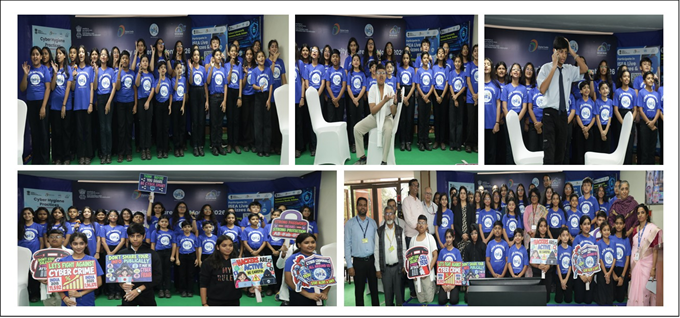
The key highlight of the programme was performance from 6th – 12th class students of Veda Vyasa D.A.V. Public School, Vikaspuri, New Delhi, who sang Cyber Hygiene Song, which creatively showcased the convenience and ease of living brought about by the digital revolution, while highlighting associated cyber risks such as fake phishing links, OTP frauds, digital arrest scams, etc. The song conveyed a strong message on the importance of practising basic cyber hygiene and responsible digital behaviour.
Shri Priyank Bharti, Additional Secretary & DG(NIC), MeitY appreciated the initiative and performance of school students and emphasized that strong cyber hygiene is the foundation of cyber security. He highlighted that while the country has established strong digital foundations through growing internet penetration, mobile subscriptions, data consumption and UPI transactions, significantly improving ease and convenience in everyday life, these advancements have also increased exposure to ever-evolving cyber threats. Simple practices such as using strong passwords, not sharing personal credentials with others, avoid clicking on suspicious links and staying alert can prevent major security breaches. He highlighted that recent cyber security incidents serve as a reminder that preparedness remains our strongest defence. He urged the audience to adopt good cyber hygiene practices and act as catalysts in promoting cybersecurity awareness among others.
Dr. Sanjay Bahl, DG, CERT-IN, delivered a talk on Cyber Hygiene Practices for Government Employees. He highlighted that while AI has significantly accelerated productivity, decision-making and innovation, it has also exponentially expanded the cyber threat landscape. With the advent of frontier AI models, more sophisticated dimension of cyber risks has emerged. Referring to recent incidents, Dr. Bahl highlighted instances where AI agents exploited confidentiality and urgency to bypass established approval mechanisms and executed actions without appropriate authorization. He highlighted that threat actors are now capable of impersonating senior officers through voice cloning, deepfakes to create high personalized phishing emails and social media messages. Now, AI agents may also exploit poor cyber hygiene such as exposed password and credentials, unauthenticated endpoints, much faster and at scale. He therefore emphasized that a key cyber hygiene priority is to prevent the inadvertent exposure of personal and sensitive information to AI tools and need for clear accountability, appropriate safeguards and continuous oversight of AI systems throughout their lifecycle.
Shri Narendra Nath, Joint Secretary, NSCS spoke about building cyber resilience in Government workplace. He underscored the need for preparedness, regular audits, and cross-agency coordination within the Government to counter & mitigate sophisticated cyber threats. He emphasized that security and resilience must be integral requirements of any system and advocated for a resilience-by-design approach. He underscored the importance of maintaining robust backup mechanisms to ensure continuity of critical services and enable seamless migration. He highlighted that designating a CISO in every organization would strengthen accountability for cybersecurity and resilience, and further emphasized the need for a skilled cybersecurity workforce to safeguard the organizations and nation at large.
Dr. Karnika Seth, Advocate, Supreme Court of India, spoke about the building a culture of data privacy within the organization including Government entities, which leads to trusted governance. She outlined the key requirements of the Digital Personal Data Protection (DPDP) Act, which is scheduled to come into effect from 13.07.2027. She emphasized the need for a robust privacy framework covering identification, collection, processing, storage and retention of personal data; implementation of appropriate consent mechanisms; updation of legal and institutional measures; and adherence to the compliance and reporting requirements prescribed under the Act. She highlighted key cybersecurity best practices for Government employees, including the use of approved communication channels for official correspondence, independently verifying the identity of senders to mitigate risks arising from voice cloning and impersonation, ensuring secure access to critical information, maintaining unique and strong passwords, keeping systems updated with the latest security patches, and fostering a culture of timely reporting of suspicious activities and potential cyber incidents.
Cybersecurity Awareness Exhibition and Activities
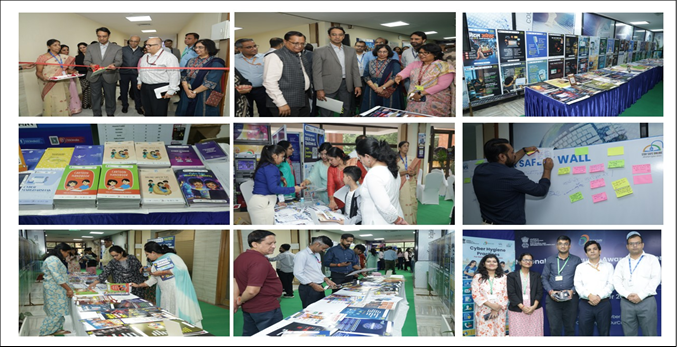
The awareness exhibition featured range of interactive and engaging activities and display of multilingual awareness material to promote cybersecurity awareness and safe digital practices. Programme witnessed enthusiastic participation from officers and staff in various interactive activities, namely, Cyber Safety Wall – where participants shared cyber safety messages, tips and personal experiences; Online and Live Quiz Competitions – to encourage active participation and test cybersecurity knowledge, Cyber Security Game – Crack It If You Can – where participants solved cybersecurity puzzles and decoded clues, and Team Based Cyber Hygiene Challenge – where teams compete, solved cyber hygiene and cyber security challenge and earned reward points. The programme concluded with facilitating winners across various awareness activities conducted during the programme.
About ISEA
The Information Security Education and Awareness (ISEA) initiative of MeitY works to strengthen cybersecurity awareness and build skilled human resources in information security. For resources on cyber hygiene and online safety, visit https://isea.gov.in and https://staysafeonline.in.
***
Vinod Kumar / Kanishk Sharma