Office of Principal Scientific Advisor to GoI
Posted On:
06 NOV 2026 6:39PM by PIB Delhi
The Office of the Principal Scientific Adviser to the Government of India, in collaboration with the Department for Promotion of Industry and Internal Trade (DPIIT), Ministry of Commerce and Industry, launched the API integration of DPIIT’s Startup India Portal with the Indian Science, Technology and Engineering Facilities Map (I-STEM) Portal on 6 November 2026, under the chairmanship of Prof. Ajay Kumar Sood, Principal Scientific Adviser (PSA). The initiative seeks to strengthen linkages between the startup ecosystem and the country’s research infrastructure by enabling DPIIT-recognised startups to discover and access existing scientific and testing facilities.
The launch was attended by Dr. (Mrs.) Parvinder Maini, Scientific Secretary, Office of the PSA; and Shri Ateesh Kumar Singh, Additional Secretary, DPIIT. Dr. Vishal Choudhary, Scientist-F; Dr. Santhosh Nair, Scientist-D; Dr. Shefali Uttam, Technical Staff, Office of the PSA; and members of the DPIIT and I-STEM teams were also present. Dr. Vishal Choudhary gave a brief presentation about the current status and impact of I-STEM.
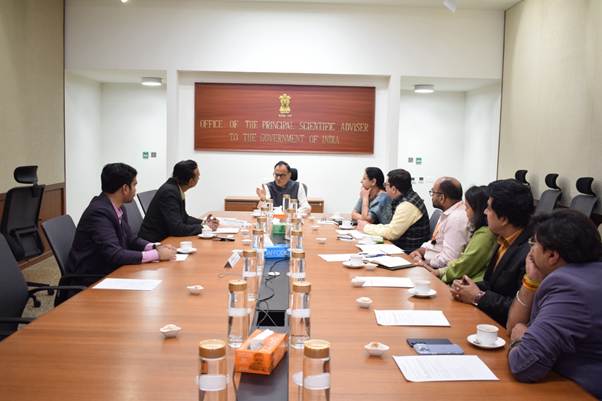
Speaking on the occasion, Prof. Sood highlighted that the integration represents an institutional convergence beyond a digital interface, connecting startup requirements with the scientific infrastructure and technical capabilities available across the country. He emphasised its potential to lower R&D costs, avoid duplication of capital-intensive facilities and enhance the utilisation of publicly funded infrastructure. He also underscored the importance of stronger industry–academia linkages and access to specialised facilities for deep-tech startups across technology development, prototyping, testing and validation.
Dr. Maini highlighted I-STEM’s role in promoting the sharing and optimal utilisation of scientific infrastructure across academic and research institutions. She noted that the integration would simplify the discovery of relevant facilities for DPIIT-recognised startups, helping address infrastructure-related barriers to technology development and innovation.
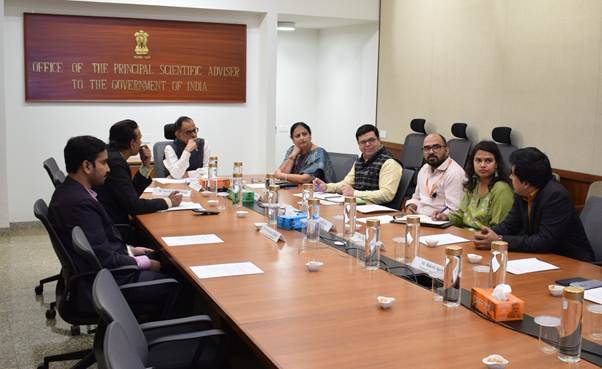
Shri Ateesh Kumar Singh highlighted the role of the integration in strengthening DPIIT’s efforts to build an enabling environment for startups, particularly in the deep-tech sector. He noted that the integration would provide DPIIT-recognised startups with improved visibility of specialised research, testing and prototyping facilities, enabling them to identify suitable infrastructure, reduce the need for independent capital investment in expensive equipment, and access institutional capabilities to support product development, testing and technology validation.
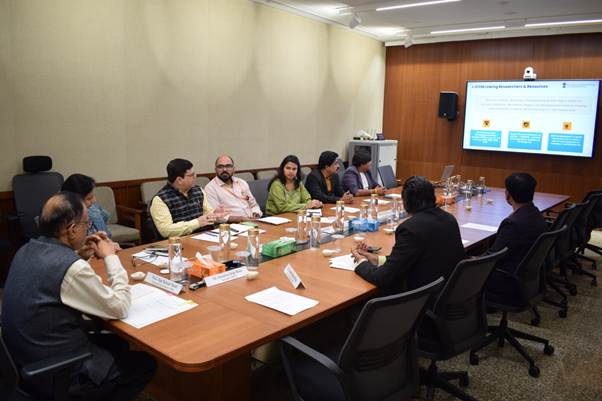
The integration will facilitate seamless, API-enabled interoperability between the Startup India Portal and I-STEM, with the proposed incorporation of Single Sign-On (SSO) functionality in subsequent phases, enabling DPIIT-recognised startups to directly access and leverage I-STEM's scientific infrastructure and research facilities through the Startup India Portal. Automated verification of DPIIT recognition status and seamless linking will streamline onboarding and facilitate the discovery of scientific equipment and research facilities. While the integration simplifies the process of identifying and requesting access to infrastructure, individual requests will continue to be evaluated and approved by the respective host institutions based on technical suitability, availability, applicable charges, safety requirements and institutional permissions. As of 6 November 2026, I-STEM listed 31,540 equipment items across 4,044 registered institutions, providing a substantial national resource base for researchers and innovators.
The initiative brings together the complementary institutional strengths of DPIIT and the Office of the PSA to build a more connected and resource-efficient innovation ecosystem. Wider onboarding of research facilities, regular updation of infrastructure information and sustained engagement with startups and host institutions will be essential to maximise its reach and facilitate the translation of scientific capabilities into technology-based solutions.
***
MJPS/SS/ST