Posted On:
10 NOV 2026 3:20PM by PIB Jaipur
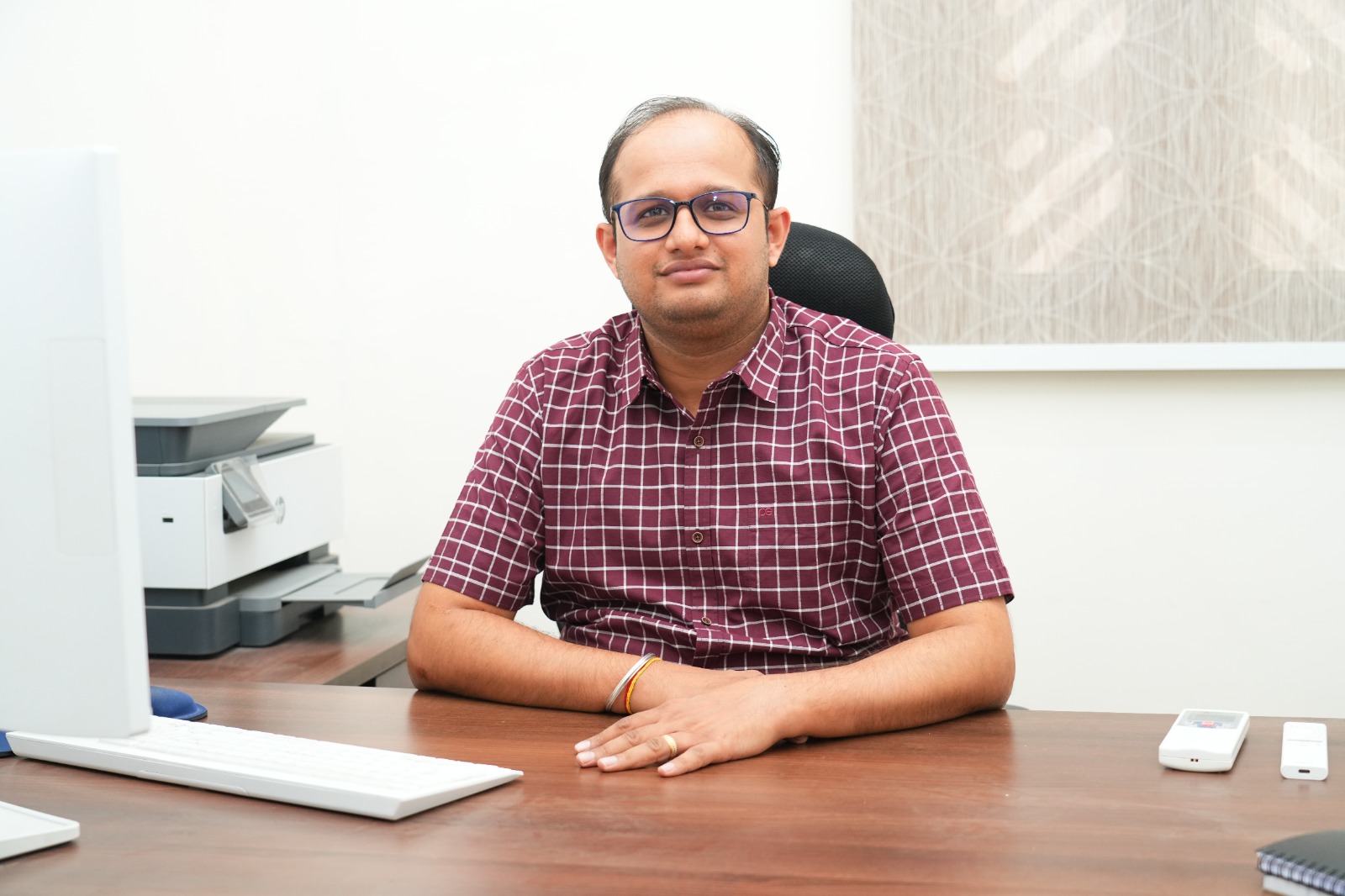
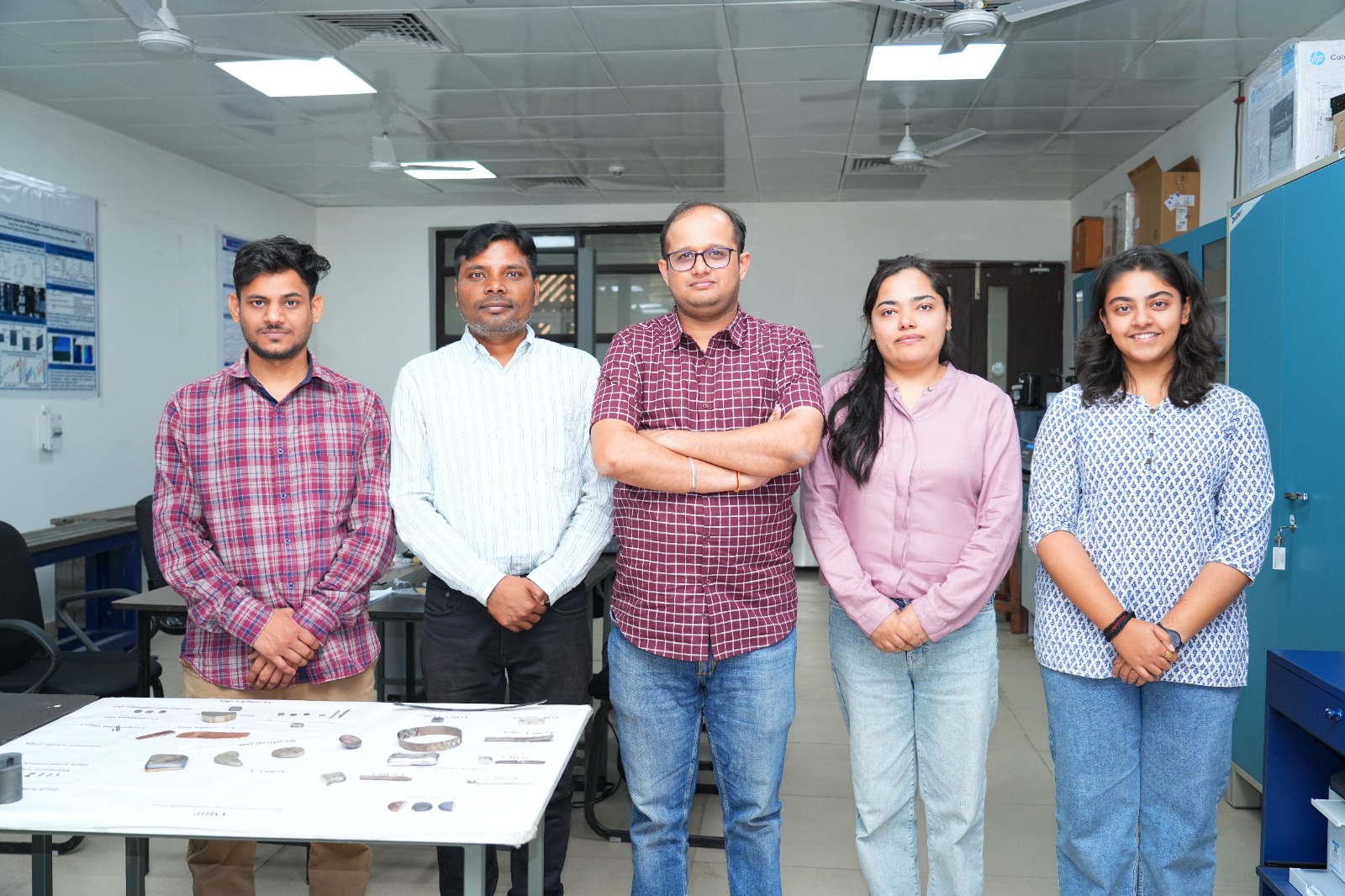
In a significant advancement in materials science with potential applications in India's aerospace, space exploration and defence sectors, a research team led by Dr. Saurabh Nene, Associate Professor, Department of Materials Engineering, Indian Institute of Technology Jodhpur (IIT Jodhpur), comprising Dr. Dharmendra Yadav (Postdoctoral Fellow), Dr. Akshit Dutta (Postdoctoral Fellow), and Mr. Aditya Balpande (PhD Research Scholar), has developed a new generation of Niobium (Nb)-rich Refractory Complex Lean Alloys (RCLAs). The newly developed alloys are engineered to withstand extreme oxidation environments while overcoming several longstanding limitations of conventional high-temperature refractory alloys, including the widely used Nb-10Hf-1Ti (wt.%) alloy, popularly known as C-103.
Published in the international journal Materials & Design (Elsevier), the research addresses a critical materials engineering challenge: developing alloys that can withstand extreme temperatures without becoming excessively heavy, brittle or vulnerable to oxidation. Such materials are essential for next-generation aircraft, hypersonic vehicles, rocket propulsion systems and other advanced engineering applications.
Combining Lightweight Design, Strength and Oxidation Resistance
Conventional refractory alloys are valued for their ability to retain structural integrity at extremely high temperatures. However, their widespread application is often constrained by three major challenges: high density, poor room-temperature formability and susceptibility to oxidation at elevated temperatures.
The research team at IIT Jodhpur has addressed these challenges through an innovative alloy-design approach called Complex Lean Alloy (CLA) design. Instead of relying on large quantities of expensive and heavy refractory elements, the approach uses a carefully optimised composition to achieve a combination of desirable material properties.
The newly developed Nb-rich RCLA has a density of approximately 7.6 g/cm³, substantially lower than that of many conventional refractory high-entropy alloys, which typically exceed 10–12 g/cm³. It is also lighter than conventional niobium-based alloys such as C-103 and WC3009, which generally have densities of approximately 9–10 g/cm³.
This reduction in density is particularly important for aerospace and defence applications, where lighter structural components can contribute to increased payload capacity, improved fuel efficiency and enhanced overall operational performance.
Exceptional Oxidation Resistance at 1,000°C
One of the most significant achievements of the research is the alloy's ability to resist oxidation at temperatures as high as 1,000°C.
During continuous exposure to 1,000°C for 24 hours, the newly developed alloy exhibited an oxidation mass gain of only 43.48 mg/cm², compared with 258 mg/cm² for conventional C-103 alloy under the same exposure conditions. This represents a substantial improvement in oxidation resistance.
The enhanced performance is attributed to the formation of a dense, adherent and protective oxide layer on the alloy's surface at elevated temperatures. This layer acts as a barrier against further oxygen penetration, thereby slowing down oxidation and improving the material's stability under extreme environmental conditions. The alloy also demonstrated no noticeable pesting during the reported oxidation assessment.
Strength and Formability Without Compromising Lightweight Performance
In addition to its low density and oxidation resistance, the newly developed alloy demonstrates promising mechanical properties at room temperature.
It exhibits a compressive strain of approximately 29%, along with a room-temperature yield strength of 1.13 GPa. These properties indicate its ability to withstand considerable compressive deformation while maintaining high strength.
The alloy also offers significant potential for reducing material costs, with an estimated cost advantage of approximately 11 times over conventional alloy systems considered in the study. This is achieved by minimising the use of critical and expensive minerals such as niobium, tungsten and tantalum, while completely eliminating hafnium, one of the rarest and most expensive constituents of conventional alloys such as C-103 and several refractory high-entropy alloys.
Dr. Saurabh Nene on the Research Achievement
Commenting on the research, Dr. Saurabh Nene, Associate Professor, Department of Materials Engineering, IIT Jodhpur, said:
"The central idea behind this research was to rethink how high-temperature refractory alloys are designed. Conventional materials often involve a trade-off between weight, mechanical formability and oxidation resistance. Through our Complex Lean Alloy design approach, we have demonstrated that these properties can be brought together in a single material system by carefully optimising its composition. Achieving significantly improved oxidation resistance at 1,000°C, along with lower density and promising room-temperature mechanical properties, is an encouraging outcome. Equally important, the entire research, from alloy conceptualisation and design to synthesis, processing and testing, has been carried out indigenously at IIT Jodhpur. This establishes a strong foundation for further development of advanced materials for India's strategic technological requirements."
Building Indigenous Capability in Advanced Alloy Manufacturing
Beyond the development of the alloy itself, the research establishes an important in-house capability at IIT Jodhpur for manufacturing and processing advanced refractory alloys.
Through specialized facilities for controlled melting, remelting, and casting, the Institute now produces defect-free, compositionally homogeneous refractory alloy coupons (20–200g). Because these alloys are highly susceptible to casting defects, manufacturing them reliably at this scale is a rare capability among Indian research facilities.
The ability to produce single-alloy ingots of up to 200 grams enables the preparation of standardised mechanical testing specimens, repeated oxidation experiments and further thermomechanical processing. This capability provides an important bridge between laboratory-scale material development and future industrial-scale production, ranging from a few kilograms to tonnes.
Importantly, the entire research programme, encompassing thermodynamic modelling, alloy composition design, synthesis, processing, microstructural characterisation and oxidation testing, was conceptualised and executed at IIT Jodhpur without foreign collaboration. This achievement reflects the Institute's growing indigenous research, advanced manufacturing and materials development capabilities.
Potential Applications in Aerospace, Space Exploration and Defence
The newly developed alloy system opens promising research directions for components that must withstand extreme thermal and mechanical conditions such as in Hypersonic and Re-entry Vehicles, Rocket Propulsion Systems and Advanced Defence Platforms.
While these applications represent potential future directions rather than deployed technologies, the research provides a promising materials-design pathway for developing components capable of operating under increasingly demanding conditions.
Next Steps: Advancing Towards High-Temperature Applications
Building on the encouraging results, the research team will undertake further investigations to evaluate the alloy's performance under more demanding operating conditions. Future work will include high-temperature mechanical testing, including yield strength, creep and fatigue studies, along with process upscaling to assess its suitability for larger-scale manufacturing and practical engineering applications.
Strengthening India's Self-Reliance in Strategic Materials
Advanced materials are fundamental to technological progress in aerospace, defence, energy and space exploration. Developing the ability to design, manufacture and characterise such materials within the country is equally important for strengthening India's strategic research and manufacturing ecosystem.
Through this research, IIT Jodhpur demonstrates how fundamental materials science, indigenous manufacturing capabilities and application-oriented engineering can converge to address complex technological challenges. The work represents a promising step towards developing lighter, stronger and more oxidation-resistant refractory alloys for the advanced technologies of tomorrow.
About IIT Jodhpur
The Indian Institute of Technology Jodhpur is an Institute of National Importance established by the Government of India. Located in Rajasthan, the Institute is committed to excellence in education, research, innovation and entrepreneurship. Through interdisciplinary research, advanced technological development and strong industry engagement, IIT Jodhpur works towards addressing emerging national and global challenges in science, engineering and technology.
Research Publication:
Journal: Materials & Design (Elsevier)
Research Article: https://www.sciencedirect.com/science/article/pii/S026412752601909X
000000