Posted On:
17 NOV 2026 9:29PM by PIB Delhi
Union Minister for Agriculture and Farmers’ Welfare, and Rural Development, Shri Shivraj Singh Chouhan today interacted directly with farmers and agricultural scientists at a programme organised at Krishi Vigyan Kendra (KVK), Samrala, in Ludhiana, Punjab, under the nationwide ‘Khet Bachao Abhiyan’, being conducted from 22 October to 30 November 2026 with the resolve of ‘Healthy Soil, Prosperous Farmers’. Paying tribute to the land of Punjab and acknowledging the innovations developed by Punjab Agricultural University (PAU), the Union Minister discussed several important aspects of agricultural development, including integrated farming, crop diversification, soil health and stubble management. He also outlined key initiatives and forthcoming measures by the central government to help farmers obtain fair prices for their produce. Emphasising the need to make agriculture more sustainable and profitable, he said that policies and programmes must be shaped by understanding the actual needs of farmers and the challenges they face in their fields. The interaction focused on practical ways to improve farm incomes, make better use of available resources and protect the long-term health of agricultural land.
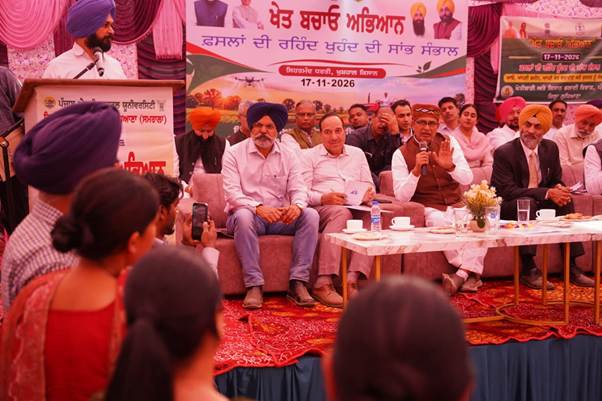
At the beginning of the programme, Union Minister Shri Shivraj Singh Chouhan paid his respects to Shri Guru Nanak Dev Ji and said that the path shown by Guru Sahib through the teachings of ‘Kirat Karo, Naam Japo and Vand Chhako’ – “work honestly, remember the divine and share with others” – had the power to make the entire world a better place. He said that he had not come to the programme with the arrogance of a ministerial position, but as a farmer and as ‘Mama’, to serve the farming community. Shri Chouhan emphasised that agricultural policies and schemes should not be formulated by sitting in closed rooms in Delhi. Instead, those responsible for making decisions must go to the fields, sit with farmers and understand their experiences, requirements and difficulties first-hand. He said that farmers should be at the centre of agricultural policymaking, and that their voices and practical knowledge must guide decisions that affect their livelihoods. According to him, meaningful agricultural planning can only emerge through direct engagement with those who work on the land.
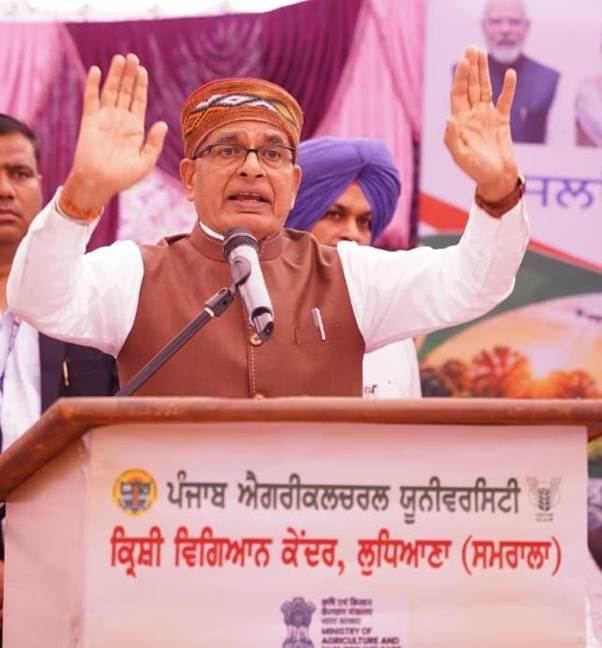
Saluting the hard work and contribution of Punjab’s farmers, Shri Chouhan recalled that there was a time when India was compelled to import red wheat from other countries to meet its food requirements. However, following the Green Revolution, which began in Punjab, the country’s foodgrain reserves had grown substantially, and India was now in a position to meet its food requirements with its own production. He said that India had overtaken China to become the world’s largest producer of rice and was the second-largest producer of wheat. He credited the farmers of Punjab for playing a major role in this transformation and for helping strengthen the country’s food security through their dedication and hard work. Referring to Prime Minister Shri Narendra Modi’s visit to Manila, he also mentioned that the Prime Minister had paid obeisance at the Khalsa Diwan Gurdwara there and laid the foundation stone for its reconstruction along with members of the sangat. Shri Chouhan said that such gestures reflected the importance of the Sikh community's traditions and its contribution to society.
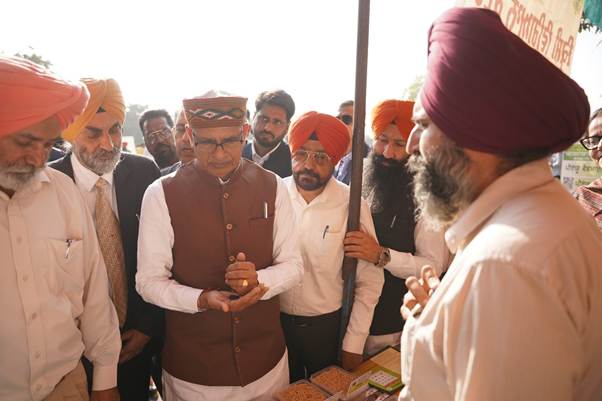
Expressing concern over the declining size of agricultural landholdings, Union Minister Shri Chouhan said that India did not have the kind of large farms, extending over thousands of hectares, that were common in some other countries. It was therefore essential to develop farming models that could generate higher returns from smaller areas of land. He praised the three-crop model developed by Punjab Agricultural University, under which farmers could cultivate three crops on just one acre and earn a net annual income of up to ₹1.5 lakh. He described the model as an important example of how small landholdings could be used more productively and profitably. He also instructed KVK Samrala to take steps to popularise the model across the region so that more farmers could learn about it and adopt it according to their own requirements. He said that such practical models could help address the challenges arising from shrinking landholdings while improving the economic prospects of small farmers.
Shri Chouhan said that continued dependence on the wheat-paddy cropping cycle was gradually reducing the fertility of agricultural land. He urged farmers to diversify their crops and move towards integrated farming by combining foodgrain cultivation with activities such as growing fruits, flowers and vegetables, cultivating medicinal plants, animal husbandry, goat rearing and fish farming. He explained that farmers should not rely exclusively on wheat and paddy, but should explore other suitable agricultural and allied activities based on their land, resources and local conditions. By combining different crops and activities, farmers could make better use of their land, create additional sources of income and reduce their dependence on a single cropping pattern. He stressed that crop diversification and integrated farming were important not only for improving farmers’ earnings but also for maintaining the long-term productivity and health of the soil.
Addressing the deteriorating condition of soil and the indiscriminate use of fertilisers, Shri Chouhan said that applying excessive quantities of fertilisers and pesticides without first testing the soil was harming the natural ecosystem of agricultural land. Such practices were destroying beneficial insects and earthworms, which play an important role in maintaining soil fertility. He appealed to farmers to experiment with natural farming on at least half of their land rather than attempting to shift their entire holdings to the practice immediately. He said that adopting natural farming on a portion of their land would help improve soil health and that farmers would be able to maintain their production levels as well. He encouraged them to assess the results and gradually expand the practice. He emphasised that farmers needed to pay greater attention to the actual nutritional requirements of their soil and avoid unnecessary use of chemical inputs. Protecting soil health, he said, was essential for sustaining agricultural productivity and ensuring that farmland remained fertile for future generations.
Taking a clear stand in support of farmers on the issue of stubble burning, Shri Chouhan said that farmers should not be unfairly blamed or portrayed negatively every time the issue of pollution was discussed. He said that farmers were becoming increasingly aware of the importance of managing crop residue and were making efforts to handle stubble rather than burn it. Stubble, he emphasised, was food for the soil, and incorporating it into the field helped increase organic carbon content. It therefore had an important role to play in maintaining soil health and improving the quality of agricultural land. He assured farmers that the government would work towards making machinery such as seeders, used for stubble management, more affordable and ensuring that mechanisation schemes were better suited to their needs. He said that farmers needed access to practical and cost-effective equipment to manage crop residue without resorting to burning. The government, he added, would focus on making such machinery more accessible and helping farmers adopt suitable mechanised solutions.
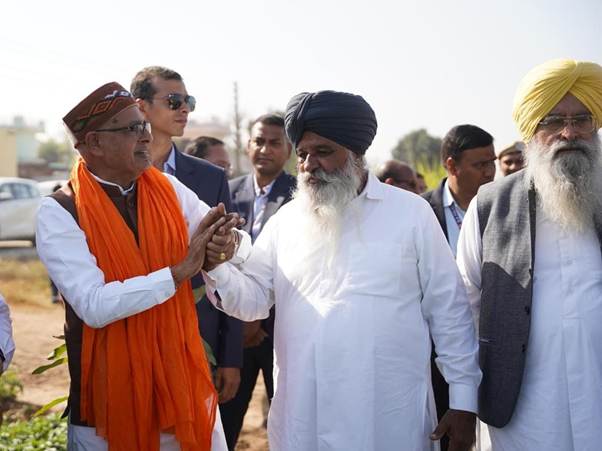
Tak marketing, Shri Chouhan said that the central government was making DAP available to farmers at ₹1,350 per bag, even though its cost was approximately ₹5,000. Similarly, a bag of urea costing around ₹3,000 was being supplied to farmers at just ₹266. He explained that the government was bearing the substantial subsidy burden to ensure that farmers could obtain these essential inputs at affordable prices. To prevent subsidised fertilisers from being diverted for industrial purposes or other unauthorised uses, the government was rapidly issuing ‘Farmer IDs’. He informed farmers that six lakh Farmer IDs had already been created in Punjab. These IDs would help ensure that fertilisers reached the farmers who needed them, in a timely manner and in quantities based on the actual requirements of their land and crops, including crops such as potatoes. He said that the system would help prevent the diversion and misuse of subsidised urea and DAP. He also announced that the central government was preparing to introduce a new and stringent Pesticide Act, along with a new seed law, to protect farmers from fake pesticides and poor-quality seeds being sold in the market. The proposed legal measures would strengthen safeguards against fraudulent and substandard agricultural inputs.
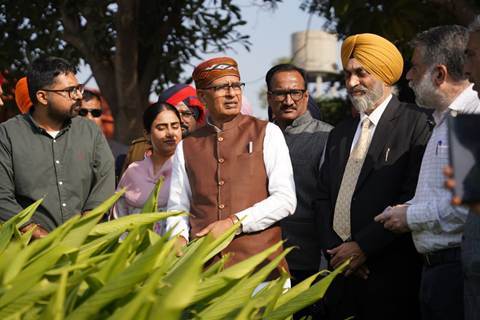
Referring to fluctuations in crop prices and the need to eliminate the role of middlemen, Union Minister Shri Shivraj Singh Chouhan outlined two major measures to provide relief to farmers. He said that if prices of potatoes, onions or tomatoes fell in Punjab, while better prices were available in major cities such as Delhi, Mumbai, Kolkata or Chennai, the central government would bear the entire transportation cost of moving the produce to those markets for sale through state government agencies. This would allow farmers to access better-paying markets in other states without having to bear the additional burden of transportation expenses. He also explained that under the ‘Market Intervention Scheme’, if farmers were compelled to sell their produce at very low prices, the central and state governments would intervene jointly, sharing the cost equally, with each contributing 50 per cent. The amount representing the difference in prices would then be transferred directly to the farmers’ bank accounts. These measures, he said, were intended to protect farmers against sharp price declines, reduce the impact of market fluctuations and ensure that they received better returns for their produce.
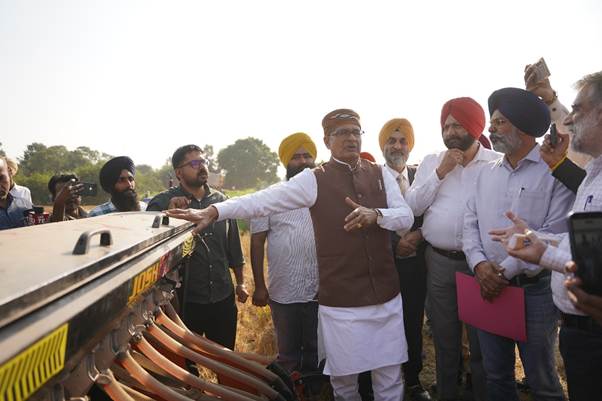
During the programme, Shri Chouhan also appreciated the use of a modern, driverless, mapping-based tractor, recognising the potential of such technology in agricultural operations. He said that agriculture was a state subject, but there should be no politics between the central and state governments when it came to serving farmers and addressing their concerns. He informed the gathering that the central government had approved all the proposals submitted by Punjab’s Agriculture Minister under the Rashtriya Krishi Vikas Yojana (RKVY). He reiterated that the Centre was ready to work with the state government to support agricultural development and improve the welfare of farmers. Shri Chouhan also said that any farmer wishing to share suggestions or raise concerns could meet him directly in Delhi by arranging an appointment. He stressed that farmers should feel free to bring their problems and ideas to his attention so that their concerns could be considered and addressed. Union Agriculture Commissioner P.K. Singh, PAU Vice-Chancellor Dr Harvinder Singh Dhaliwal, and a large number of agricultural scientists and progressive farmers were present on the occasion.
*****
SS/MS/MK