Ministry of Statistics & Programme Implementation
Posted On:
18 NOV 2026 4:43PM by PIB Delhi
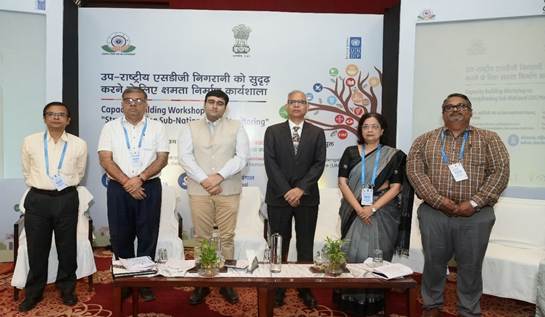
The Ministry of Statistics and Programme Implementation (MoSPI), in collaboration with the Department of Planning, Statistics and Programme Monitoring, Government of West Bengal and the United Nations Development Programme (UNDP), organised a one-day Capacity Building Workshop on “Strengthening Sub-National SDG Monitoring” in Kolkata, West Bengal on 18th November, 2026. The workshop brought together government officials from States and Union Territories that are in process of development of their respective State/UT Indicator Frameworks (SIFs/UTIFs) and the three (3) States/UT sharing best practices, with the aim of strengthening institutional capacities and providing targeted technical support to advance the process. Around 50 participants attended the workshop, comprising officers from MoSPI, UNDP, and States/UTs-West Bengal, Maharashtra, Delhi, Odisha, and Dadra and Nagar Haveli and Daman and Diu.
With around four years remaining to achieve the 2030 Agenda, strengthening sub-national monitoring systems is critical to advancing SDG localisation and translating national commitments into measurable outcomes at the State/UT levels. State/UT-level monitoring enables governments to track progress against SDG targets, identify development gaps and align policies and interventions with local priorities.
As per SDGs-National Indicator Framework Progress Report, 2026, 33 States and Union Territories have developed their respective State/UT Indicator Frameworks. Strengthening the remaining frameworks and improving existing monitoring systems is important to ensure comprehensive SDG monitoring across the country.
In the inaugural session, Ms. Supriya Roy, Additional Director General, Social Statistics Division, MoSPI, emphasised the importance of strengthening monitoring systems at the State and local levels. She highlighted that national-level data alone cannot capture the diversity of development challenges across India. State and District Indicator Frameworks are essential to translate national SDG commitments into locally relevant priorities and measurable outcomes. She also underlined the need to strengthen statistical capacities and improve the quality and timeliness of data.
Shri Pawan Kadyan, Senior Special Secretary, Department of Finance, Government of West Bengal, highlighted the need for State Indicator Frameworks to reflect ground realities and local development priorities. He emphasised that monitoring should extend to districts, blocks and Gram Sabhas. He also stressed the need to move beyond tracking scheme implementation and fund utilisation towards measuring actual development outcomes, enabling a shift towards outcome-oriented governance. Representative of UNDP, Mr. Jaimon Uthup, Policy Specialist emphasized the commitment to supporting the Government of India and States/UTs in building robust data systems, technical capacities, and inclusive monitoring mechanisms.
Dr. Dalip Singh, Director General (Central Statistics), MoSPI, highlighted the ongoing statistical reforms undertaken by MoSPI to address emerging data needs and strengthen the evidence base for development planning. He emphasised the importance of linking Indicator Frameworks not only with the SDGs but also with India's longer-term development goals under Viksit Bharat. He noted that updated base years and new statistical surveys to capture the unorganised sector and services economy are strengthening the country's statistical system.
The technical sessions commenced with a presentation by Ms. Ruchika Gupta, Deputy Director General, Social Statistics Division, MoSPI, on strengthening the SDG monitoring architecture at national and sub-national levels. The session covered the National Indicator Framework (NIF), its alignment with State/UT Indicator Frameworks, principles for indicator selection, data sources, reporting periodicity and institutional responsibilities.
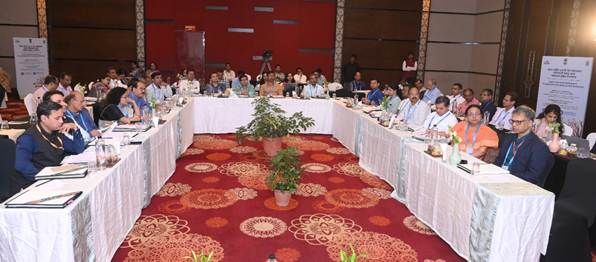
A key component of the workshop was the sharing of good practices and experiences from States that have made progress in strengthening SDG monitoring and localisation. Representatives from Maharashtra, Delhi and Odisha presented their approaches, highlighting institutional arrangements, data systems and lessons that could inform the development and strengthening of State/UT Indicator Frameworks.
Officials from the participating State and UT administrations presented their progress, institutional preparedness, data readiness and challenges in developing their respective frameworks. The discussions helped identify State/UT-specific priorities, institutional requirements and data-related gaps.
The workshop also included a facilitated group exercise led by MoSPI and UNDP, focusing on the development and refinement of draft State/UT Indicator Frameworks. Participants reviewed potential indicators for each SDG, identified State/UT-specific indicators reflecting local development priorities, mapped responsible departments and data sources, and assessed data availability and gaps. The exercise also emphasised the integration of gender-responsive and disaggregated indicators, wherever relevant, and the prioritisation of indicators based on relevance and monitoring requirements.
The workshop concluded with discussions on key recommendations and next steps for finalising and strengthening the respective State/UT Indicator Frameworks. MoSPI and UNDP reaffirmed their commitment to providing continued technical support to the all States/UTs.
The workshop reiterated the importance of robust sub-national statistical systems in advancing SDG localisation and evidence-based policymaking. State and UT Indicator Frameworks provide a common basis for tracking progress against the SDGs while reflecting local development priorities and longer-term Vision 2047 agendas. These frameworks can also strengthen planning, monitoring and decision-making at State and sub-State levels
***
Samrat