Posted On:
21 NOV 2026 5:32PM by PIB Hyderabad
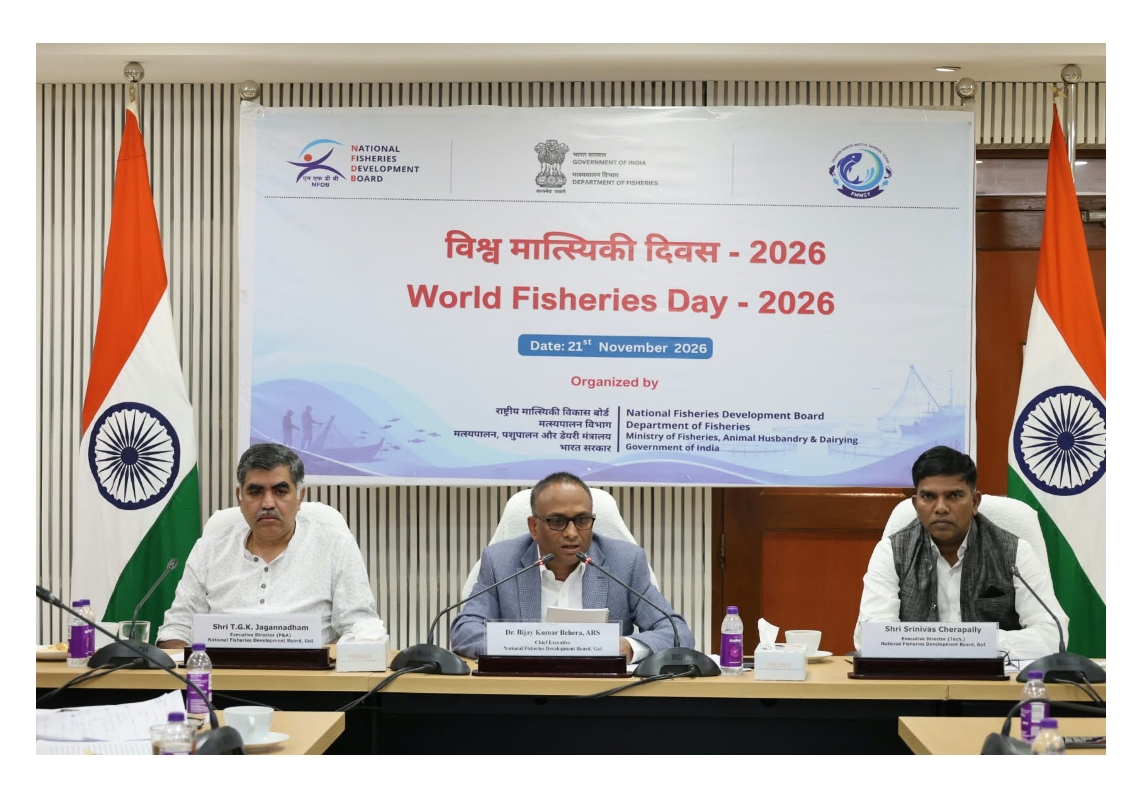
The National Fisheries Development Board (NFDB), in association with the Department of Fisheries, Ministry of Fisheries, Animal Husbandry and Dairying, Government of India, celebrated World Fisheries Day 2026 on 21 November 2026 at NFDB, Hyderabad, bringing together the fisheries community from across the country under the theme announced by the Food and Agriculture Organization (FAO): “Empowering People for Change: Advancing Decent Work in Fisheries and Aquaculture, particularly for Youth and Women.”
The programme witnessed enthusiastic participation from over 6,000 fisheries stakeholders across more than 530 locations in the country, representing nearly 34 States and Union Territories. The participants included fishers, fish farmers, members of Self-Help Groups (SHGs), representatives of State and UT Fisheries Departments, officials from the Department of Fisheries, Government of India, ICAR Fisheries Institutes, NFDB-Regional centers and other stakeholders associated with the fisheries and aquaculture sector.
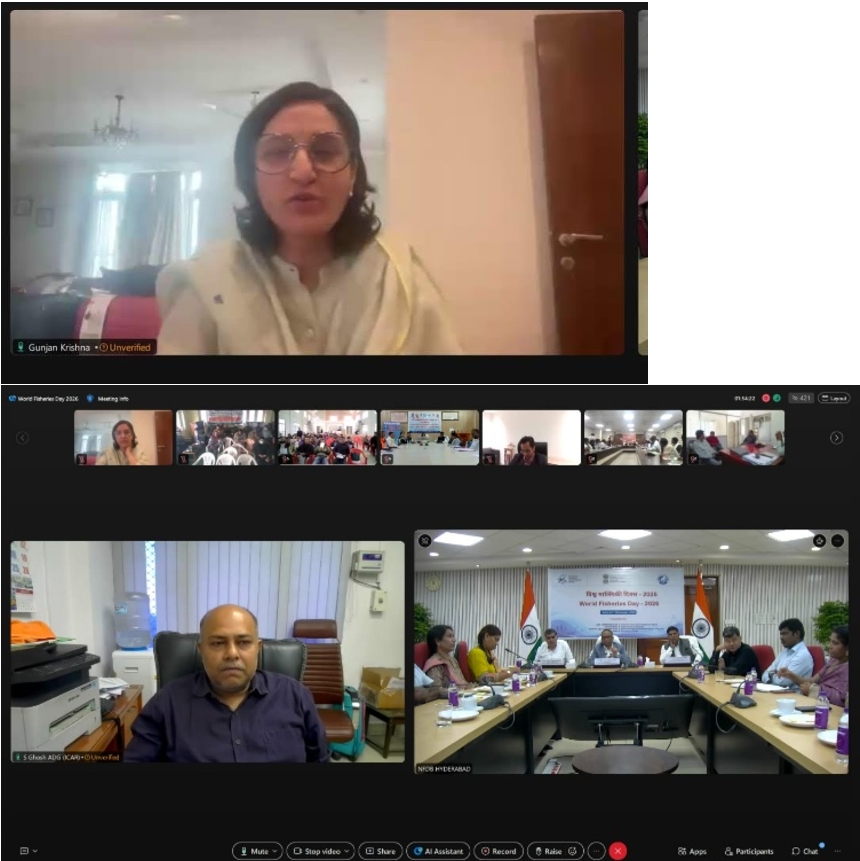
The programme was graced by Smt. Gunjan Krishna, Joint Secretary (Inland Fisheries), Department of Fisheries, Government of India; Dr. B. K. Behera, Chief Executive, NFDB; and Dr. Shubhadeep Ghosh, Assistant Director General (Marine Fisheries), ICAR, New Delhi.
Speaking on the occasion, Dr. B. K. Behera, Chief Executive, NFDB, highlighted the significant progress made by India's fisheries sector through various schemes and interventions of the Government of India. He emphasised that fisheries are a sunrise sector, providing substantial livelihood opportunities and contributing significantly to the national economy. He highlighted the sector's annual growth of approximately 9–10% over the last decade and stressed the need to sustain this momentum through focused interventions and inclusive development.
Dr. Behera further emphasised the importance of enhancing inland fish production through species diversification, promoting export-oriented species such as Pangasius and Tilapia, and strengthening domestic consumption. He highlighted the need for integrated value chains, modern processing facilities and improved marketing infrastructure. He also underscored the importance of empowering women, youth and Self-Help Groups through entrepreneurship, technology adoption and sustainable livelihood opportunities to accelerate the growth of fisheries and aquaculture.
Speaking on the occasion, Smt. Gunjan Krishna, Joint Secretary (Inland Fisheries), highlighted the importance of quality fish seed and feed in enhancing production, meeting domestic demand and strengthening India's export potential. She emphasised the need for improved traceability systems, development of inland fisheries exports, promotion of fisheries clusters and addressing critical infrastructure and value-chain gaps. She also highlighted the importance of climate resilience and sustainable production practices for the long-term growth of the fisheries sector.
Dr. Shubhadeep Ghosh, Assistant Director General (Marine Fisheries), ICAR, highlighted the achievements made in disseminating innovative technologies in the fisheries sector through the collaborative efforts of ICAR, the Department of Fisheries and NFDB. He emphasised the growing importance of precision aquaculture, species diversification and the introduction and promotion of emerging marine species such as Cobia and Pompano. He also highlighted the potential of seaweed clusters, with seaweed serving as a sustainable feed ingredient in aquaculture as well as a direct seafood and functional food product. He stressed the importance of research, innovation and technology transfer in promoting sustainable aquaculture development.
As part of the celebration, successful fisheries initiatives and achievements of fish farmers from Jammu & Kashmir, Andhra Pradesh and Chhattisgarh were presented. These success stories highlighted the role of Government support, technological interventions, entrepreneurship and institutional coordination in improving productivity, strengthening livelihoods and creating opportunities across the fisheries value chain.
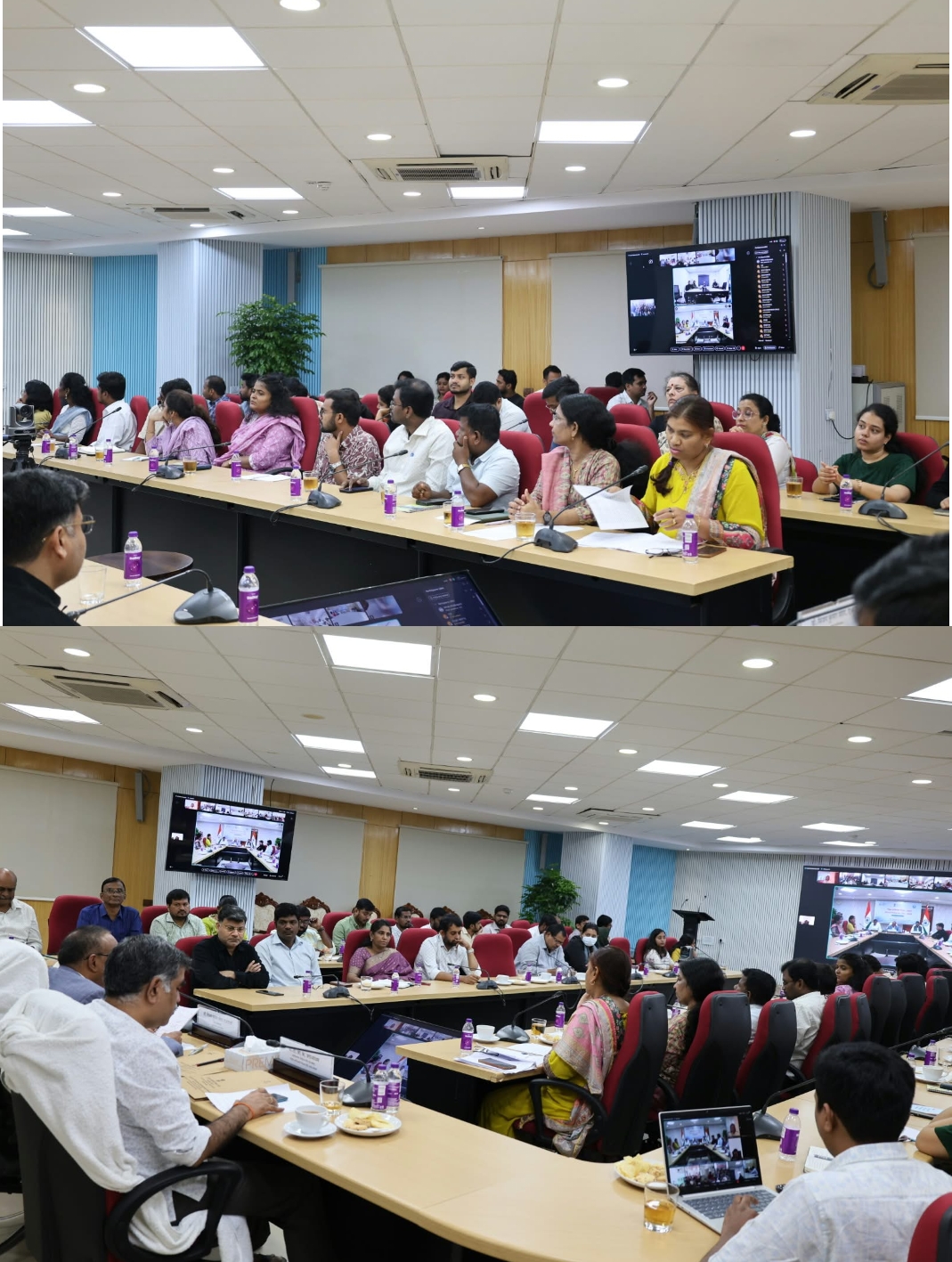
The programme also provided an opportunity for interaction among fishers, fish farmers, policymakers, technical experts and other stakeholders. Various schemes, initiatives and support mechanisms of the Government of India were highlighted to familiarise participants with the opportunities and benefits available to enhance productivity, improve infrastructure, strengthen livelihoods and expand fisheries-based enterprises.
The celebration reaffirmed the commitment of NFDB and the Department of Fisheries towards promoting inclusive and sustainable development of the fisheries sector through technological advancement, cluster-based development, capacity building, stakeholder participation and convergence of Government initiatives. The active participation of women, youth, fish farmers and fisheries institutions was recognised as essential for strengthening India's Blue Economy and achieving the vision of Viksit Bharat
******