Posted On:
23 NOV 2026 12:12PM by PIB Delhi
The Ministry of Ayush is showcasing India’s diverse traditional healthcare systems at the 45th India International Trade Fair (IITF) 2026, being held from 13 to 27 November at Hall No. 2, Bharat Mandapam, New Delhi. The Ayush Pavilion is offering visitors an engaging experience through healthcare consultations, interactive activities, traditional dietary preparations, medicinal plant displays and educational presentations highlighting the relevance of Ayush systems in promoting preventive healthcare and healthy living.This year’s Ayush Pavilion at IITF is themed "Ayush Ki Virasat Se Swasth Bharat Ka Vikaas" (आयुष की विरासत से स्वस्थ भारत का विकास), in alignment with the overarching theme of IITF, "Development and Heritage" (विकास और विरासत).
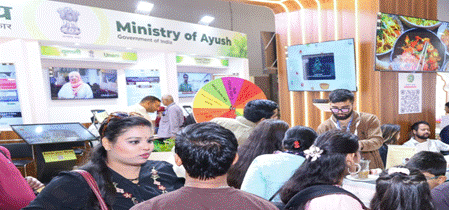
The pavilion brings together institutions and research councils under the Ministry of Ayush, presenting a wide range of activities that connect traditional knowledge with everyday health practices. The CCRAS–CARI is providing Ayurveda OPD services and Prakriti Pariksha, along with information on preventive healthcare, healthy lifestyles and Ayurvedic wellness. The All India Institute of Ayurveda (AIIA), New Delhi, is presenting commonly used herbs and spices, including Ashwagandha, Shatavari, Arjuna, Amla, Haridra and Guduchi, with information on their classical applications and relevance to health promotion. Visitors are also being sensitised to the importance of appropriate dosage, individual health conditions and professional guidance before using medicinal herbs.
The National Institute of Ayurveda (NIA), Jaipur, is showcasing Ayush Aahar products such as Ragi Cookies, Triphala Jam, Aloe Vera Gel and herbal Lip Balm. Interactive attractions include Ayurvedic Snakes and Ladders based on Ahara (diet) and Vihara (lifestyle), along with virtual reality experiences offering visualisation of human body systems. IEC materials are also being displayed to create awareness about Prakruti, Panchakarma, Ayurvedic cooking and the role of Ayurveda in daily life.
Rashtriya Ayurveda Vidyapeeth (RAV) is promoting Ayurveda-based food innovations through the display of POSHAK cookies, Ayurvedic bread and the traditional drink Pankam. Activities such as “Dadi Se Puchho” and “Millets on the Wheel” are engaging visitors while spreading awareness about traditional dietary practices, the nutritional benefits of millets and healthy living.
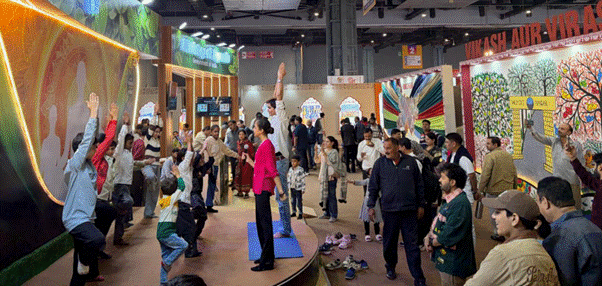
The Morarji Desai National Institute of Yoga (MDNIY) is conducting regular yoga demonstrations and sessions on a dedicated platform at the pavilion. Visitors are also receiving personalised yoga consultations based on their age, health concerns and lifestyle. Yoga quizzes and asana competitions are further encouraging participation, with visitors showing interest in incorporating yoga into their daily routines.
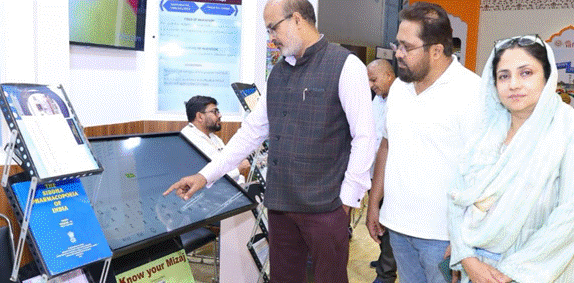
The Unani stall, managed by the Regional Research Institute of Unani Medicine (RRIUM), New Delhi, under the Central Council for Research in Unani Medicine (CCRUM), is highlighting traditional Unani dietary preparations and healthcare practices. Visitors are being offered tastings of Unani Qahwa, Hareera, Halwa Gheekawar, Gulkand and Murabba Amla. A modified digital Mizaj Assessment Kiosk is enabling visitors to assess their temperament and receive personalised dietary advice. The stall also features digital presentations and documentaries on Unani medicine. On 18 and 19 November, the Unani OPD provided free consultations and medicines to 151 patients.
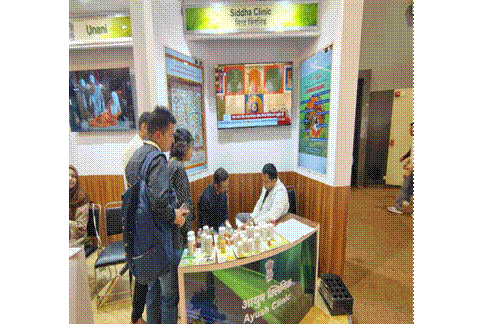
The Siddha stall, managed by the Central Council for Research in Siddha (CCRS) and the National Institute of Siddha (NIS), Chennai, raises awareness of Siddha principles, preventive healthcare practices, and therapeutic applications. The display covers Siddha Ahar, nutrition, lifestyle modification, diagnostic methods, traditional formulations and therapies, including Varma therapy. Digital presentations, documentaries and IEC materials are being used to engage visitors. The stall also highlights NIS's academic and research activities, including its BSMS, MD (Siddha), and PhD programmes, encouraging students to explore education and careers in Siddha.
The Central Council for Research in Yoga & Naturopathy (CCRYN) is presenting Yoga and Naturopathy through digital audio-visual content, IEC material and an Ayush Aahar display. Visitors are being introduced to healthy snack options such as Makhana Ladoo, Peanut Ladoo, Til Ladoo and Namkeen. Free consultations on Yoga, Naturopathy, dietary practices and lifestyle modifications were also provided on 17 and 18 November.
The National Institute of Sowa-Rigpa is offering visitors insights into the ancient healing traditions of the Himalayan region. The stall features detailed information on Sowa-Rigpa diet, therapeutic regimens and herbal formulations, with practitioners offering personalised guidance based on classical Sowa-Rigpa texts.
The National Medicinal Plants Board (NMPB) is highlighting the importance of medicinal plants through live displays, information material and the distribution of Satavari medicinal plants. Plants featuring QR codes are helping visitors access information, while brochures, pamphlets and the comic book “Professor Ayushman” are being distributed to promote awareness about medicinal plants and their uses.
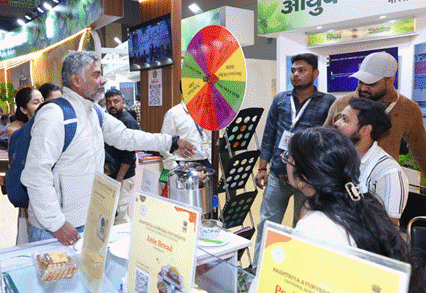
Through its diverse displays and interactive activities, the Ayush Pavilion at IITF 2026 is providing a platform for visitors to experience India’s traditional healthcare systems and learn about their role in preventive healthcare, nutrition and wellness. The pavilion reflects the Ministry of Ayush’s continued efforts to promote public awareness and bring Ayush practices closer to people through accessible, engaging and educational initiatives.
***
SR/AK/SG