Ministry of Environment, Forest and Climate Change
Posted On:
24 NOV 2026 10:57AM by PIB Kolkata
Kolkata, November 24, 2026
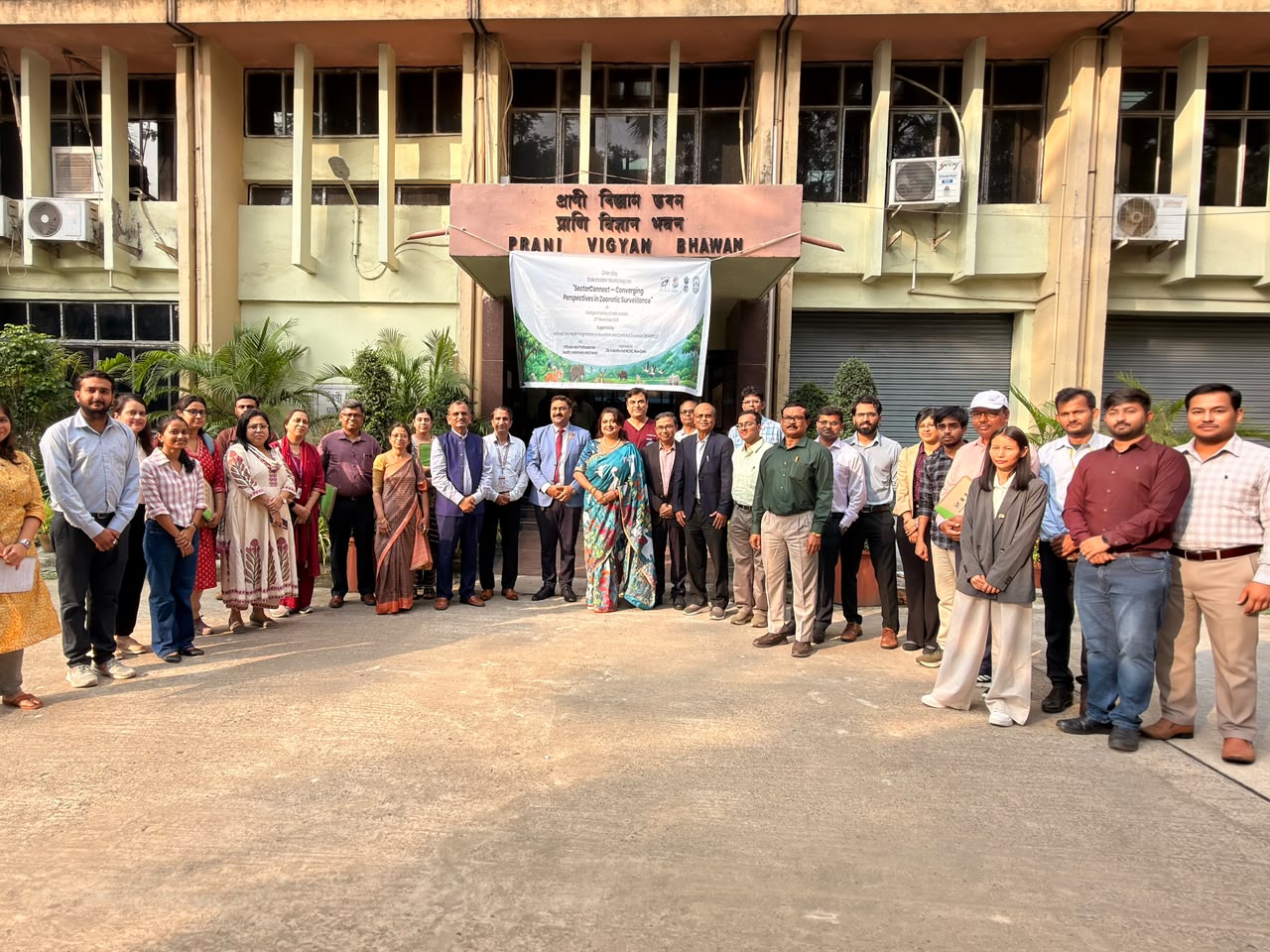
The Zoological Survey of India (ZSI) hosted a stakeholder workshop titled "SectorConnect – Converging Perspectives in Zoonotic Surveillance" on Monday (November 23, 2026) under the National One Health Programme for Prevention and Control of Zoonoses (NOHPPCZ). Participants agreed that zoonotic disease surveillance in India must move from responding to outbreaks to predicting them, and that this requires closer coordination across sectors.The programme was supported by the National Centre for Disease Control (NCDC), under Union Ministry of Health and Family Welfare. In this role, ZSI contributed wildlife and biodiversity expertise to extend discussions on zoonotic disease surveillance and facilitates engagement with institutions working across the human–animal–environment interface.
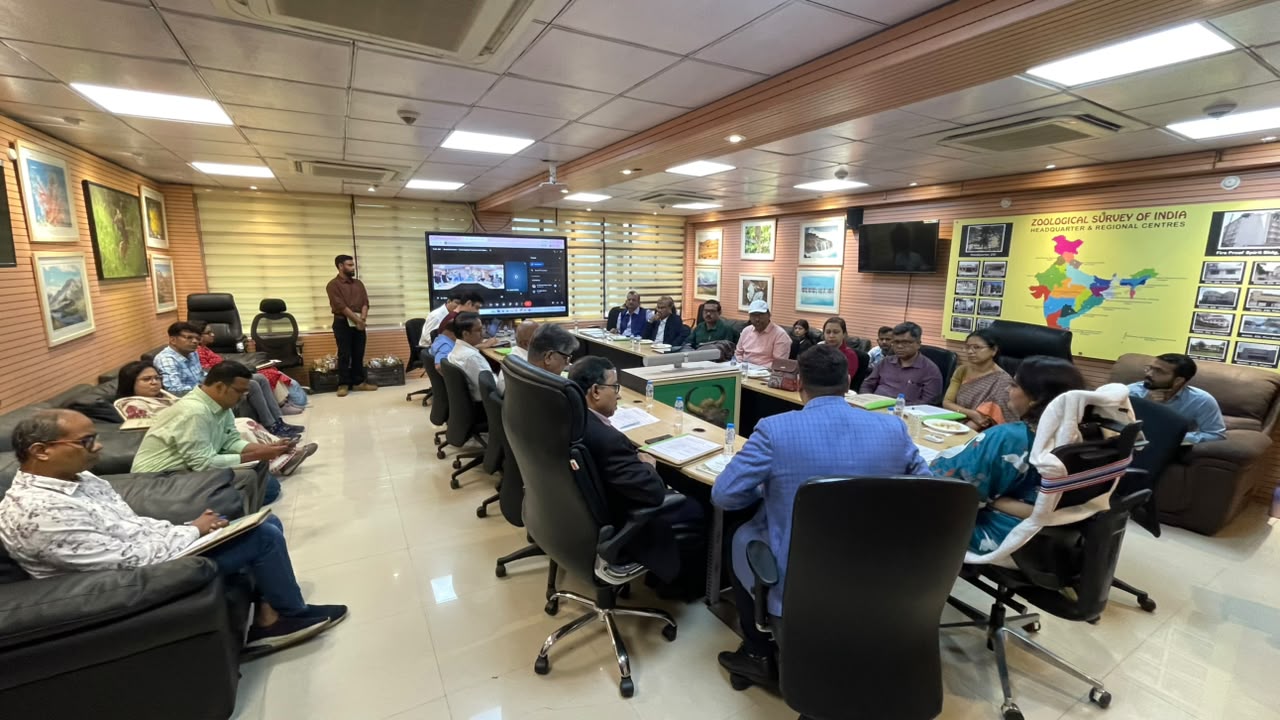
The meeting, coordinated by Dr. Mukesh Thakur, Scientist D, ZSI, bringing together a diverse coalition of medical epidemiologists, microbiologists and veterinary microbiologists, scientists from NIRBI, AIIPH&H- Kolkata, IVRI- Eastern office, IIPH- Gandhinagar veterinarians from Zoological Garden,Alipore, representatives of the Animal Resource Development, West Bengal Forest Department and clinicians from the School of Tropical Medicine, AIIMS Kalyani, RG Kar Medical College, ID & BG Hospital, and North Bengal Medical College and Hospital. The meeting was presided over by Dr. Jitesh Shamsundar Kuwatada, the Assistant Director of NCDC, New Delhi and Dr. Debasish Roy, Joint Director, DHS, Deptt of Health and Family Welfare, Government of WB. A total of 25 stakeholders from 16 interconnected sectors attended the workshop. The primary goal was to bridge the gap between sectors to create a unified One Health framework that recognises that the health of people is closely connected to the health of animals and our shared environment.
The consultation commenced with a welcome address by Dr Mukesh Thakur, the workshop coordinator, followed by the inaugural address by Dr. Dhriti Banerjee, Director, ZSI, who set the stage for the event. Highlighting ZSI’s previous research, she noted how this institutional expertise will shape the organization's future initiatives. Welcoming the stakeholders, she stated, “We call it SectorConnect because effective zoonotic surveillance depends on sustained coordination across animal health, human health, wildlife, and environmental sectors, which we have here today.” Looking ahead, Dr. Banerjee shared her vision for an extensive symposium bringing together experts from diverse fields to brainstorm novel workflows and policy reforms that will bolster the One Health objective.
Joining virtually, Dr. Jitesh Kuwatada, Assistant Director, National Centre for Disease Control (NCDC), addressed participants on the need for intersectoral coordination and networking to strengthen zoonotic surveillance. He congratulated the ZSI for bringing diverse sectors together in a unique stakeholders' consultation. Highlighting the four national programs operating under the Centre for One Health (two of which focus on priority zoonotic diseases, namely rabies and leptospirosis) Dr. Jitesh drew upon past successes where intersectoral collaboration proved effective in managing outbreaks such as Nipah and COVID-19. He strongly advocated for establishing a unified platform where participating institutions can submit data on isolated zoonotic cases in both humans and animals.This would enable the health department to swiftly initiate critical interventions. “The regulatory actions will take place, the legal actions will take place in due course of time, but immediate public health actions are important,” he added.
Dr. Debasis Ray, Joint Director, Health Department, Government of West Bengal, outlined the opportunities and challenges of integrated zoonotic surveillance in the state. He observed, “Animal health, human health and the environment are very much interconnected. But to understand this, we have already considered animal health and public health as well as the environment in separate domains for decades now.” Expressing appreciation to Dr. Mukesh for convening the cross-sectoral meeting, Dr. Ray noted that West Bengal has established a strong foundation for a cohesive approach, citing the robust IDSP-IHIP portal and joint surveillance initiatives with the animal husbandry department. Surveillance efforts are currently underway at NBMCH, Bankura Sammilani Medical College, SSKM, and Rampurhat, supported by a joint outbreak investigation team. However, he highlighted key operational challenges, including absence of horizontal integration of vertical data, laboratory disconnects, lack of role clarity and inter-institutional coordination, and grassroots reporting gaps. He expressed optimism that such collaborative initiatives will drive the design and implementation of an effective integrated workflow.
Dr. Atul Raj, Head of the Department of Microbiology at the All India Institute of Hygiene and Public Health (AIIHPH), Kolkata, and Dr. Sayantan Banerjee, Associate Professor, AIIMS Kalyani, contributed key insights toward developing an integrated disease surveillance system from a public health perspective. Dr. Raj noted that while current surveillance relies heavily on bacterial culture positivity, it is imperative to transition toward molecular-level approaches. This shift would enable the identification of novel haplotypes, differentiate between pathogenic strains, and track the introduction of strains into new demographics. He emphasised that routing positive samples to specialised institutions like ZSI for molecular testing would yield deeper insights for managing zoonoses.
Meanwhile, Dr. Banerjee presented a compelling case study involving two unrelated patients, both nurses, who exhibited identical symptoms and were eventually diagnosed with the Nipah virus. An investigation later revealed that both had cared for an index patient with similar symptoms a few weeks earlier, underscoring the need for robust medical epidemiology alongside early diagnosis and reporting. He further cautioned that institutional non-disclosure of such cases and the lack of a unified reporting portal continues to exacerbate public health challenges.
Dr. Siddhartha Narayan Joardar, Professor and Head of Veterinary Microbiology, West Bengal University of Animal and Fishery Sciences, proposed holding periodic meetings on a quarterly or half-yearly basis to build trust, foster collaboration, track progress, and develop improved workflows for policy reform. He stressed the need for reliable data to build accurate disease prediction models and emphasized the importance of sharing this data across sectors. Dr. Joardar also identified several critical areas requiring focused attention, including the detection of bovine tuberculosis to curb human transmission, pathogen surveillance in migratory birds, and monitoring animals in public spaces that carry antimicrobial-resistant strains. Finally, he underscored the importance of responsible science communication to ensure critical public health information remains accessible to the general public.
Finally, Dr. Thakur, the project coordinator, pointed out the need for a cohesive approach that integrates humans, animals, and vectors to detect pathogens across hosts and establish pathogenicity. Drawing on innovative study designs, he explained how hematophagous (blood-feeding) organisms such as mosquitoes and leeches serve as effective bioindicators for mapping a region's pathogen landscape. He projected the prevalence of Bartonella detected in rodents and ticks within densely populated urban areas like New Alipore, illustrating how molecular detection and strain identification remain vital missing pieces in the One Health framework. Concluding his session, Dr. Thakur introduced stakeholders to the state-of-the-art laboratory facilities at ZSI, demonstrating their readiness to support an integrated project work plan.
The session concluded with an interactive open-house discussion where participants formalised a commitment to sustained data sharing and collaborative monitoring. By integrating the efforts of wildlife biologists, veterinarians, and medical doctors, the initiative aims to build a robust early-warning system against emerging infectious diseases.
************************
SSS/Kol/24.11.26...