Ministry of Fisheries, Animal Husbandry & Dairying
Posted On:
27 NOV 2026 4:14PM by PIB Delhi
Dr. Abhilaksh Likhi, Secretary, Department of Fisheries, Ministry of Fisheries, Animal Husbandry and Dairying, Government of India, visited the College of Fishery Science, Nagpur, Maharashtra. He delivered a presentation on ‘India’s Initiatives in the Fisheries and Aquaculture Sector,’ highlighting key developments and emerging opportunities in the sector, and interacted with students on the growth, emerging opportunities and future prospects of India's fisheries sector. The College promotes experiential learning through hands-on training, complemented by smart classroom teaching in areas such as fish breeding, hatchery & farm management, value added processing.
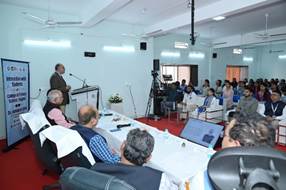
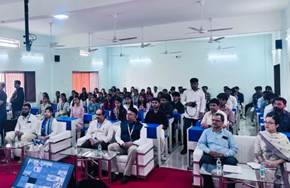
Highlighting the sector's major achievements, Dr. Likhi stated that India's total fish production has reached to 198 lakh tonnes in 2024-25. India stands as the world’s second largest aquaculture producer accounting for 8% of the global fish production. Inland fisheries and aquaculture production have registered substantial growth and achieved 153 lakh tonnes in 2024-25. India's seafood exports have also reached an all-time high of ₹73,890.46 crore (USD 8.45 billion) in FY 2025-26, with export volumes touching 19.32 lakh metric tonnes. Seafood exports have registered a significant growth at an all-time high. The sector supports the livelihoods of over 3 crore fishers and fish farmers.
In his presentation, the Union Secretary emphasised the Government's commitment to strengthening the fisheries value chain, and highlighted the importance of the cluster-based development approach in facilitating economies of scale, improving productivity and creating integrated opportunities across production, processing, marketing and exports. He informed that the Government of India has notified 34 specialised fisheries and aquaculture clusters across the country, focusing on end-to-end value chain solutions and catering to diverse species including tuna, shrimp, pearl spot, murrel, pangasius, tilapia, trout, seaweed, ornamental fisheries, reservoir fisheries, coldwater fisheries, cage culture, organic fisheries and riverine fisheries, among others. These clusters are envisaged as integrated development hubs, addressing gaps across pre-production, production and post-harvest activities while facilitating technology adoption, market linkages and value addition. The cluster approach will also leverage institutional financing and support from agencies such as NABARD, along with participation from private entrepreneurs and other stakeholders.
He also focused on technology infusion in transforming fisheries and aquaculture into a modern, productive and commercially sustainable fisheries sector. He elaborated on the adoption of advanced aquaculture technologies such as Recirculatory Aquaculture Systems (RAS), Biofloc, reservoir and sea cage culture, raceways, pen culture and improved hatchery and seed production systems, supported under the Pradhan Mantri Matsya Sampada Yojana (PMMSY). He also emphasised the growing role of digital technologies, Artificial Intelligence (AI), Internet of Things (IoT), machine learning and drone-based applications in improving water quality monitoring, fish health management, feeding practices, disease surveillance and operational efficiency.
Highlighting the Government's efforts to promote entrepreneurship and strengthen the institutional ecosystem, he spoke about the opportunities being created for fisheries start-ups, young entrepreneurs, Fisheries Farmer Producer Organisations (FFPOs), cooperatives and Self-Help Groups (SHGs) through various initiatives, including PMMSY and the Pradhan Mantri Matsya Kisan Samridhi Sah-Yojana (PM-MKSSY). He emphasised the importance of strengthening fisheries cooperatives and FFPOs, improving their access to institutional credit, financial assistance, and capacity-building and digital market platforms such as the Open Network for Digital Commerce (ONDC). He also highlighted the role of the National Fisheries Digital Platform (NFDP) in formalising the sector and facilitating access to credit, insurance and other scheme benefits.
He further underscored the need for modern fisheries infrastructure to strengthen the entire value chain, including Smart and Integrated Fishing Harbours, modern fish landing centres, wholesale and retail fish markets, cold-chain facilities, transportation and logistics networks, processing units and value-added product development. He highlighted emerging opportunities in diversified fisheries segments such as seaweed cultivation, ornamental fisheries, pearl culture and other mariculture activities, which can create additional livelihood and entrepreneurial opportunities, particularly for youth and women. He also stressed the importance of improving post-harvest management, processing and value addition to enhance income realisation for fishers and fish farmers and strengthen India's position in global seafood markets.
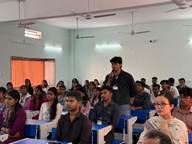
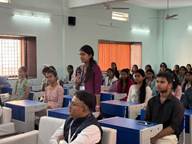
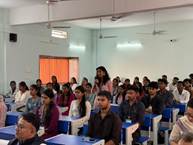
Fisheries students from various fisheries colleges and universities across the country, representatives from Krishi Vigyan Kendras (KVKs), ICAR institutes and the Departments of Fisheries of various States and Union Territories, attended through video conferencing. The Secretary encouraged students to look beyond conventional employment avenues and explore emerging opportunities across various segments of the fisheries and aquaculture sector. During the interaction, College of Fishery Science students shared their views and perspectives on the sector and highlighted the need for an information-sharing platform to facilitate access to internship and employment opportunities. They also showed keen interest in learning about various schemes and initiatives of the Government of India that could support self-employment and entrepreneurship in the fisheries sector.
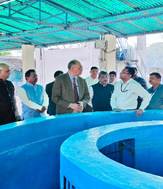
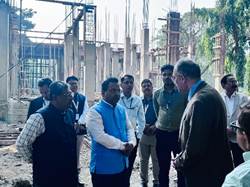
Dr. Likhi also visited various facilities of the College of Fishery Science, Nagpur, Maharashtra, including fish seed unit, hatcheries, exhibition, and museum. He also visited the Fisheries Technology Complex, envisioned as a comprehensive, one-stop facility for inland fisheries, integrating research, training, diagnostics and demonstration services. The complex is being established under theFisheries and Aquaculture Infrastructure Development Fund (FIDF) scheme of the Government of India, with a project cost of Rs 19.69 crore.
*****
JP