Posted On:
27 NOV 2026 9:51PM by PIB Jaipur
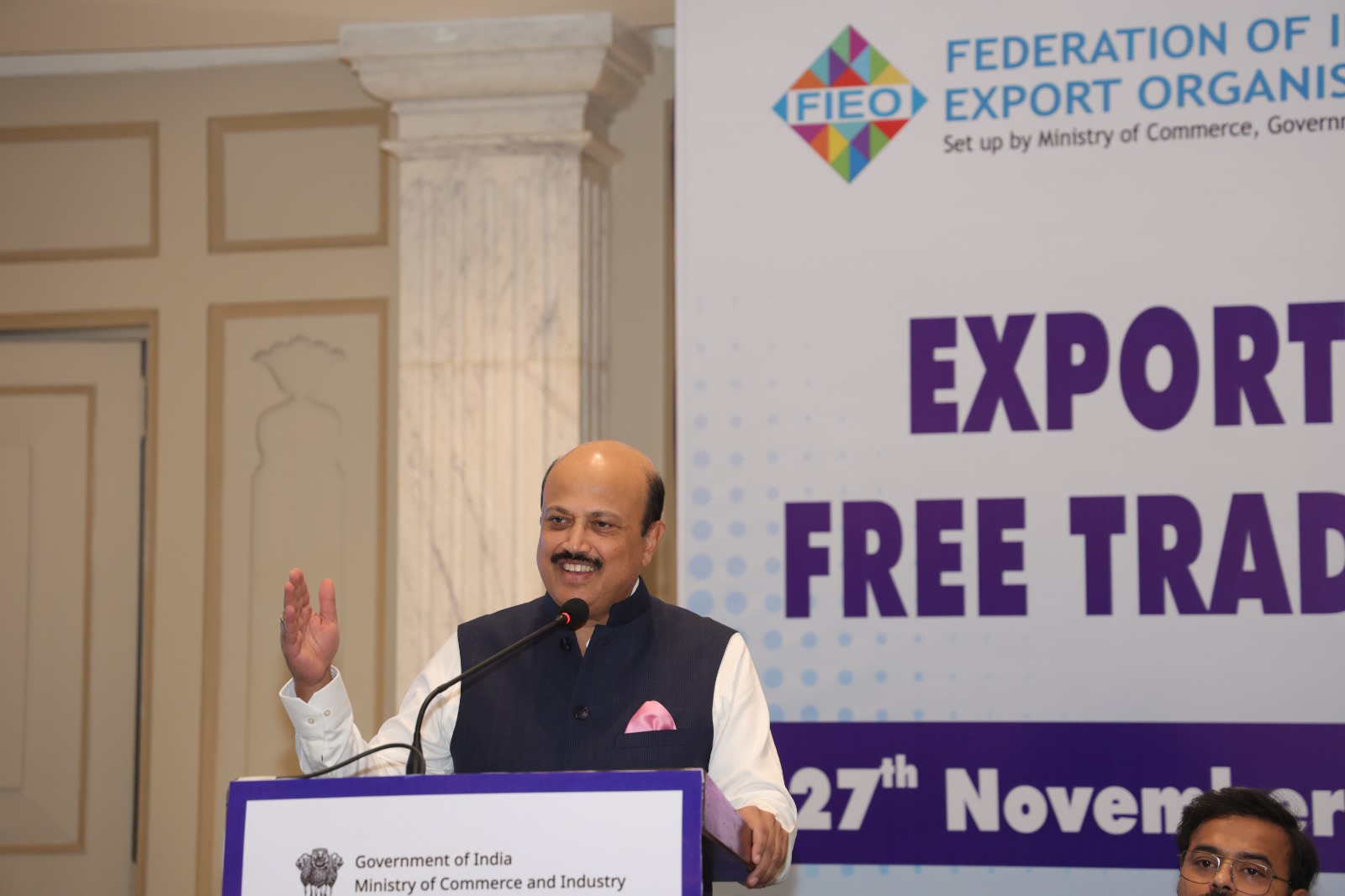
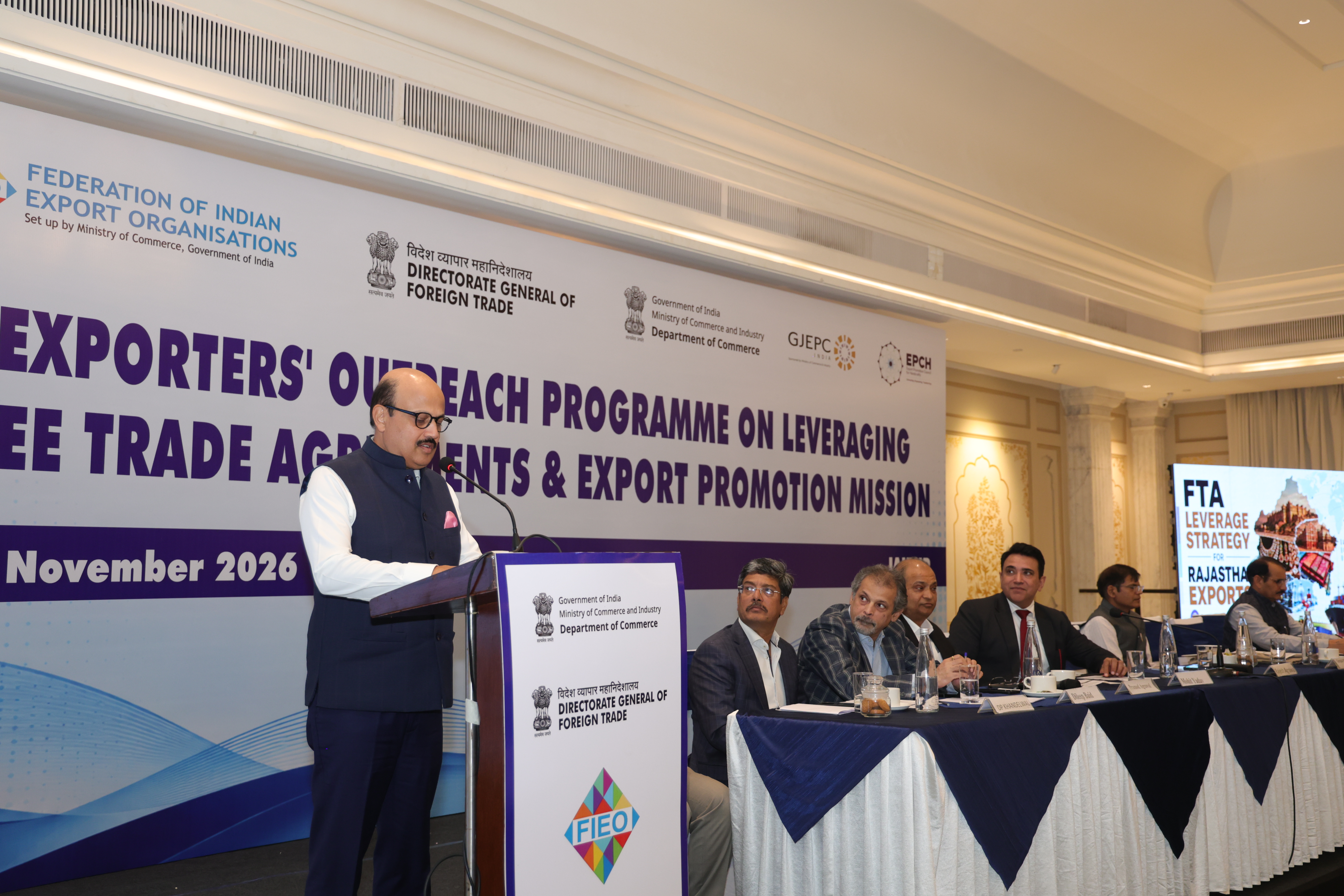
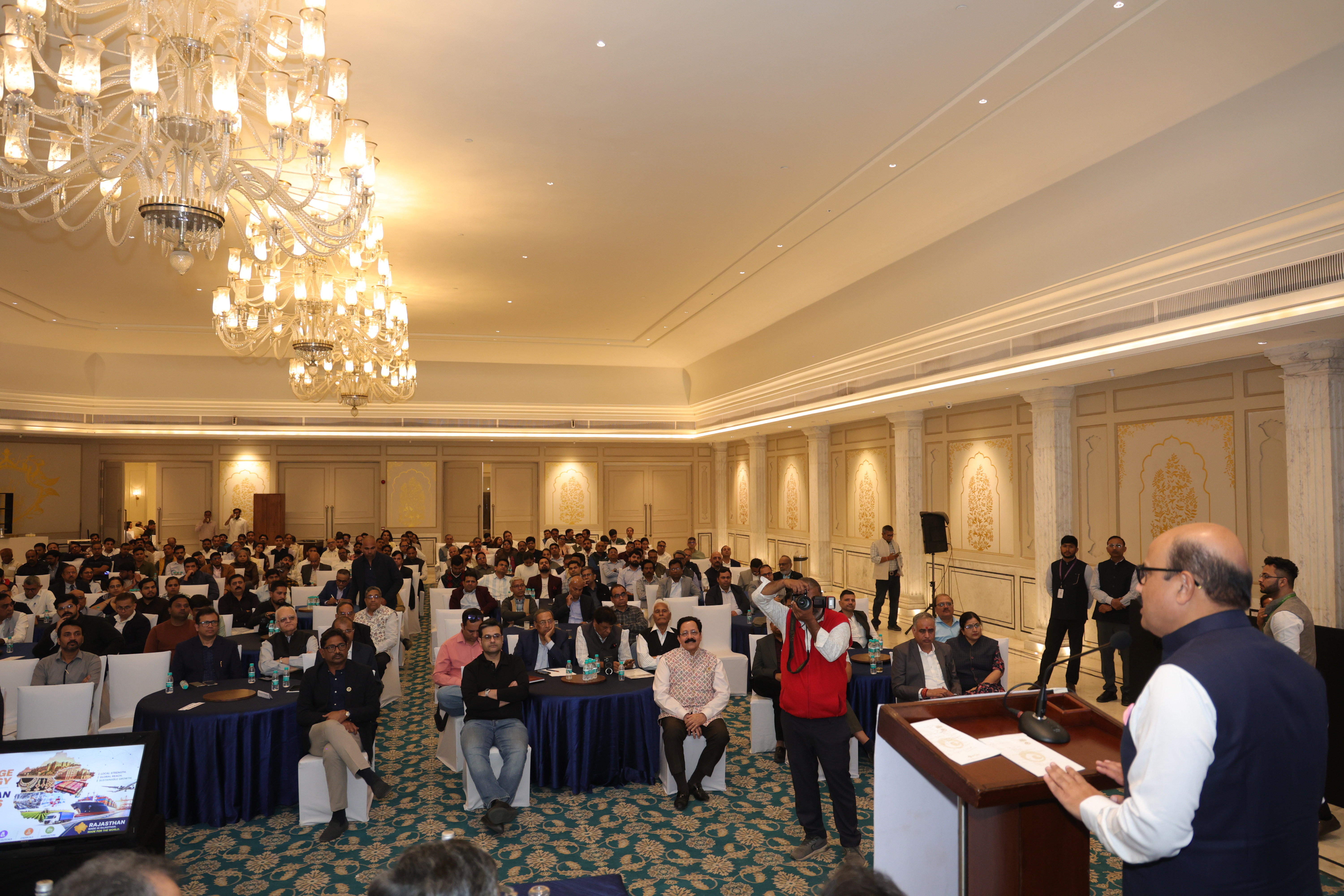
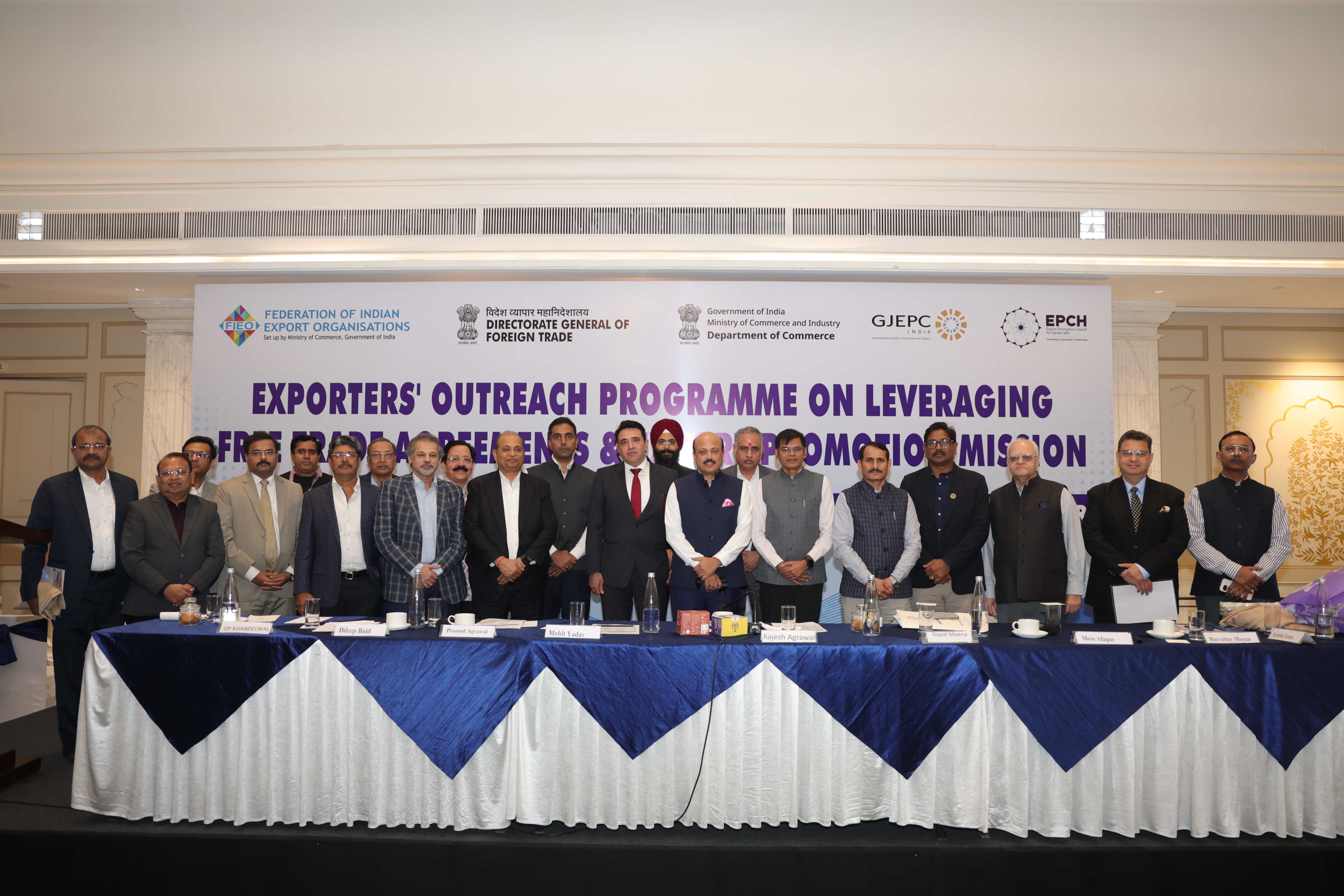
The Department of Commerce held an Exporters' Outreach Session on Leveraging India's Free Trade Agreements (FTAs) at Hotel Clarks Amer, Jaipur, on 27 November 2026, with the Commerce Secretary, Shri Rajesh Agrawal, as Chief Guest. The session was organized with the Federation of Indian Export Organizations (FIEO), the Directorate General of Foreign Trade (DGFT) and the Government of Rajasthan.
On the FTAs signed by India in recent years, The Hon’ble Prime Minister of India has said: "These Free Trade Agreements are creating new doors of possibilities for our youth". Shri Piyush Goyal, Hon’ble Commerce and Industry Minister has noted the expanding market access available to Indian businesses through recent Free Trade Agreements (FTAs) and urged Indian businesses to utilize the opportunities opened by these agreements. He has said that India's preferential access to global markets, representing around USD 10 trillion in GDP until a few years ago, has expanded by an additional USD 60 trillion over the last four-and-a-half years, taking the total to approximately USD 70 trillion. With ongoing bilateral and multilateral trade engagements across eight to nine geographies, this is expected to expand to around USD 85 trillion, representing nearly 76 per cent of global GDP, over the next year to year-and-a-half.
Speaking to exporters, Commerce Secretary highlighted the significant opportunities created by India’s FTAs and emphasized the need for Indian exporters, especially MSMEs, to proactively leverage preferential market access. He encouraged exporters to identify sector-specific opportunities in FTA partner countries, participate in international exhibitions, develop overseas supply chains and explore emerging avenues such as cross-border e-commerce. Highlighting Rajasthan’s strengths in sectors such as gems and jewellery, textiles, handicrafts, furniture and minerals, he urged businesses to translate these strengths into increased export opportunities. He also outlined the various interventions under the Export Promotion Mission (EPM), including support for export credit, international exhibitions, testing and certification, overseas warehousing and logistics, aimed at enhancing the competitiveness of Indian exporters.
Market access gained, and what is coming
-India's preferential access to global markets has grown from economies of about USD 10 trillion to about USD 70 trillion in four and a half years, and with negotiations across eight to nine geographies it is expected to reach about USD 85 trillion, nearly 76 per cent of world GDP, in the next year to year and a half.
-United Kingdom, in force from 15 July 2026: zero duty on nearly 99 per cent of India's exports; European Free Trade Association (EFTA), from 1 October 2025: 99.6 per cent of India's exports covered; Oman, from 1 June 2026: duty-free access for 99.38 per cent of India's exports by value; New Zealand, from 20 October 2026: zero duty on all tariff lines; and the United Arab Emirates (UAE) and Australia since 2022.
-European Union (EU): duty ends on entry into force for 70.4 per cent of the EU's tariff lines, covering 90.7 per cent of India's export value, with a further 20.3 per cent of lines phased; the agreement is expected to come into effect in early 2027.
-United States: a framework for an interim agreement was announced on 7 February 2026 and negotiations are on; Canada: the sixth round of negotiations was held from 11 to 20 November 2026 for an agreement that "delivers tangible benefits to farmers, industries, businesses and Micro, Small and Medium Enterprises (MSMEs)".
* Negotiations are also underway with Chile, Peru, Israel and the Eurasian Economic Union, with Mexico and others.
Who gains in Rajasthan
-Farmers and farmer-producer organizations: India-UAE CEPA reduces the customs duty on whole cumin seeds from 5 per cent to zero, creating opportunities for Rajasthan’s cumin producers and exporters to expand their presence in the UAE market.
-For MSMEs and artisans in textiles, handicrafts, jewellery and engineering, tariff preferences improve price competitiveness: duty of 5 per cent on jewellery is removed in the UAE and Australia and of 2 to 4 per cent in the UK; duty of up to 12 per cent on garments and 8 per cent on carpets is removed in the UK, and EU duties of 12 per cent on cotton garments and bedlinen and 8 per cent on carpets end on entry into force.
-Women entrepreneurs: the 100 per cent duty-free access to New Zealand opens new opportunities for MSMEs, artisans, farmers and women entrepreneurs.
-The New Zealand agreement gives Indian youth and professionals 5,000 Temporary Employment Entry visas and 1,000 Working Holiday visas every year.
Employment
-The agreements give preferential access to labour-intensive products to boost growth and employment in textiles, apparel and leather goods; under the UK agreement, workers gain new employment opportunities in labour-intensive sectors.
-Under the EFTA agreement, the EFTA States aim to raise their investment in India by USD 100 billion over 15 years and to "facilitate the generation of 1 million jobs within 15 years in India".
-The Union Minister of Commerce and Industry has said that using the agreements would "generate millions of jobs on the ground".
Exports and the economy
-India's exports of goods and services reached USD 568.84 billion in April-October 2026, up 16.66 per cent; in October, gems and jewellery grew 40.06 per cent, handicrafts 55.22 per cent, carpets 20.64 per cent and readymade garments 20.33 per cent; the target for 2026-27 is USD 1 trillion.
-Rajasthan's exports were USD 11.18 billion in 2025-26, led by engineering goods, gems and jewellery, and textiles and handicrafts; the State aims at exports of Rs 1.5 lakh crore by 2029.
-The Prime Minister has urged businesses to use reduced- or zero-duty access by focusing on quality and competitiveness.
Shri Mohit Yadav, Joint Secretary, Department of Commerce, highlighted Rajasthan’s distinctive role in leveraging India’s Free Trade Agreements (FTAs), given its inherent strengths across diverse export-oriented sectors. He emphasized the competitive advantage that recent FTAs have accorded Indian exporters over competing countries and urged businesses to adopt a long-term strategic outlook, with an unwavering focus on quality, innovation and adherence to international standards. He underscored that FTAs go beyond preferential market access and offer significant opportunities for technology transfer, joint ventures and investment partnerships, particularly in the context of the USD 100 billion investment commitment over 15 years under the India-EFTA Trade and Economic Partnership Agreement (TEPA). He also stressed the need for exporters to develop a deeper understanding of evolving market trends, consumer preferences and buyers’ expectations in FTA partner countries to build enduring commercial relationships and secure a greater share of global markets.
The Joint Director General of Foreign Trade, Jaipur, Shri Moin Afaque, presented the use of the agreements and the Export Promotion Mission, which has an outlay of Rs 25,060 crore for 2025-26 to 2030-31, outlining that coverage and support under the 3 interventions of EPM have been increased: the number of certificates eligible for reimbursement has increased to 600; MSME exporters from an additional 308 districts across 21 States/UTs are now eligible to receive reimbursement of transportation costs under EPM; the mandatory membership period with EPCs to participate in market access supported events has been reduced from 6 months to 3 months, and airfare support to MSMEs has been extended up to 95%, this was followed by an open house with exporters.
Commerce Secretary also interacted with exporters and industry representatives, addressed issues raised by them in relation to export opportunities and market access. He encouraged them to make greater use of the Trade Connect portal, engage with DGFT offices and Indian Missions abroad, and avail themselves of the various support mechanisms available under EPM to expand their presence in international markets.
The outreach initiative reflected the Department of Commerce's continued commitment to taking the benefits of India's trade agreements to exporters across States, particularly MSMEs, women entrepreneurs, farmers, artisans and young entrepreneurs, ensuring that the opportunities created through India's expanding global trade partnerships translate into greater exports, employment generation and inclusive economic prosperity.