PIB Backgrounder
Khet Bachaao Abhiyaan - Rabi 2026
“Soil Health and Sustainable Agriculture”
Posted On:
02 NOV 2026 10:47AM by PIB Delhi
|
Khet Bachaao Abhiyaan (KBA)-Rabi 2026 is a nationwide campaign running from 22 October to 30 November 2026. It promotes soil health, balanced fertiliser use, and sustainable agriculture across 34 States and Union Territories, over 700 districts and 50,000 villages, targeting around 50 lakh farmers. Key priorities include balanced nutrient management, natural farming, crop residue management, crop diversification and climate-resilient agriculture. The campaign envisages 4,150 teams involving KVKs and ATMA, supported by over 12,000 scientists and ATMA functionaries. The initiative seeks to conduct 50,000 field demonstrations and 11,750 structured training sessions. The campaign projects a social media outreach of 1.5 crore farmers, with an envisaged expansion of overall digital outreach to 2.5 crore.
|
The Foundation of Farming Lies Beneath
Soil health is fundamental to agricultural productivity, food security, and rural livelihoods. With more than 46 percent of India’s workforce engaged in agriculture and allied activities, soil health influences food systems and economic stability. Healthy soils support higher crop yields and reduce dependence on external inputs.
Recognising the importance of soil health, Khet Bachaao Abhiyaan (KBA) - Rabi 2026 “Swasth Dhara, Samriddh Kisan” is envisaged as a nationwide campaign from 22 October to 30 November 2026. It follows a convergence-based approach, bringing together agricultural departments, research institutions, and field-level functionaries to promote balanced, judicious fertiliser use and sustainable nutrient management. The campaign aims to promote sustainable agriculture, improve soil health, and encourage the judicious use of agricultural resources. It also promotes natural farming, water conservation, and efficient use of natural resources. It addresses concerns such as imbalanced nutrient application, declining soil organic matter, rising cultivation costs, and the degradation of natural resources.
The initiatives also emphasise capacity building, farm mechanisation, and demonstrations of improved agricultural technologies, including regenerative agriculture practices (farming methods focused on restoring soil health and enhancing biodiversity).
The campaign covers 34 States and Union Territories, over 700 districts and 50,000 villages. It aims to reach around 50 lakh farmers through coordinated activities. States and Union Territories have been instructed to prioritise 100 high fertiliser-consuming districts to strengthen outreach and promote balanced nutrient management.
Through its wide reach and field-level activities, the campaign seeks to bring farmers, scientists and agricultural institutions together. This coordinated effort is expected to encourage informed farming decisions and greater adoption of sustainable agricultural practices.
Khet Bachaao Abhiyaan
(From 1 to 30 June 2026)
Khet Bachaao Abhiyaan was launched nationwide on 1 June 2026 as a month-long campaign to promote soil health, balanced fertiliser use and sustainable agricultural practices. The campaign deployed 1,657 multidisciplinary teams for direct field-level engagement. The initiative achieved significant outreach, conducting over 1.34 lakh awareness events for 92.44 lakh farmers, and 6,685 training sessions on green manuring and bio-fertilisers, benefiting 4.94 lakh farmers. Additionally, 3,167 field demonstrations and 4,779 interactive programs provided hands-on learning. A further 4,916 Janpratinidhi Sammelans, including those involving fertiliser and input dealers, strengthened grassroots engagement.. Overall, the campaign directly reached around 1.07 crore farmers and other stakeholders, while social media outreach covered approximately 4.5 crore citizens.
Key Objectives of Khet Bachaao Abhiyaan - Rabi 2026
The campaign aims to encourage farmers to adopt location-specific, science-based practices that improve input-use efficiency and support climate-resilient agriculture.
- Balanced Nutrient Management: Promote General Fertiliser Recommendations (GFR) based nutrient management and the 4R Principle of fertiliser use - Right source, Right rate, Right time, and Right place. This method ensures balanced, efficient fertiliser use aligned with Rabi crop requirements.
- Natural Farming: Encourage the adoption of natural farming through awareness campaigns, capacity building, demonstrations and farmer-to-farmer learning.
- Integrated Nutrient Management (INM): Promote INM and the use of suitable organic and biological inputs through awareness, capacity building and demonstrations.
- Crop Residue Management: Promote sustainable residue management and discourage crop residue burning in Punjab, Haryana, Uttar Pradesh and Madhya Pradesh through Information, Education and Communication (IEC) activities.
- Crop Diversification: Strengthen oilseed and pulse production, encourage crop diversification and promote the productive use of rice-fallow areas through awareness, capacity building and demonstrations.
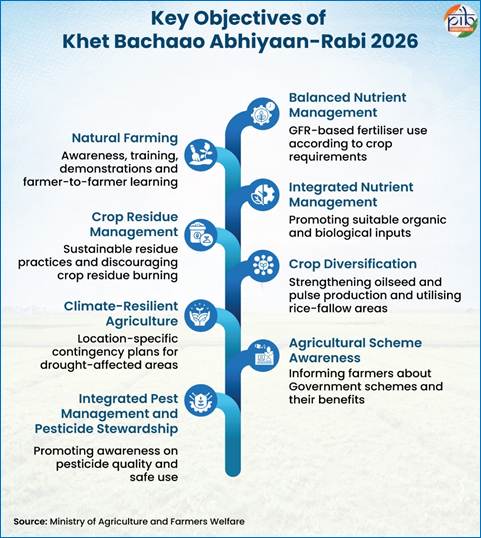
- Climate-Resilient Agriculture: Implement location-specific contingency plans in drought-affected areas of Maharashtra, Karnataka, Telangana, Andhra Pradesh and Rajasthan to support climate-resilient crop and resource management.
- Awareness of Agricultural Schemes: Create awareness about government schemes related to agriculture and their benefits.
- Integrated Pest Management and Pesticide Stewardship: Promote awareness of pesticide quality and safe use, encourage Integrated Pest Management (IPM) and safe, need-based, label-compliant pesticide use, and discourage indiscriminate application.
Dhaincha and Green Gram Offer a Path to Healthier Soils
In the rice-growing areas of East Champaran, Bihar, maintaining soil fertility while managing fertiliser use is an important concern for farmers. Declining soil organic carbon and micronutrient deficiencies add to the challenge. Under Khet Bachaao Abhiyaan-2026, the ICAR-Mahatma Gandhi Integrated Farming Research Institute (MGIFRI), Motihari, Bihar, highlighted how green manuring and biological nitrogen fixation can support soil health.
At the farmer outreach programme at the Pantoka Panchayat in Raxaul Block, East Champaran District, Bihar, farmers were encouraged to combine farmyard manure, compost, biofertilisers and crop residues with recommended fertiliser doses. The discussions covered rice nursery management and alternatives to crop residue burning, including composting, mulching and vermicomposting.
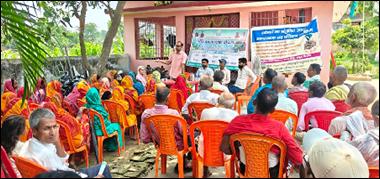
Scientists also emphasised the use of dhaincha (Sesbania sp.) and summer green gram in rice-based cropping systems. Dhaincha can contribute around 50-60 kg of nitrogen per hectare, equivalent to 110-130 kg of urea. Summer green gram can contribute 25-30 kg of nitrogen per hectare, equivalent to 55-65 kg of urea. These crops can help reduce fertiliser requirements while improving soil organic matter and biological activity.
The programme brought together 62 farmers, including 41 women. Participants expressed willingness to adopt green manuring and balanced nutrient management.
Bringing the Campaign to Farmers: Institutional Roles and Responsibilities
- State/UT Department of Agriculture: Responsible for campaign planning and implementation, issuing necessary instructions, convening preparatory meetings, approving district-level schedules, mobilising field personnel and convergence partners, facilitating access to schemes and services, and consolidating reports.
- Agricultural Technology Management Agencies (ATMA) and District Agriculture Administration: Responsible for coordinating campaign activities across district, block and village levels, preparing micro-plans, mobilising farmers and community institutions, facilitating venues, field access, IEC materials and logistics, and maintaining attendance and activity records.
- ICAR Institutes, Agricultural Technology Application Research Institutes (ATARIs), Krishi Vigyan Kendras (KVKs), and Agricultural Universities (Knowledge Partners): Provide science-based technical guidance and location-specific recommendations, nominate resource persons, support training, conduct demonstrations and farmer-scientist interactions when requested, prepare or validate technical IEC materials and advisories, share research evidence, and document lessons. Their role does not extend to State-level implementation, administrative control, enforcement or expenditure responsibilities unless separately authorised.
The campaign envisages 4,150 teams involving KVKs and ATMA. More than 12,000 scientists and ATMA functionaries are expected to help implement it. Through ATMA and ICAR, the campaign aims to reach approximately one crore participants.
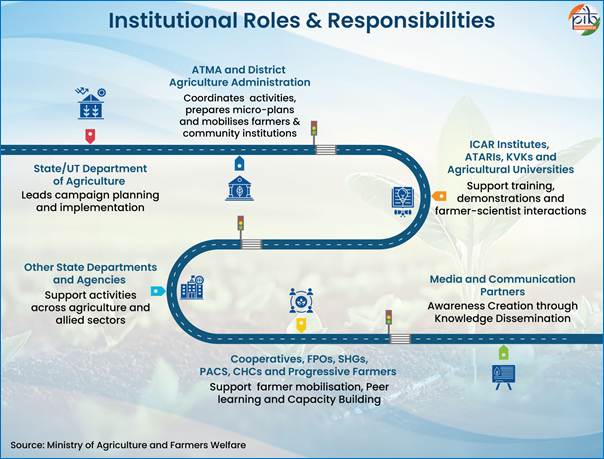
- Other State Departments and Agencies: Support and facilitate campaign activities, as relevant to their respective mandates, through coordinated engagement by departments and agencies responsible for horticulture, soil and water conservation, irrigation, animal husbandry, rural development, cooperatives, Panchayati Raj, environment, agricultural marketing and allied sectors.
- Farmer Producer Organisations (FPOs), Self-Help Groups (SHGs), Primary Agricultural Credit Societies (PACS), Custom Hiring Centres (CHCs) and Progressive Farmers: Support local mobilisation, peer learning, demonstration visits and dissemination of validated advisories among farmers.
- Media and Communication Partners: Facilitate the dissemination of approved campaign messages through local media, community radio, WhatsApp, Kisan Sarathi and other appropriate communication platforms, while ensuring the accuracy and verification of agronomic information shared with farmers.
Driving Farmer Awareness and Outreach
The campaign combines farmer awareness, capacity building, field demonstrations, practical exposure visits, and digital outreach to promote improved agricultural practices, strengthen technical knowledge, and extend the reach of campaign messages among farmers.
Awareness Creation for Various Activities
The campaign seeks to enhance farmers’ awareness and understanding of General Fertiliser Recommendations GFR-based nutrient management, natural farming, Integrated Nutrient Management (INM), Crop Residue Management (CRM), and improved technologies for oilseed and pulse production. It also disseminates information on Standard Operating Procedures (SOPs) for implementing contingency plans in drought-affected districts and key government schemes related to agriculture.
- Each of the 950 ICAR institute teams is assigned three village visits per week, while the 700 KVK teams are expected to undertake four visits per week. Each visit targets the participation of 100 farmers.
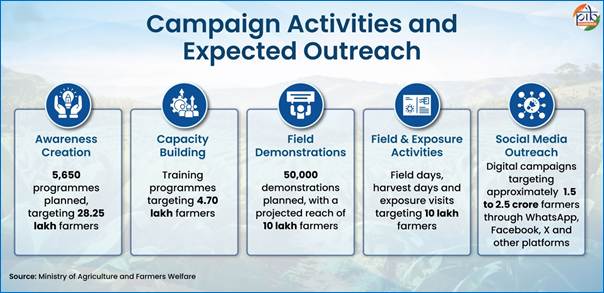
- Over a five-week period, the campaign envisages 5,650 awareness programmes, with an estimated outreach of 28.25 lakh farmers.
Capacity Building of Farmers
Training programmes are designed to strengthen farmers’ knowledge and technical capacities in Integrated Nutrient Management (INM), Crop Residue Management (CRM), natural farming, improved oilseed and pulse production practices, Integrated Pest Management (IPM), and other relevant thematic areas.
- Each of the 950 ICAR institute teams is expected to conduct one training programme per week, while the 700 KVK teams are assigned two programmes per week. Each programme targets 40 participants.
- Over a five-week period, the campaign envisages 11,750 training programmes, with an estimated outreach of 4.70 lakh farmers.
Demonstrations at Farmers’ Fields
ICAR institutes and Krishi Vigyan Kendras (KVKs) organise field demonstrations at selected farmers’ fields to illustrate the potential and benefits of improved agricultural technologies. These demonstrations enable farmers to assess scientific interventions and compare their outcomes with existing farming practices. The key areas covered include Green Ammonia, Crop Residue Management (CRM), Integrated Nutrient Management (INM), Integrated Pest Management (IPM), natural farming, Integrated Crop Management (ICM) for oilseeds and pulses, biofertilisers, and organic and biological inputs.
- The campaign envisages 50,000 field demonstrations, comprising 40,000 by KVKs and 10,000 by ICAR institutes.
- With an intended participation of 20 farmers per demonstration, the initiative targets an estimated outreach of 10 lakh farmers.
Field Days, Harvest Days and Exposure Visits
Field days, harvest events and exposure visits to demonstration sites constitute an integral component of the campaign’s “Seeing is Believing” approach. These activities provide farmers with first-hand opportunities to observe improved agricultural technologies, understand their practical applications and assess their benefits under field conditions.
- Each of the 1,650 teams is assigned to organise three field or harvest days and two exposure visits during the crop season, with each activity targeting approximately 125 farmers.
- These activities are expected to collectively reach approximately 10 lakh farmers.
Digital platforms serve as an important channel for disseminating information on improved agricultural practices, technical advisories, and campaign-related activities, thereby extending the campaign’s outreach beyond field-level interventions.
- Organising teams to disseminate daily updates through WhatsApp, Facebook, X, and other appropriate digital platforms.
- The campaign projects a social media outreach of 1.5 crore farmers, with an envisaged expansion of overall digital outreach to 2.5 crore.
Connecting Farmers with Schemes and Services
The campaign undertakes targeted awareness initiatives to familiarise farmers with key agricultural schemes, services and practices. These include PM-KISAN, balanced pesticide use, Soil Health Cards, the applicable fertiliser sale framework and the potential benefits of trade agreements. It also facilitates the creation and updating of Farmers’ IDs and disseminates information on crop insurance coverage under the Pradhan Mantri Fasal Bima Yojana (PMFBY). In addition, saturation drives under the Kisan Credit Card (KCC) scheme seek to facilitate eligible farmers’ access to institutional credit.
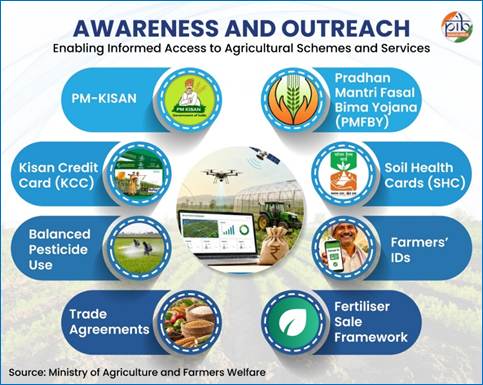
Collectively, these interventions seek to strengthen farmers’ awareness of government support mechanisms and improve their access to essential agricultural services, formal credit and risk-mitigation instruments, thereby reinforcing the institutional and financial foundations of farm livelihoods.
Strengthening the Foundations of Sustainable Agriculture
The Khet Bachaao Abhiyaan-Rabi 2026 seeks to place soil health and sustainable resource management at the centre of agricultural development. Through convergence among scientific institutions, government departments, extension networks and farming communities, it aims to translate scientific knowledge into location-specific agricultural practices. Its integrated approach combines farmer awareness, capacity building, field demonstrations and digital outreach to promote improved farming practices. Alongside balanced nutrient management, natural farming and efficient input use, the campaign emphasises crop diversification, residue management, integrated pest management and climate resilience. Its focus on institutional coordination and farmer participation also strengthens grassroots extension mechanisms and access to agricultural services.
These interventions support resource-efficient farming systems, healthier soils and resilient agricultural livelihoods, contributing to the broader vision of Viksit Bharat. Furthermore, the campaign supports progress towards the Sustainable Development Goals (SDGs), particularly Zero Hunger (SDG 2) and Climate Action (SDG 13).
References
Ministry of Agriculture and Farmers Welfare
https://www.pib.gov.in/PressNoteDetails.aspx?NoteId=159311&ModuleId=3®=48&lang=1
https://www.manage.gov.in/publications/eBooks/DAESI_%20Vol%20I_Study%20Material.pdf
https://vikalp.kisansarathi.in/#home
https://www.pib.gov.in/PressReleaseDetail.aspx?PRID=2302428®=48&lang=1
https://www.pib.gov.in/PressReleasePage.aspx?PRID=2326112®=48&lang=2
https://www.pib.gov.in/PressReleasePage.aspx?PRID=2266794&lang=1®=1
https://www.pib.gov.in/PressReleasePage.aspx?PRID=2288740®=48&lang=2
https://icar.gov.in/en/icar-mgifri-motihari-takes-khet-bachao-abhiyan-indias-frontier-villages-promotes-soil-health-and
Indian Council of Agricultural Research
https://icar.org.in/sites/default/files/2026-10/Khet-Bachaao-Abhiyaan-2026.pdf
https://icar.org.in/sites/default/files/Circulars/ICAR%20Insights%20Outcomes%20Booklet%20%28English%29.pdf
https://icar.org.in/sites/default/files/Circulars/Farmers%20Innovations_2025___English.pdf
Click to see pdf
***
PIB Research
(Release ID: 2331385)
Visitor Counter : 926