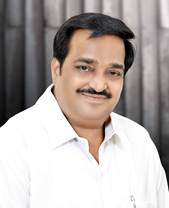
By Shri C. R. Patil
Did you know that the Jal Jeevan Mission is the world’s largest rural drinking water supply programme? Or that the Swachh Bharat Mission is the most significant rural sanitation movement globally, bringing about behavioural change at an unprecedented scale? Or that Namami Gange today stands among the world’s most ambitious river rejuvenation programmes? Together, these initiatives represent not merely government schemes, but a re-imagination of how a nation of 1.45 billion people is building a water-secure future.
When historians reflect on India’s development journey, they may well describe the last twelve years as the period when ‘water’ moved to the centre stage of national transformation. Few sectors shape human dignity, economic growth, public health, agriculture and environmental sustainability as profoundly as water.
Yet, for decades, India’s water challenges were addressed in fragmented ways. What has changed in recent years is the focus, seriousness and integrated nature of the response, led by the Prime Minister Shri Narendra Modi himself.
The scale of investment and execution in the water sector in the last 12 years has been unparalleled. But the significance of this transformation lies not only in numbers. Water is now viewed as a shared national priority, cutting across departments, states, communities and generations. Earlier, water was relegated to a side note, but under Shri Narendra Modi, the Government of India assumed responsibility for filling the long-standing gaps in planning, management, and delivery in the water sector.
The most prominent example of this transformation is the Jal Jeevan Mission. When the programme was launched, only about 3.23 crore rural households, roughly 17 per cent of rural Indian households, had tap water connections. Today, more than 15.8 crore rural households, covering over 81 per cent of rural India, have access to tap water at home, and we are moving towards achieving 100 per cent coverage by 2028. For millions of families, especially women and children, this is not merely a utility service; it is a change in their way of life.
Studies indicate that earlier, rural women in India spent billions of hours each year fetching water. The expansion of household tap water supply has helped save more than 5.5 crore person-hours daily. Time once lost in drudgery is now being invested in education, livelihoods, childcare and economic activity. Across households, access to safe drinking water has also reduced out-of-pocket health expenditure arising from water-borne diseases.
Equally transformative is the Swachh Bharat Mission. India’s sanitation movement demonstrated that behavioural change, public participation and political commitment can work together at scale. According to the World Health Organisation’s assessment of health gains, SBM-Grameen is estimated to have averted more than 3 lakh diarrhoea deaths between 2014 and October 2019. The construction of household toilets also brought dignity, privacy and safety to millions of rural women, turning sanitation into a movement for public health and social dignity. Beyond making villages open defecation-free, the country has now moved towards sustainable solid and liquid waste management under SBM-Grameen 2.0.
India has also undertaken one of the largest water conservation and groundwater recharge initiatives anywhere in the world. Under the “Jal Sanchay Jan Bhagidari” initiative launched by the Hon’ble Prime Minister from Surat on 6 September 2024, more than 1.55 crore rainwater harvesting and groundwater recharge structures have been created across the country by 31 May 2026. This demonstrates the power of collective action and community participation in water conservation.
The impact of these efforts is increasingly visible in groundwater trends as well. Recent assessments indicate improvement in groundwater recharge and a reduction in the number of over-exploited assessment units in several parts of the country. It also showcases that sustained conservation efforts, when combined with community participation, can reverse environmental stress.
At the same time, India has advanced long-pending national water projects. The Ken-Betwa River Linking Project, the country’s first major river interlinking initiative to bring water to the arid region of Bundelkhand, is moving ahead at an accelerated pace. Intra-state river linking initiatives have also made significant progress.
Under the guidance of Prime Minister Shri Narendra Modi, the Namami Gange programme has demonstrated that environmental restoration and development can advance together. Over the past decade, we have created 4,260 MLD of sewage treatment capacity, reduced the BOD load from grossly polluting industries from 26 TPD in 2017 to 10.75 TPD in 2024, and brought down effluent discharge from 349 MLD to 265.56 MLD. Today, monitoring shows that pH and dissolved oxygen levels in the Ganga meet bathing criteria at all monitored locations. Further, a nationwide assessment estimated the population of Gangetic dolphins at approximately 6,324, reflecting the river’s improving ecological health.
India’s water journey over these years also offers an important global lesson. Water challenges in the 21st century cannot be addressed through isolated interventions. Drinking water, sanitation, river conservation, irrigation efficiency, groundwater recharge, wastewater reuse and climate resilience must all be viewed as parts of a connected ecosystem.
This integrated approach becomes even more critical in the face of climate change, which is accentuating existing pressures on water resources worldwide. For India, the challenge is unique. The country is home to nearly 18 per cent of the world’s population, but has access to only about 4 per cent of global freshwater resources. Rapid urbanisation, industrial growth and changing weather patterns will place increasing pressure on these resources in the coming decades.
Today’s investments, therefore, are not merely developmental expenditures; they are long-term investments in national resilience. The progress achieved over the past decade demonstrates the immense potential unlocked when selfless leadership, responsive governance, and active public participation come together in pursuit of a shared national vision.
As India marches forward, water remains central to our developmental aspirations. A water-secure India is not only about ensuring adequate supply. It is about dignity for women, better health for families, productivity for farmers, sustainability for cities and ecological balance for future generations.
The remarkable transformation of India’s water sector over the last twelve years stands as a testimony to the visionary leadership of Prime Minister Shri Narendra Modi, whose commitment has transformed water from a developmental challenge into a powerful instrument of nation-building and Viksit Bharat.
The road ahead requires sustained effort. Technology, data and innovation continue to play a major role. We strive to improve water-use efficiency across sectors, promote reuse and recycling, strengthen local water governance, and encourage citizen participation.
(The author is Union Minister of Jal Shakti.)
****