Red Roads, Green Intent: NHAI is redefining highway safety while protecting wildlife and forest ecology
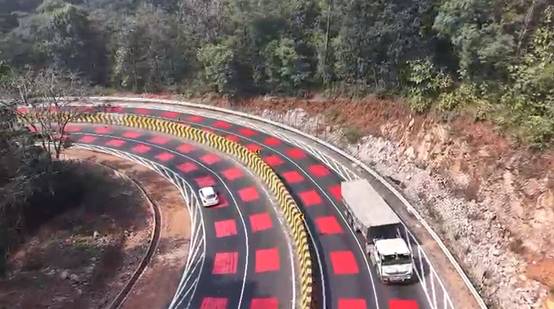
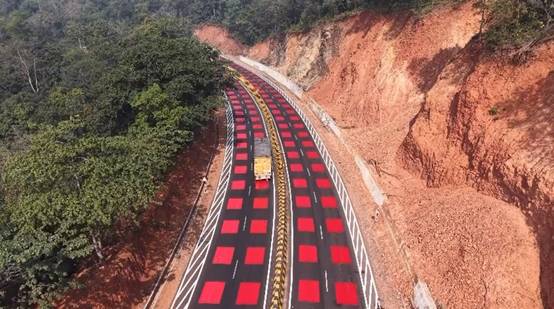
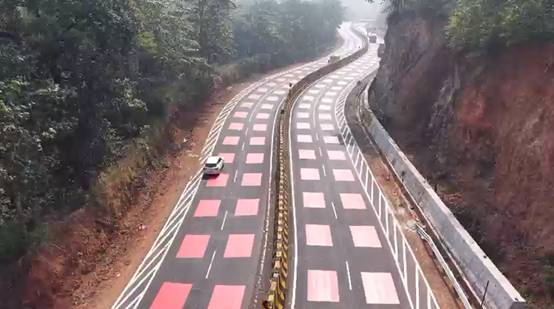
India’s First ‘Table-Top Red Marking’ on a Highway
25 dedicated animal underpasses provided along the 11.96 km stretch at identified animal movement locations
As India rapidly expands its highway network, the National Highways Authority of India (NHAI), under the guidance of the Ministry of Road Transport and Highways (MoRTH), is also redefining what responsible infrastructure development looks like. A pioneering safety initiative implemented on a National Highway stretch passing through a sensitive forest and ghat section demonstrates how road engineering can balance human safety, wildlife protection, and ecological preservation, without compromising on any of the three.
A Safer Highway Through a Tiger Reserve
The initiative has been implemented on a 2.0 km ghat section of an 11.96 km highway project passing through the Veerangana Durgavati Tiger Reserve (erstwhile Nauradehi Sanctuary), Madhya Pradesh.
India’s First ‘Table-Top Red Marking’ on a Highway
Drawing inspiration from Sheikh Zayed Road in Dubai, and supported by international research and guidelines, NHAI implemented India’s first-ever ‘table-top red marking’ on a National Highway.
A 5 mm thick hot-applied thermoplastic red surface layer has been laid across the carriageway in the identified danger zone. The bright red colour immediately alerts drivers that they are entering a speed-restricted, wildlife-sensitive corridor. The slightly raised surface generates mild tactile and audible feedback, naturally encouraging drivers to slow down, without causing discomfort or sudden braking.
Minimal Impact, Maximum Protection
What makes this intervention truly significant is its low ecological footprint:
- No disturbance to wildlife movement or habitat
- No alteration to pavement structure or drainage
- Lower noise levels compared to conventional rumble strips
- Easy maintenance and fully reversible if future improvements are made
White shoulder lines have also been added on both sides of the highway to guide motorists and prevent vehicles from drifting onto unpaved or grassy areas, further enhancing safety.
Comprehensive Wildlife Safety Measures
Beyond speed management, NHAI has taken a holistic approach to wildlife protection along this corridor:
- 25 dedicated animal underpasses have been provided along the 11.96 km stretch at identified animal movement locations.
- These underpasses are integrated with natural ground levels and drainage paths to encourage regular animal use.
- Continuous chain-link fencing (except in deep cutting sections) has been installed on both sides of the highway to prevent animals from entering the carriageway and to guide them toward underpasses.
- Cameras installed on minor bridges, which also function as animal crossing points, help monitor wildlife movement.
- Solar lighting at bridges and junctions enhances visibility at conflict points without adding environmental burden.
Importantly, although the 2.0 km section is marked as a danger zone based on geometric conditions, the fencing and underpass system ensures that there is no possibility of animals directly crossing the roadway, thereby safeguarding both wildlife and motorists.
A Model for Sustainable Highway Development
This initiative stands as a strong example of how modern highway engineering can coexist with conservation goals. By combining global best practices, scientific research, and on-ground ecological considerations, NHAI has delivered a solution that:
- Saves human lives by reducing accidents
- Protects wildlife from vehicle collisions
- Preserves the integrity of forest ecosystems
- Ensures smooth, comfortable, and safer travel for road users
As India continues to build critical infrastructure through diverse landscapes, this project sets a benchmark for environmentally responsible, people-centric, and wildlife-sensitive highway development, where red roads signal not danger, but thoughtful design and green intent.
***
GDH/DS
(Release ID :280788)