CSIR-NPL Strengthens National Quality Infrastructure with Inauguration of Two Apex Calibration Facilities
India witnessed the launch of two apex-level calibration establishments at CSIR-National Physical Laboratory, dedicated to empowering indigenous measurement and certification within the country. The CSIR-NPL, the apex institution for metrology and custodian of India’s national standards, completed eight decades of diligent service to the nation. The Laboratory had been discharging its responsibilities as the National Metrology Institute of India, establishing reference measurements that supported research laboratories, manufacturing units, municipal agencies, and strategic sectors. Its work in developing accurate measurements had a direct bearing on industrial quality, fair trade, reliable environmental data, and consumer and public safety.
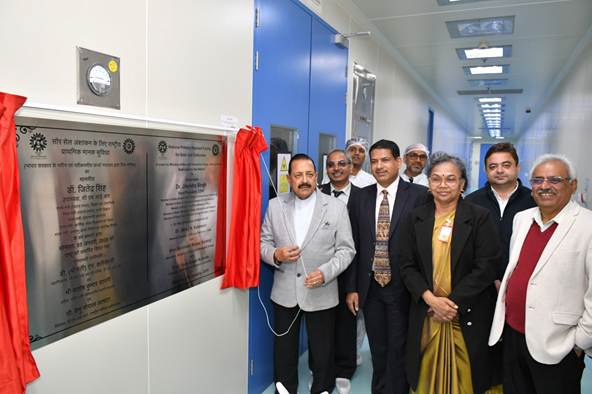
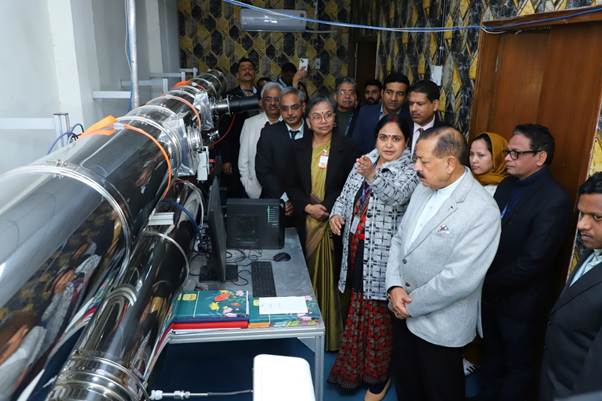
The National Primary Standard Facility for Solar Cell Calibration (NPF-SCC) was created to provide India with a world-class system to check the performance of reference solar cells and panels. The facility was built around a laser-based Differential Spectral Responsivity Primary Reference Measurement System developed in collaboration with PTB Germany. It enabled the measurement of the short-circuit current of reference solar cells with ±0.35 percent uncertainty at k equals 2, one of the lowest uncertainties among the four World Photovoltaic Scale laboratories. This milestone established a complete domestic traceability chain for photovoltaic metrology, reduced dependence on foreign calibration, shortened turnaround time for Indian solar companies, and allowed calibration certificates to be issued on the basis of Indian climatic, humidity, and dust profiles. The facility was expected to support India’s rapidly expanding solar manufacturing ecosystem, rooftop solar missions, and wider acceptance of Indian PV products in exports and PLI-linked programmes.
The National Environmental Standard Laboratory (NESL) was established to test and recalibrate instruments used for air pollution monitoring systems and environmental sensors under Indian environmental conditions. Earlier, most such equipment was imported with foreign certifications issued under Europe or US weather profiles. The difference in temperature, humidity, pollution mix, and high dust load often affected the long-term reliability and transparency of data generated in India. NESL allowed manufacturers, industries, and municipal agencies to validate performance within the country, ensured credible data for the National Clean Air Programme, industrial emission audits, and smart-city monitoring networks, and provided reference gases, protocols, and uncertainty evaluation services that improved public trust and evidence-based governance.
Together, NPF-SCC and NESL were expected to help MSMEs, start-ups, and indigenous manufacturers to demonstrate product quality at lower cost, meet tightening regulatory guidelines on quality and transparency, and overcome trade and certification barriers in a cost-effective manner. Both facilities were realised through financial grants from the Ministry of New and Renewable Energy, Government of India, and the Ministry of Environment, Forest and Climate Change, respectively. These facilities show the strength of inter-ministerial collaborations in realizing world class facilities in India. CSIR-NPL also reiterated that the Laboratory had been working on quantum standards development, advanced materials and biomedical metrology, and maintenance of Indian Standard Time. These initiatives reflected the Laboratory’s multidimensional contribution to India’s economy and daily life, highlighted the importance of reliable measurements to society, and reaffirmed CSIR-NPL’s commitment to provide precision for India’s progress and prosperity.
****
NKR/AK
(Release ID :281985)