PIB Backgrounder
From Welfare to Women-Led Development
Posted On:
02 JUN 2026 3:56PM by PIB Delhi
Between 2014 and 2026, India has shifted focus from ‘Women’s welfare’ to ‘Women-led development’ across sectors and institutions. A lifecycle approach adopted by the Government has strengthened women’s access to healthcare, education, nutrition, livelihoods, financial inclusion, and leadership opportunities. Programmes supporting Self Help Groups (SHGs), entrepreneurship, and digital inclusion have expanded women’s economic participation significantly. Improved access to sanitation, housing, clean fuel, and tap water has strengthened dignity, safety, and quality of life. Growing participation in governance, public institutions, and decision-making reflects the expanding role of women in nation-building.
Women at the Centre of India’s Growth Story
Over the past twelve years, women’s development in India has undergone a significant shift. From providing access and support, the focus is now on enhancing participation, opportunity, and leadership. Women are no longer seen only as beneficiaries. They are increasingly shaping growth and progress.
This transformation has been driven through interventions across the life cycle. Efforts begin with protecting and educating the girl child, and continue through health, nutrition, skills, entrepreneurship, and leadership. The emphasis is now on sustained participation and measurable outcomes.
These changes are visible across sectors. More girls are staying in schools and entering higher education. Financial inclusion has expanded women’s access to banking and credit, strengthening livelihoods and economic independence. Better access to health, nutrition, sanitation, and clean cooking fuel has improved dignity and quality of life.
Women are also becoming more visible in public and political spaces. Their participation in local governance, community institutions, and decision-making processes continues to grow.
Dignity at Birth: Protection and Early Childhood Care
Care at birth shapes the foundation of a child’s life and a mother’s well-being. Over the years, India has strengthened maternal and early childhood care through a combination of health services, nutrition support, and institutional delivery systems.
Beti Bachao Beti Padhao: A Decade of Empowering India's Daughters
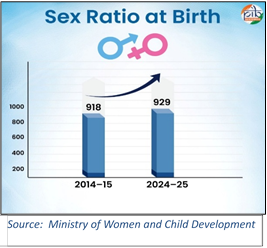
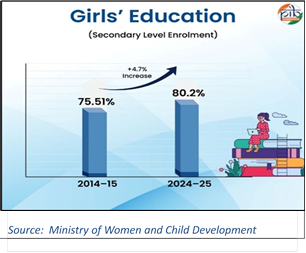
Launched on 22nd January 2015, the scheme is an initiative of the Government. It aims to address the declining child sex ratio, prevent gender-biased sex selection, and promote the survival, protection, and education of the girl child.
The initiative focuses on improving institutional deliveries, increasing enrolment of girls in secondary education, reducing dropout rates, and strengthening antenatal care registration. It also promotes awareness on safe menstrual hygiene and management. The scheme has evolved into a national movement for girl child empowerment, focusing on mindset change and gender equality.
The scheme integrates strict enforcement of the PCPNDT (Pre-Conception and Pre-Natal Diagnostic Techniques) Act with sustained mass awareness efforts to challenge gender-biased social norms and drive behavioural change. The National Family Health Survey-5 (NFHS-5) marked a significant demographic shift in the sex ratio, recording 1,020 women up from 943 (Census 2011) for every 1,000 men in India’s population.
Pradhan Mantri Matru Vandana Yojana (PMMVY)
Recognising the importance of maternal health and early childhood care, PMMVY was introduced in 2017. It is a maternity benefit scheme to support pregnant and lactating women.
Under the scheme, women receive ₹5,000 in two instalments for the first living child and ₹6,000 for the second child (girl child only). Payments are linked to key health milestones such as early registration, antenatal care, and immunisation.
Direct Benefit Transfers ensure timely support, with provisions for fresh eligibility in cases of miscarriage/stillbirth. The assistance also acts as partial wage compensation. This helps improve maternal well-being, promotes institutional care, and advances gender equity.
Key reach and coverage:
- Number of beneficiaries enrolled since inception: ₹4.92 crore (as on 30th April, 2026)
- Number of beneficiaries paid since scheme inception: ₹4.28 crore (as on 30th April, 2026)
- Total amount paid: ₹20,150 crore
|
Rakchi Sangma’s Journey to Safe Motherhood
Rakchi N. Sangma is a homemaker and small farmer in Meghalaya’s Belpara village in North Garo Hills, barely managing to support her family. Things got more difficult during pregnancy with financial constraints and limited access to healthcare.
She sought support under the PMMVY scheme and got much needed relief at the right time. The financial assistance enabled her to access nutritious food, regular antenatal check-ups, and essential medical care without additional financial burden. With proper care and continuous monitoring, Rakchi safely delivered a healthy baby at a healthcare institution
|
Pradhan Mantri Surakshit Matritva Abhiyan (PMSMA)
For pregnant women, timely medical care can make a noticeable difference between a safe, healthy pregnancy and one with serious health risks. Launched in 2016, PMSMA addresses this need by providing free and quality antenatal check-ups at government health facilities on the 9th of every month. The initiative focuses especially on women in the second and third trimesters. This enables early identification and management of high-risk pregnancies.
Key reach and coverage:
- Over 7.4 crore pregnant women examined under PMSMA scheme
- 8,812 Volunteers Registered
- Over 22 thousand facilities providing PMSMA services nationwide
- More than 6.85 crore antenatal check-ups conducted and 1.03 crore high-risk pregnancies identified for focused monitoring
- PMSMA additionally introduced digital tracking and follow-up support for high-risk pregnancies.
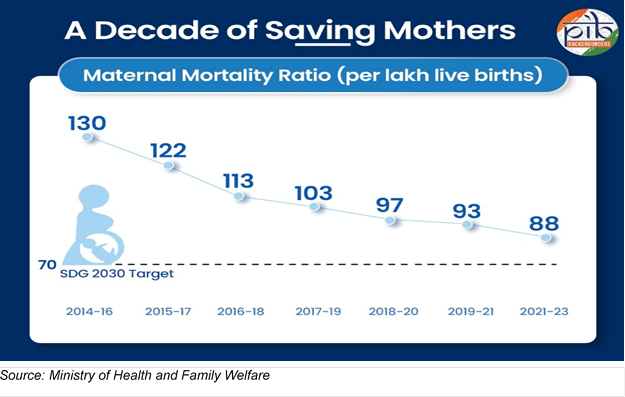
- This marks a significant reduction in Maternal Mortality Ratio to 88 per lakh live births (2021-2023), down from 130 (2014-15)
Janani Suraksha Yojana (JSY)
Janani Suraksha Yojana provides conditional cash assistance and community outreach under the National Health Mission. The scheme encourages facility-based deliveries among poor pregnant women, particularly those from BPL households and SC/ST communities, while ASHA workers help connect beneficiaries to healthcare services. Together, these efforts have increased institutional deliveries, improved access to maternal healthcare, and reduced risks associated with home deliveries.
Janani Shishu Suraksha Karyakram (JSSK)
In 2014, the JSSK was extended to all antenatal & post-natal complications of pregnancy. Similar entitlements have been put in place for all sick newborns and infants (up to one year of age) accessing public health institutions for treatment. The key achievements of the programme are:
- JSSK beneficiaries in FY 2024-25: 1.99 crore pregnant women; 16.85 lakh sick infants
These investments show up in outcomes:
- First-trimester antenatal care visits increased from 59% (NFHS-4, 2015-16) to 76.2% (NFHS-6, 2023-24).
- Nationally, the share of women completing four or more Antenatal Care (ANC) visits grew from 51% (2015-16) to 65.2% (2023-24).
- Institutional births have increased significantly from 79% (2015-16) to 90.6% (2023-24) at the national level.
Education, Skills and Aspirational Growth
Since 2014, girls’ education has moved beyond basic access. The focus now is on continuity, progression, and meaningful outcomes across stages. More girls are staying in school, moving into higher education and acquiring valuable skills.
This transition is anchored in the National Education Policy (NEP) 2020. The policy addresses structural barriers that earlier limited girls’ educational journeys. Gender inclusion is embedded as a core principle across the education system.
- The Gender Inclusion Fund enables targeted support for disadvantaged girls
- Flexible learning pathways reduce dropouts and support continued participation
- Multidisciplinary options allow girls to pursue diverse academic interests
School & Foundational Education
Samagra Shiksha and Kasturba Gandhi Balika Vidyalayas
Launched in 2018–19, Samagra Shiksha adopts a holistic approach to school education. It integrates learning from pre-primary to Class XII under one comprehensive framework. The scheme has strengthened access, infrastructure, digital learning, and student retention across the school system.
For girls, these improvements are especially important. Nearby schools, functional toilets, safe classrooms, trained teachers, and residential support all influence whether girls’ education continues beyond the early years.
- In 2024–25, India had 14.71 lakh schools, 1.01 crore teachers, and 24.69 crore students. The female enrolment has increased from 1.57 crore (32%) in 2014-15 to 11.93 crore (48%) today.
- Between 2018–19 and 2025–26, over 4,073 schools were upgraded. More than 1.49 lakh ICT and digital learning initiatives, including smart classrooms, were supported. Skill education also expanded steadily. The number of schools providing vocational courses covered increased from 9,477 to 25,000, helping students gain early exposure.
School conditions today are far more supportive for girls. In 2024–25:
- 99.3% schools had access to drinking water. In 2014-15, 95.72% of the schools had a drinking water facility
- 97.3% schools had functional girls’ toilets. In 2014-15, 92.09% of the schools had separate girls' toilet facility
- 93.6% schools had electricity
- 89.5% schools had libraries
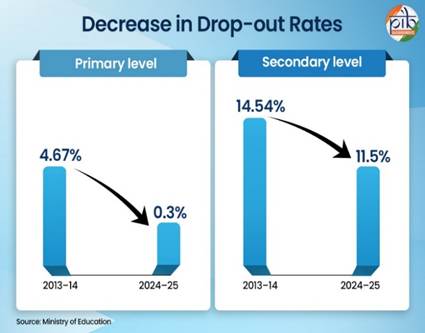
Continuity in schooling has also improved over time. Dropout rates have declined significantly across primary and secondary levels.
Within this strengthened system, Kasturba Gandhi Balika Vidyalayas (KGBVs) provide targeted support for girls who require residential schooling. They are part of the Samagra Shiksha framework and focus on girls fromsocio-economically disadvantaged groups such as SCs, STs, OBCs and others—especially in educationally backward blocks. Covering classes VI–XII, these residential schools provide a supportive environment for girls to learn and progress from elementary to higher secondary education.
The scale and reach of KGBVs are significant:
- Functional KGBV schools increased from 4,996 (2022) to 5,316 (2026)
- Enrolment increased from 6.07 lakh (2020–21) to 7.58 lakh (2025–26)
|
From a Residential School to the Civil Services (Uttar Pradesh)
In Amroha, Uttar Pradesh, Kumari Nidhi began her journey at a Kasturba Gandhi Balika Vidyalaya. Like many girls, she came from a background where opportunities were limited. With consistent support and a focused academic environment, she continued her studies and went on to clear the UPSC Civil Services Examination in 2023, securing the 39th rank. Today, she serves as a Sub-Divisional Magistrate (SDM). Her journey shows what becomes possible when access to education is combined with sustained support.
|
|
From School Grounds to the World Stage (Uttar Pradesh)
From KGBV-Ganj Muradabad in Unnao, Archana Nishad discovered her strength in sports early on. What began as participation at the school level gradually turned into serious pursuit. She went on to represent India as part of the cricket Under-19 Women’s World Cup winning team in 2023. Her journey reflects how encouragement at the right stage can open doors far beyond the classroom.
|
Scholarships & Financial Support
As more girls complete school education, financial support becomes important for ensuring that higher studies remain within reach. Scholarships are helping young women continue their education without placing additional pressure on families.
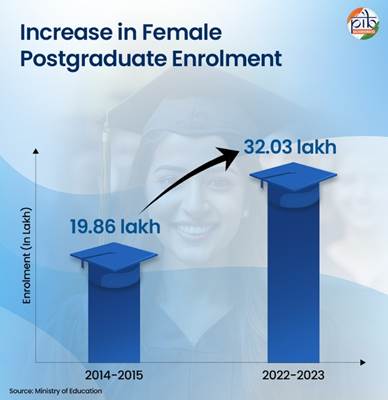
The Central Sector Scholarship for College and University Students supports meritorious students from economically weaker families. About 50% of scholarships are reserved for girls. The National Scholarship for Post Graduate Studies, launched in 2023–24, provides financial support of ₹1.5 lakh per year to selected students, including 3,000 women annually.
The AICTE PRAGATI Scholarship is further expanding opportunities in technical education. Since 2014–15, it has provided 10,000 scholarships annually across diploma and degree courses. By 2024–25, nearly 36 thousand girl students benefited under the scheme.
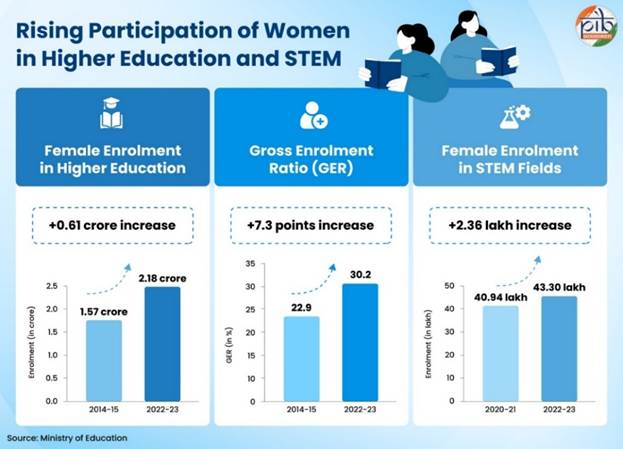
This continued support is reflected in outcomes. Between 2014–15 and 2022–23, over 12 lakh more women enrolled in higher education.
Women in Science, Technology, Engineering, and Mathematics (STEM)& Higher Education
For a long time, careers in science and technology felt distant for many girls. Expanding women’s opportunities has meant opening clearer pathways into STEM fields.
The Vigyan Jyoti Scheme supports girls from Classes IX to XII to study STEM through mentoring, lab exposure, workshops, and guided support. Since its inception in December 2019, the scheme has reached over 1.12 lakh girls across 300 districts in 34 States and UTs.
Access to premier institutions has also improved. Additional (supernumerary) seats in IITs and NITs increased women’s participation from below 10% to over 20%. Women also accounted for over 53% of UGC NET-JRF scholars in STEM subjects in 2024–25.
Skills & Digital Inclusion
Since 2014, more women have been entering emerging sectors, supported by expanded skilling initiatives and a growing startup ecosystem.
Skills and Employability: Pradhan Mantri Kaushal Vikas Yojana (PMKVY)
Education has expanded opportunities for women, but turning these opportunities into livelihoods depends on access to relevant skills and industry exposure. Pradhan Mantri Kaushal Vikas Yojana (PMKVY) launched in 2015 has played an important role in this transition by providing short-term, industry-aligned training linked to employment and entrepreneurship. Nearly 45% of PMKVY beneficiaries have been women.
The programme has expanded steadily across phases:
- PMKVY 1.0: Over 19 lakh candidates trained
- PMKVY 2.0: Over 1.10 crore candidates trained
- PMKVY 3.0: Around 7.35 lakh candidates trained
The current phase, PMKVY 4.0, focuses on practical and future-ready skills. Training includes on-the-job exposure and covers emerging sectors such as artificial intelligence, drones, green energy, and electronics. In the last three years alone, over 27 lakh candidates have been trained under PMKVY 4.0, with 18.79 lakh certified.
Targeted Skilling for Young Women: NAVYA
NAVYA (Nurturing Aspirations through Vocational Training for Young Adolescent Girls) focuses on girls aged 16–18 years under PMKVY 4.0. Launched in 2025, the programme introduces young women to digital marketing, cybersecurity, AI-enabled services, and environmentally sustainable jobs. It also helps build life skills and financial literacy.
The initiative is being implemented across 27 Aspirational and North-Eastern districts in 19 states, with a target to train 3,850 girls.
As of December 2025:
- 1,295 girls enrolled
- 671 girls trained
Health, Nutrition and Well-being with Dignity
As part of the lifecycle-based approach to women’s health, India is expanding access to affordable healthcare, including mental health, and strengthening nutrition support. Additionally, everyday dignity is being improved through interventions such as clean cooking fuel. These efforts reflect a broader commitment to building a healthier, more equitable society for women and their families.
Ayushman Bharat
Ayushman Bharat, the Government’s flagship scheme launched in 2018 has significantly improved women’s access to affordable and quality healthcare services across India.The four components of this comprehensive scheme work together to ensure that people have access to quality healthcare at the primary, secondary, and tertiary levels.
- Ayushman Bharat Pradhan Mantri Jan Arogya Yojana (AB-PMJAY) provides cashless secondary and tertiary healthcare, reducing financial burdens on economically vulnerable families. As of February 2026, over 43.52 crore Ayushman cards were created nationwide under AB-PMJAY. Women account for nearly 49% or 21 crore of these.
A total of 36,229 hospitals has been empanelled under the scheme, out of which 19,483 are public and 16,746 are private. Approximately 48% of authorised hospital admissions are women beneficiaries So far, more than 4.97 crore women have received authorised hospital admissions under the scheme.
- Ayushman Arogya Mandir (AAM) are primary healthcare centres across rural, urban and tribal regions that provide comprehensive, universal, and free services to people closer to where they live. Over 1.84 lakh Ayushman Arogya Mandirs are operational nationwide (as on February 27, 2026).
These centres support maternal healthcare, non-communicable disease screening, reproductive healthcare and preventive healthcare services for women.
- PM-Ayushman Bharat Health Infrastructure Mission (PM-ABHIM) is one of India’s largest programmes aimed at strengthening health infrastructure from grassroots to district level. It focuses on establishing and upgrading Ayushman Arogya Mandirs, Block and District Public Health Units and Labs, and Critical Care Hospital Blocks in every district.
This improves timely healthcare access for women in underserved regions Ayushman Bharat Digital Mission (ABDM) creates a unified digital healthcare ecosystem across the country. It enables patients to securely store and access medical records digitally through ABHA accounts. It facilitates tele-consultations linking patients with distant practitioners. Over 95 crore health records have been linked digitally nationwide. Women constitute 49.75% of these accounts. The digital health ecosystem particularly benefits women through portability and easier access to healthcare records.
Saksham Anganwadi and Poshan 2.0
Early nutrition and care shape long-term health and learning outcomes for both mothers and children. Saksham Anganwadi and Poshan 2.0 strengthen this support system through integrated nutrition, health, and early childhood care services for children (0-6 years), adolescent girls, pregnant women, and lactating mothers.
The programmes provide supplementary nutrition, pre-school education, immunisation, health check-ups, and referral services through Anganwadi Centres. To strengthen delivery at the grassroots, major investments have been made in infrastructure and frontline workers.
Key interventions include:
- 1.03 lakh Anganwadi Centres upgraded making them Saksham Anganwadis with improved infrastructure, audiovisual aids, and smart learning tools.
- 10.58 lakh Anganwadi Workers trained in nutrition and Early Childhood Care and Education (ECCE)
- Focus on maternal nutrition, infant feeding, and treatment of Severe Acute Malnutrition (SAM) andModerate Acute Malnutrition (MAM)
- Revised nutrition norms promoting diet diversity, protein, healthy fats, and micronutrients
- Poshan Bhi Padhai Bhi, promoting play-based early learning aligned with National Education Policy 2020
- Increased use of digital learning content and ECCE resources at Anganwadi Centres
Mission Indradhanush
Mission Indradhanush, launched in December 2014, targets unvaccinated and partially vaccinated populations through focused campaigns in high-risk districts and urban areas.
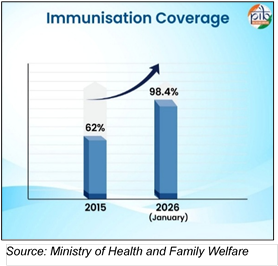
The programme strengthens routine immunisation under the Universal Immunisation Programme, protecting against multiple life-threatening diseases. Digital platforms like U-WIN enable real-time tracking of beneficiaries and vaccination status. Till March18, 2026, over 11.87 crore children and 3.96 crore pregnant women have registered on the portal. 5.46 crore children and 1.32 crore pregnant women have been vaccinated against vaccine preventable diseases. Additionally, 8.73 crore women have been screened for cervical cancer as on 17th February 2026.
Financial Inclusion and Economic Empowerment
In the last 12 years, the Government has placed strong emphasis on advancing women’s financial inclusion and empowerment, recognising that access to finance is a basic right. A range of economic initiatives has expanded women’s access to bank accounts, credit, savings, and entrepreneurial support, bringing millions into the formal financial system.
Sukanya Samriddhi Yojana
Sukanya Samriddhi Yojana has made saving for a daughter’s future more structured and secure. The Government launched this scheme in 2015 under the Beti Bachao Beti Padhao campaign. Families can open accounts for girls up to 10 years of age at post offices and authorised banks.
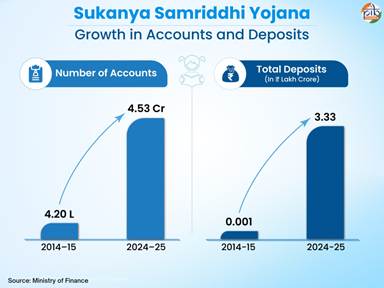
Deposits begin from ₹250 and earn 8.2% annual interest, with tax-free returns under Section 80C. Partial withdrawals are also allowed for higher education and marriage.
Over the years, the scheme has seen strong growth in both accounts and deposits. This reflects increasing financial planning for girls’ education and future through formal savings channels.
DAY-NRLM (Self Help Groups-SHG ecosystem)
In rural areas, women often lacked access to formal credit, markets, and financial decision-making. Self Help Groups (SHGs) helped address this through collective savings, credit access, and peer support.
Over the past decade, Deendayal Antyodaya Yojana - National Rural Livelihood Mission (DAY-NRLM) has expanded this model into a nationwide platform for women-led economic participation. The programme now covers 7,627 blocks nationwide and has developed 1.51 crore community cadre members.
Financial inclusion has grown alongside this expansion of DAY-NRLM. SHGs have accessed over ₹12.18 lakh crore in bank credit. More than 50,548 trained Bank Sakhis support women with banking services, transactions, and loan access.
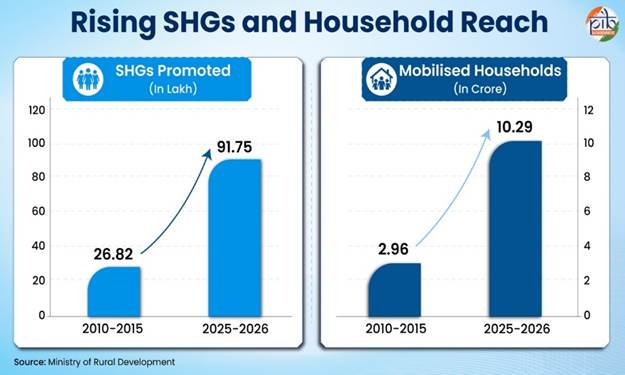
Livelihood support has also expanded through community resource persons such as Krishi Sakhis and Pashu Sakhis, who support farm and livestock activities. At the same time, over 5.88 lakh enterprises have been supported under the Start-up Village Entrepreneurship Programme (SVEP). This has helped women move towards more sustainable income-generating activities.
Lakhpati Didi Scheme
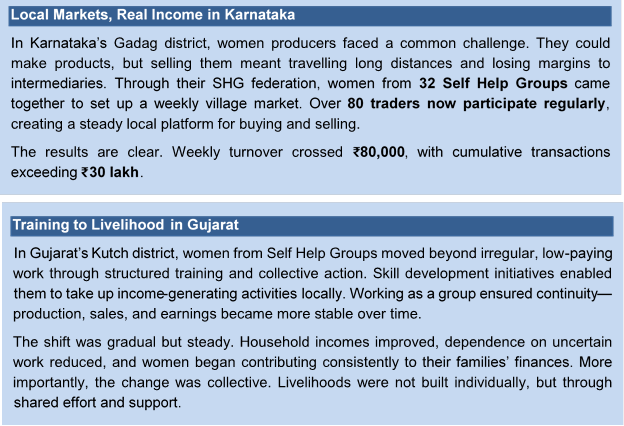
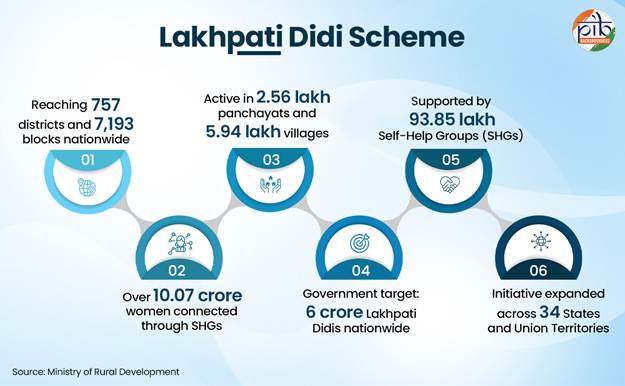
Over the past decade, women-led Self-Help Groups (SHGs) have become a major force for rural economic participation. Lakhpati Didi initiative, focuses on helping women achieve sustainable annual incomes of at least ₹1 lakh.
Building on this, the initiative now covers 34 States/UTs, 757 districts, 7,193 blocks, 2.56 lakh panchayats, and 5.94 lakh villages. This extensive presence is supported by a strong network of 93.85 lakh SHGs with 10.07 crore members. The Government has set a target of creating 6 crore Lakhpati Didis.
These groups have expanded access to savings, credit, livelihoods, and community support, enabling women to participate more actively in local economies and household decision-making.
Pradhan Mantri Jan Dhan Yojana
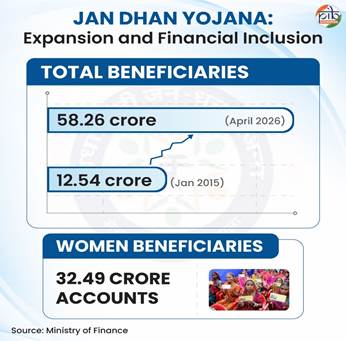
Access to a bank account was not always assured, especially for women. Savings were often kept in cash, outside formal systems, and basic financial services remained out of reach. The Pradhan Mantri Jan Dhan Yojana changed this by making banking simple, accessible, and universal.
Launched in 2014, the scheme focuses on opening zero-balance accounts and connecting households to formal banking. Over time, it has become the foundation for financial inclusion, enabling access to savings, credit, insurance, and direct benefit transfers.
Pradhan Mantri Mudra Yojana (PMMY)
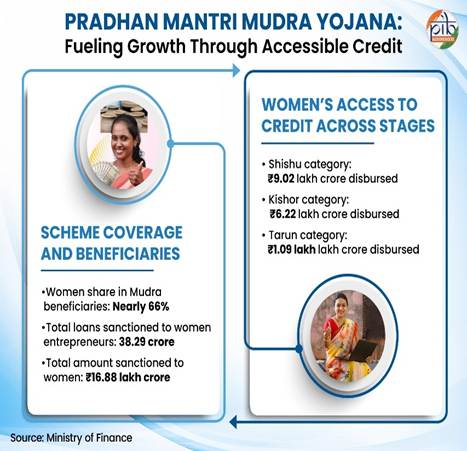
For many women entrepreneurs, access to formal credit was often the biggest barrier to starting or expanding a business. Launched in 2015, Pradhan Mantri Mudra Yojana (PMMY) addresses this gap. Through collateral-free loans for micro and small enterprises, it is spread across categories such as Shishu, Kishor, Tarun, and Tarun Plus. The categorisation caters to different stages of growth and financial needs of the enterprises.
Total loans sanctioned grew from ₹3.49 crore in 2015-16 to ₹57.79 crore till March 2026. Total amount sanctioned grew from ₹1.37 lakh crore in 2015-16 to ₹40.07 lakh crore till March 2026.
Over the years, the scheme has emerged as a major driver of women-led entrepreneurship.
Pradhan Mantri PM Street Vendor's AtmaNirbhar Nidhi (SVANidhi) Scheme
For many urban women street vendors, the pandemic disrupted incomes and threatened small businesses. PM SVANidhi was introduced in June 2020 to help them restart and stabilise their businesses through working capital support. This scheme supports street vendors through collateral-free working capital loans and formal financial access.
The scheme provides loans of up to ₹15,000 in the first tranche, followed by higher loan eligibility of ₹25,000 and ₹50,000 for timely repayment. Vendors also receive a 7% interest subsidy, digital cashback incentives, and UPI-linked RuPay Credit Cards.
In the last six years, over 1.15 crore loans have been sanctioned, benefiting nearly 74.9 lakh street vendors. Women account for 46% of beneficiaries under the scheme.
Stand-Up India
Launched in April 2016, Stand-Up India enables women to access formal credit for setting up new enterprises. It supports their transition from small activities to larger, structured businesses across sectors. Women can avail loans from ₹10 lakh to ₹1 crore. Repayment is allowed up to seven years, including a moratorium period. This makes it easier to start or scale independent businesses.
The Stand-Up India portal also supports women with application guidance, training linkages, and mentorship. The scale of women-led enterprise creation under the scheme has expanded steadily.
The scheme remained operational until March 2025, by which time it had supported over 2.05 lakh women entrepreneurs. During this period, women accounts increased from over 55 thousand in 2018 to 1.90 lakh in 2024. At the same time, sanctioned amount rose from over ₹12 crore to nearly ₹44 crore.
NaMo Drone Didi Yojana
Access to modern agricultural technology is now being led by women through the Namo Drone Didi scheme. Launched in November 2023, the scheme places advanced tools directly in the hands of women from Self Help Groups (SHGs).
Women are trained to operate drones for activities such as spraying fertilizers and pesticides. This creates a new source of income while improving efficiency in farm operations.
The Government approved the scheme with an outlay of ₹1,261 crore for the period 2023–24 to 2025–26. It aims to provide 15,000 drones to women SHGs, building a network of women-led agri-service providers. 1094 drones were distributed to drone didis of SHGs in 2023-24. All selected women have been trained at Directorate General of Civil Aviation (DGCA)-authorised Remote Pilot Training Organisations. This marks a big shift in women’s role in agriculture.
Womaniya (GeM)
Market access has often remained limited for women entrepreneurs, especially those operating from SHGs or small enterprises. The Womaniya initiative addresses this by connecting women directly to government procurement through the Government e-Marketplace (GeM).
Launched in 2019, the initiative creates a dedicated digital interface for women to list and sell their products such as handicrafts, handloom, and home décor. These items can then be directly purchased by Central Ministries and PSUs anywhere in India. It removes intermediaries and enables direct participation in formal markets.
The scale of participation and expansion reflects strong adoption of the scheme:
- Over 2.1 lakh women-led enterprises registered on GeM
- Around 13.7 lakh orders secured in FY 2025–26
- More than ₹ 28,000 crore contract value awarded to women-led enterprises with 27.60% growth over FY 2024-25
Womaniya has grown into a robust ecosystem, securing 5.6% of GeM's total order value- surpassing the mandated 3% procurement target.
Self Help Entrepreneur Mart (SHE-Mart)
Even after access to credit and skills, many rural women still face challenges in selling their products. The scheme of SHE-Marts, announced in the Union Budget 2026–27, addresses this by creating dedicated retail spaces for women under the SHG ecosystem.
These are planned as community-owned outlets managed by SHG federations. They allow women to sell directly to consumers, improve visibility of their products, and reduce dependence on intermediaries.
The Government has set a target to benefit 1 crore women through this initiative. This initiative enables women to transition from small-scale livelihood activities to owning and managing sustainable enterprises.
Safety, Security, Dignity and Living Standards
Since 2014, the Government has adopted a broader approach to women’s empowerment by linking safety and dignity with everyday quality of life. Efforts have focused on strengthening institutional support while expanding access to housing, sanitation, clean water, and other essential services.
These interventions have improved safety, reduced everyday hardships, and created more enabling conditions for women, especially in vulnerable and underserved communities.
Mission Shakti: A Convergent Framework
Mission Shakti, implemented since April 2022, is strengthening systems to ensure women’s safety, protection, and empowerment across the country. It combines immediate support with long-term capacity building through its two verticals — Sambal (safety) and Samarthya (empowerment). Key components under Sambal include:
- One Stop Centres (OSCs)
- Women Helpline (181)
- Nari Adalat
Some of the key components under Samarthya include:
- Shakti Sadan
- Sakhi Niwas
- National Creche Scheme (Palna)
- Supportive Action for Nurturing and Knowledge-Based Advancement, Last-Mile Delivery and Potential Realisation of Women) SANKALP: HEW (Hub for Empowerment of Women)
Strengthening frontline support:
- 973 One Stop Centres operational nationwide
- Over 14.49 lakh women assisted through these centres
- Over 3 crore women supported through the Women Helpline (181) providing 24×7 assistance
- Integrated with Emergency Response Support System (112) for faster response
Improving access to justice and policing:
- 15,000+ Women Help Desks across police stations in India, improving accessibility and trust
- Emergency Response System (112) ensures immediate, technology-enabled assistance
Community and digital interventions:
- Nari Adalats at gram panchayat level for local dispute resolution through mediation
- SHe-Box portal enabling online reporting of workplace harassment
- Digital platforms making grievance redressal faster and more accessible
Together, these interventions are creating a responsive support system, ensuring timely assistance, greater trust in institutions, and safer environments for women.
Swachh Bharat Mission (SBM)
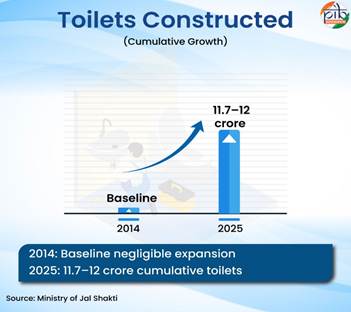
Swachh Bharat Mission (SBM) has transformed access to safe sanitation, significantly improving women’s health, safety, and dignity. Launched in October 2014, it focuses on eliminating open defecation and strengthening waste management across rural and urban areas.
Key achievements:
- Nationwide Open Defecation Free (ODF) status achieved successfully in October 2019
- SOver 6.3 lakh Community & Public Toilets constructed under Swachh Bharat Mission (Urban)
- More than 2.7 lakh Community Sanitary Complexes built under Swachh Bharat Mission (Gramin)
- Nearly 16 crore families got access to clean tap water, nurturing health and well-being of every woman, every family in rural areas.
- Over 12 crore individual household latrines/toilets built
- More than 5 lakh villages declared as ODF Plus (Model). An ODF Plus village is defined as a village which sustains its Open Defecation Free (ODF) Status, ensures solid and liquid waste management and is visually clean.
- More than 5.3 lakh villages having arrangements for solid waste management and 5.4 lakh villages having arrangement of liquid waste management.
Pradhan Mantri Awas Yojana (PMAY)
The Pradhan Mantri Awas Yojana (PMAY)aims to achieve “Housing for All” by providing pucca houses with basic amenities to eligible rural and urban households. The Pradhan Mantri Awas Yojana–Urban (PMAY-U) was launched in 2015.It was followed by launch of Pradhan Mantri Awas Yojana–Gramin (PMAY-G) in 2016.
Under PMAY-Gramin, as of March 2026, 4.15 crore houses have been allocated, 3.90 crore sanctioned, and 2.99 crore houses completed, supported by financial assistance of over ₹4.03 lakh crore.
Key achievements:
- 96% houses under PMAY-U 2.0 allotted to women
- Total homes sanctioned – 125.31 lakh
- Total homes grounded – 119.35 lakh
- Total homes completed – 98.10 lakh
Pradhan Mantri Ujjwala Yojana (PMUY)
The scheme, launched in May 2016, provides deposit-free LPG connections to women from poor households, promoting clean cooking fuel adoption. It aims to reduce indoor air pollution and improve women’s health, safety, and overall quality of life. Over the decade, the scheme has transformed the lives of millions across the country. The scheme also provides refill support and targeted subsidies to ensure sustained LPG usage among economically vulnerable households.
- Total LPG connections released under PMUY (as on 14 May 2026): 10.55 crore
- As part of the additional 25 lakh LPG connection target under PMUY, 22.42 lakh connections had been released (as of 4 May 2026)
Jal Jeevan Mission (JJM)
The Jal Jeevan Mission launched in August 2019, has significantly improved women’s daily lives by ensuring functional household tap water connections (Har Ghar Jal). Historically, women and girls have shouldered the responsibility of collecting water, often traveling long distances and dedicating several hours daily to the task.
Around 15.84 crore families got access to clean tap water, nurturing the health and well-being of every woman and every family in rural areas. JJM has reduced this manual labour, enabling women to reclaim time for education, income-generating activities, and caregiving. The mission has been extended till 2028, with an aim to achieve 100% tap water connections in rural areas.
|
From Long Walks to Lasting Change: Lakshmi Murmu’s Journey to Dignity Through Tap Water
The success story of Lakshmi Murmu from rural West Bengal, illustrates the transformative impact of the mission on women’s lives. Earlier, Lakshmi had to walk long distances daily to collect water. This was a physically demanding and time-consuming task that affected her health and limited her ability to engage in income-generating activities. With the provision of a Functional Household Tap Connection (FHTC) under the mission, her household now has access to safe drinking water. It has significantly reduced her daily labour, improved her health and well-being, and freed up time for productive work. The intervention has demonstrated how access to basic services like water can lead to meaningful social and economic empowerment.
|
Participation, Representation, and Decision-Making
Over the past decade, women’s participation in governance and public life has expanded steadily. The shift became visible not only in voting patterns, but also in leadership, representation, and decision-making roles across institutions.
Women constituted 48.62% of the electorate, with over 47 crore registered voters in 2024. Their voter turnout stood at 65.78%, slightly higher than men. Women’s participation as electoral candidates also increased, to nearly 10% in 2024.
Women’s presence in legislatures has become more visible over time. In 2024, 75 women were elected to the Lok Sabha. Women also accounted for nearly 17% of Rajya Sabha members.
The most visible transformation took place at the grassroots. Today, over 14.5 lakh women serve as elected representatives in Panchayati Raj Institutions, accounting for nearly 46% of the total. Their leadership has strengthened focus on issues such as drinking water, sanitation, nutrition, schools, and primary healthcare.
The Nari Shakti Vandan Adhiniyam, 2023 marked another significant step. The Act provided 33% reservation for women in the Lok Sabha and State Legislative Assemblies. This has created a stronger framework for women’s representation in legislative bodies.
The Government also ensured that women’s participation expanded in national institutions. In 2025, the first batch of 17 women cadets graduated from the National Defence Academy, marking a historic milestone in the armed forces. Their induction built on a larger shift since women entered the NDA in 2022. By early 2026, a total of 158 women cadets had joined the Academy.
Together, these changes reflect a broader shift. Women have moved from participation to representation and leadership, making governance more inclusive and more representative of everyday realities.
Nari Shakti as the Foundation of Viksit Bharat
Over the past 12 years, the government’s sustained focus on women empowerment has reshaped social welfare- from a basic safety net into a platform that fosters leadership, dignity, and opportunity.
As India moves towards the goal of Viksit Bharat by 2047, the role of women is increasingly becoming central to this journey. Across sectors, women are contributing as workers, entrepreneurs, farmers, innovators, and leaders. Their participation is strengthening local economies, improving household resilience, and influencing community decisions.
The government has ensured that women have access to education, income, and decision-making, extending the impact to their families, communities, and future generations.
From entrepreneurship to grassroots governance, from home to office boardrooms, Nari Shakti is advancing with greater strength, freedom, and an unyielding sense of purpose. Viksit Bharat will not only serve the women of this country, it will be led from the front by them.
References
Press Information Bureau
https://www.pib.gov.in/PressReleasePage.aspx?PRID=1999713®=3&lang=2#:~:text=The%20Female%20enrolment%20has%20increased,32%25)%20in%202014%2D15
https://www.pib.gov.in/PressReleseDetailm.aspx?PRID=2161543&utm_®=3&lang=2
https://www.pib.gov.in/Pressreleaseshare.aspx?PRID=2091737&utm_®=3&lang=2
https://www.pib.gov.in/PressReleasePage.aspx?PRID=2235796®=3&lang=1
https://www.pib.gov.in/PressReleaseDetail.aspx?PRID=2245228®=1&lang=1
https://www.pib.gov.in/PressNoteDetails.aspx?NoteId=157709&ModuleId=3®=3&lang=1
https://www.pib.gov.in/PressNoteDetails.aspx?NoteId=154880&ModuleId=3®=3&lang=2
https://www.pib.gov.in/PressReleasePage.aspx?PRID=2216748®=3&lang=1
https://www.pib.gov.in/PressReleasePage.aspx?PRID=2235818®=3&lang=1
https://www.pib.gov.in/PressReleasePage.aspx?PRID=2146870®=3&lang=2
https://www.pib.gov.in/PressNoteDetails.aspx?NoteId=155102&ModuleId=3®=3&lang=2
https://www.pib.gov.in/PressNoteDetails.aspx?NoteId=158056&ModuleId=3®=3&lang=2
https://www.pib.gov.in/PressReleasePage.aspx?PRID=2249915®=3&lang=1
https://www.pib.gov.in/PressReleasePage.aspx?PRID=2206995®=3&lang=1
https://www.pib.gov.in/PressReleasePage.aspx?PRID=2119045®=3&lang=2
https://www.pib.gov.in/PressReleasePage.aspx?PRID=2244648®=3&lang=2
https://www.pib.gov.in/PressReleasePage.aspx?PRID=2215001®=3&lang=1
https://www.pib.gov.in/PressNoteDetails.aspx?id=158114&NoteId=158114&ModuleId=3®=3&lang=2
https://www.pib.gov.in/PressReleasePage.aspx?PRID=2005189®=3&lang=2
https://www.pib.gov.in/PressReleasePage.aspx?PRID=2198559®=3&lang=2
https://www.pib.gov.in/PressReleasePage.aspx?PRID=2236551®=3&lang=1
https://www.pib.gov.in/PressReleaseIframePage.aspx?PRID=2094929®=3&lang=2
https://www.pib.gov.in/PressReleasePage.aspx?PRID=2239637
https://www.pib.gov.in/PressReleasePage.aspx?PRID=2113800®=3&lang=2
https://www.pib.gov.in/PressReleasePage.aspx?PRID=2128024®=3&lang=2
Press Release: Press Information Bureau
https://www.pib.gov.in/PressReleasePage.aspx?PRID=2074713®=3&lang=2
https://www.pib.gov.in/PressReleasePage.aspx?PRID=2226336
https://www.pib.gov.in/PressReleasePage.aspx?PRID=2245908
https://www.pib.gov.in/PressReleasePage.aspx?PRID=2245904
https://static.pib.gov.in/WriteReadData/specificdocs/documents/2026/mar/doc202631807601.pdf
https://www.pib.gov.in/PressReleasePage.aspx?PRID=2247176
Ministry of Women and Child Development
Beti Bachao Beti Padhao (BBBP) | Ministry of Women and Child Development
https://missionshakti.wcd.gov.in/public/documents/whatsnew/BBBP_Operational_Manual.pdf
https://missionshakti.wcd.gov.in/public/documents/whatsnew/BBBP_Operational_Manual.pdf
https://pmmvy.wcd.gov.in/WebsiteContent/assets/pdf/success-story/ss-003.pdf
https://pmmvy.wcd.gov.in/
Ministry of Education
https://www.education.gov.in/en/national-education-policy
https://dashboard.udiseplus.gov.in/
https://www.education.gov.in/sites/upload_files/mhrd/files/upload_document/CPIOs.pdf
https://samagra.education.gov.in/kgbv.html
https://dashboard.udiseplus.gov.in/report2025/static/media/UDISE+2024_25_Booklet_nep.ea09e672a163f92d9cfe.pdf
https://dashboard.udiseplus.gov.in/report2025/static/media/UDISE+2022_23_Booklet_nep.897ad1d762ba546d666b.pdf
Lok Sabha Questions
https://sansad.in/getFile/loksabhaquestions/annex/187/AS436_KnRltD.pdf?source=pqals
https://sansad.in/getFile/loksabhaquestions/annex/187/AU5006_t85YVC.pdf?source=pqals
https://sansad.in/getFile/loksabhaquestions/annex/187/AS322_pXcJiB.pdf?source=pqals
https://sansad.in/getFile/annex/268/AU2676_k3eJh9.pdf?source=pqars
https://sansad.in/getFile/loksabhaquestions/annex/185/AU1136_kCnH0M.pdf?source=pqals
https://sansad.in/getFile/loksabhaquestions/annex/187/AU5006_t85YVC.pdf?source=pqals
https://sansad.in/getFile/loksabhaquestions/annex/187/AS322_pXcJiB.pdf?source=pqals
Ministry of Rural Development
https://nrlm.gov.in/outerReportAction.do?methodName=showIndex#gsc.tab=0
https://lakhpatididi.gov.in/lakhpati-didi-impact/
Ministry of Finance
https://www.pmjdy.gov.in/account
https://www.pmjdy.gov.in/files/progress/phase1.pdf
https://www.indiabudget.gov.in/doc/Budget_Speech.pdf
https://www.indiabudget.gov.in/economicsurvey/doc/eschapter/echap11.pdf
Others
https://mospi.gov.in/sites/default/files/reports_and_publication/statistical_publication/Women_Men/mw24/SuccessStories.pdf
https://vigyanjyoti.dst.gov.in/
https://pmsvanidhi.mohua.gov.in/
https://pmsvanidhi.mohua.gov.in/Home/PMSDashboard
https://namodronedidi.da.gov.in/
https://she-mart.in/
https://sbmurban.org/
https://dashboard.abdm.gov.in/abdm/
https://dashboard.nha.gov.in/public/
Click here to see in PDF
PIB Research
(Release ID: 2267960)
Visitor Counter : 12163