PIB Backgrounder
Securing the Nation
12 Years of India's Zero Tolerance Against Terror
Posted On:
19 JUN 2026 10:57AM by PIB Delhi
India’s comprehensive counter-terrorism transformation over the last 12 years reflects a firm zero-tolerance approach towards terrorism. Strengthened legal frameworks, institutional reforms, and intelligence integration have significantly enhanced inter-agency coordination across central and state agencies. Focused actions against cross-border terrorism, dismantling of terror financing networks, and modernization of police and security forces have reinforced national security architecture. Expansion of cyber security capabilities has further strengthened preparedness against emerging digital threats. These sustained efforts have contributed to measurable improvements in internal security indicators, including reduced terror incidents, lower casualties among civilians and security forces, and improved public safety, development outcomes, and national resilience.
A Decade of Concrete Decisions and Actions
In the last twelve years, India has undertaken one of the most comprehensive transformations of its national security architecture. The Government adopted a policy of zero tolerance against terrorism. It moved beyond reactive responses and built a proactive, whole-of-government approach. Networks financing terrorism were disrupted. Investigative agencies were empowered. Border surveillance was strengthened. Coordination among security institutions was enhanced. Diplomatic initiatives elevated India's voice in international forums and raised the global cost of sponsoring terror.
Twelve years of sustained effort have produced a transformation that can be understood through three interlocking outcomes. Vishwas is the restoration of public confidence through decisive action. Vikas is the development of a robust legal and institutional security architecture. Jan-Kalyan is the creation of a safer environment in which development, dignity, and ordinary life can flourish.
These outcomes were not accidental. They were built through the willingness to act with military precision when diplomacy reached its limits. They were built through landmark legislative reforms that gave investigative agencies sharper tools and wider reach. They were built through technology-driven intelligence platforms that connected the country's security apparatus in real time. India's counter-terrorism record over this period reflects a state that moved decisively from managing terrorism to dismantling the conditions that sustain it.
None of this, however, came without a starting point. When the Government assumed office in May 2014, it inherited a security environment shaped by decades of neglect, institutional gaps, and unresolved conflicts across multiple theatres. Understanding what was inherited is essential to appreciating what was built. The challenges the Government faced were not ordinary. They were systemic, simultaneous, and severe.
The Challenge Landscape
India in 2014 stood at a crossroads. The internal security environment was deeply fractured across multiple simultaneous theatres. The preceding decade (2004–2014) had recorded 7,217 terrorist incidents. Nearly 92,000 citizens had lost their lives over four decades to terrorism, insurgency, and extremism combined. The challenge landscape demanded not incremental reform, but systemic transformation.
Infiltration from across the Line of Control (LoC) in Jammu and Kashmir has been a persistent and escalating challenge. Pakistan's Inter-Services Intelligence (ISI) provides training, arms, and financial support to designated terrorist organisations including Lashkar-e-Taiba, Jaish-e-Mohammed, and Hizbul Mujahideen. These terror groups are then used to destabilise peace and stability of the nation. The 2008 Mumbai attacks which claimed 166 lives were perpetrated by LeT operatives with active ISI support. Such terror incidents demonstrated the catastrophic potential of state-sponsored terrorism, yet accountability remained elusive in the absence of a credible deterrence doctrine.
Simultaneously, Kashmir separatism, sustained by cross-border support and local mobilisation networks, posed a major challenge to peace and governance in the country. From 2010 to 2014, an average of 2,654 organized stone-pelting incidents occurred every year. Over-ground worker (OGW) networks provided active support to infiltrating militants. The political and administrative framework of the erstwhile State, governed under Article 370, had created structural conditions that complicated effective governance and security response.
Terror groups were also exploiting social media, encrypted communication platforms, the dark web, and cryptocurrencies for propaganda, recruitment, financing, and operational coordination.
The global emergence of the Islamic State (ISIS) after 2014 introduced a new dimension to India’s security concerns. The rise of online radicalisation and extremist propaganda created risks of recruitment among Indian nationals and heightened the threat of self-radicalised, low-intensity attacks targeting civilian spaces. This evolving threat landscape required security agencies to develop new capabilities in counter-radicalisation, cyber monitoring, and intelligence coordination.
By any measure, the security environment inherited in 2014 was extraordinarily challenging. Thousands of terrorist incidents had occurred in the preceding decade; infiltration and terrorism in Jammu and Kashmir remained unabated; insurgencies continued to claim lives; and the legal framework lacked critical provisions, including the ability to designate individuals as terrorists. The magnitude of these challenges called for a fundamental overhaul of India’s security doctrine, institutional capacities, and operational response mechanisms.
India’s Counter-Terror Policy: New Era of Zero Tolerance Against Terrorism
From the first day of assuming office, the Government pursued a single, unwavering principle of zero tolerance against terrorism. The objective was not merely to respond to terror attacks but to dismantle the complete supply chain of the terror ecosystem. Key measures include sustained action against terrorists and support structures, crackdown on terror finance, preventive operations, prevention of infiltration, strengthening the counter-insurgency grid, modernization of security equipment, intensified CASO operations, real-time intelligence sharing, strategic nakas, and day-and-night area domination to sustain peace and stability.
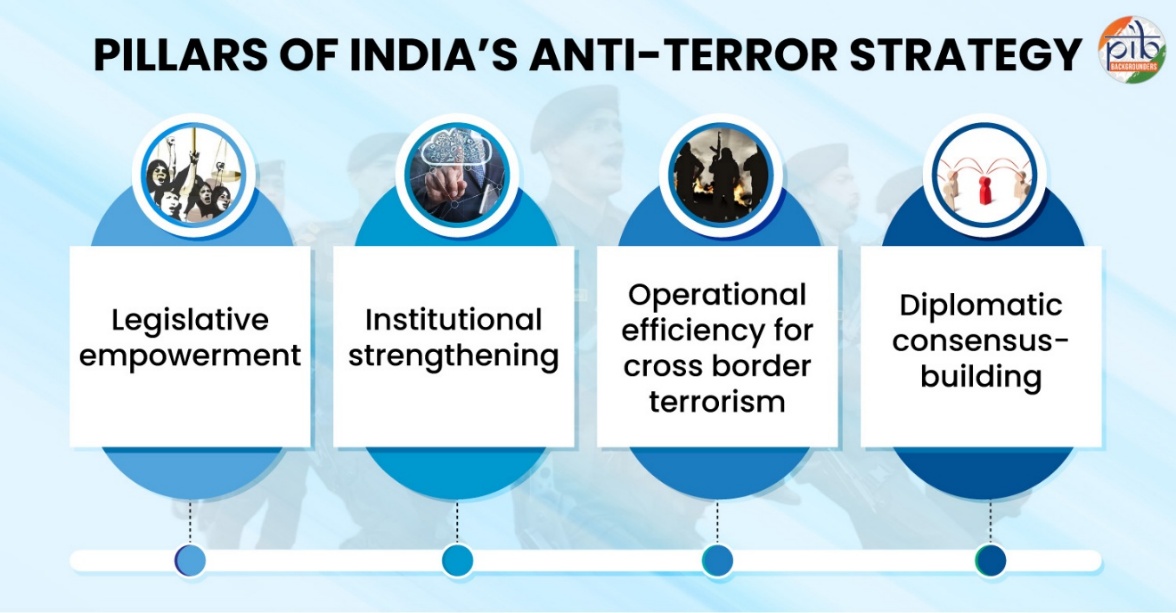
Over twelve years, this strategy took shape across four distinct pillars. The first pillar built legislative empowerment through stronger anti-terror laws and far-reaching legal reforms. The second pillar strengthened institutions, intelligence networks, and investigative capabilities. The third pillar established a doctrine of decisive action against cross-border terrorism and enhanced border management. The fourth pillar constructed a robust multilateral and diplomatic counter-terror architecture, reinforcing India's standing in international cooperation against terrorism.
These four pillars did not emerge fully formed. They were built incrementally, tested operationally, and refined through experience. By 2026, twelve years of legislative reform, institutional construction, operational doctrine, and diplomatic engagement had produced a body of counter-terrorism practice substantial enough to be codified. That codification arrived in the form of PRAHAAR: India's National Counter-Terrorism Policy and Strategy.
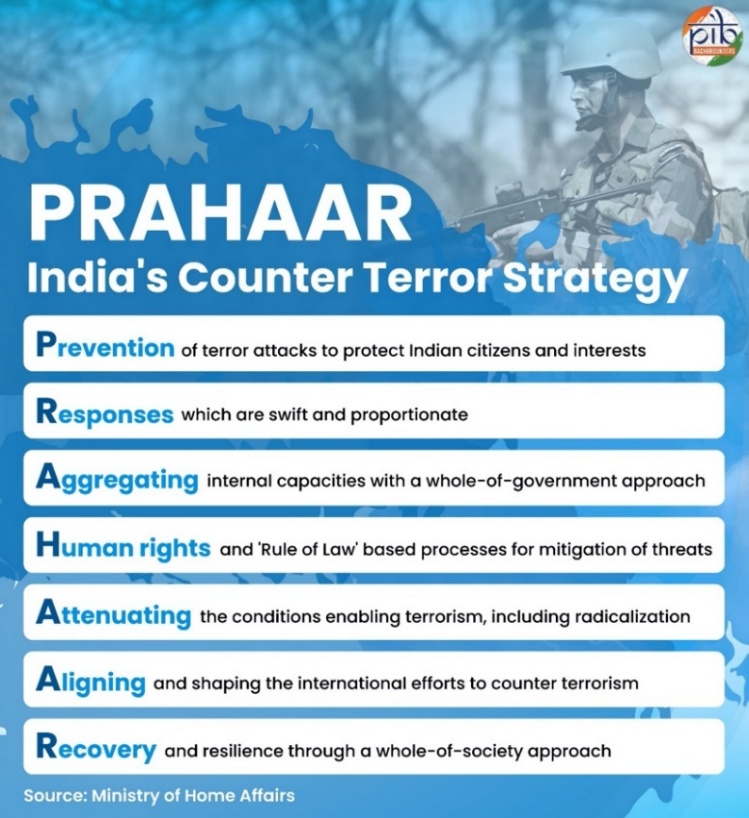
PRAHAAR does not supersede what was built over the preceding decade. Rather, it consolidates, systematises, and gives formal doctrinal expression to the principles and practices that twelve years of governance had established. It integrates prevention, swift response, whole-of-government synergy, human rights-based processes, and international cooperation into a unified national doctrine providing a formal articulation to everything the preceding twelve years had demonstrated in practice.
The sections that follow examine each of the four pillars in detail. Together, they tell the story of how India moved from a reactive security posture to a proactive, resilient, and doctrine-driven counter-terrorism architecture.
Pillar 1: Legislative empowerment
Effective counter-terrorism requires a strong legal foundation. Since 2014, the Government has undertaken major legislative reforms to strengthen investigation, prosecution, and deterrence against terrorism. These measures have empowered security agencies, tightened anti-terror laws, disrupted terror financing, and enhanced India's ability to combat evolving security threats.

The Unlawful Activities (Prevention) Amendment Act, 2019
UAPA Amendment strengthened India’s anti-terror legal framework by expanding the powers of the Central Government and investigative agencies. It is the most significant legislative reform of this decade, passed by Parliament on 2 August 2019 and notified on 14 August 2019.
The amendment empowered the Central Government to designate individuals not merely organisations as terrorists under the Act. The amendment also empowered officers of the National Investigation Agency (NIA) of the rank of Inspector and above to investigate terrorism cases. It also enabled the NIA Director-General to approve seizure or attachment of property linked to terrorism. The Act expanded the jurisdiction of the NIA to investigate cases related to human trafficking, counterfeit currency, cyberterrorism and offences committed outside India affecting Indian interests.
Since the amendment came into force, the Government has designated over 57 individuals as terrorists. These include Masood Azhar (JeM), Hafiz Saeed (LeT), Zaki-ur-Rehman Lakhvi (LeT), Dawood Ibrahim, and key Khalistani operatives including Gurpatwant Singh Pannun (Sikhs for Justice), Hardeep Singh Nijjar (Khalistan Tiger Force), and Wadhawa Singh Babbar (Babbar Khalsa International).
National Investigation Agency Amendment Act, 2019
The NIA amendment act was amended to expand NIA's jurisdictional mandate. The agency is now enabled to investigate terror-related offences committed outside India against Indian interests. Its probing powers have been widened to include cyber terrorism; human trafficking connected to explosive substances. The amendment also elevated the authority of the DG, NIA, to directly approve property seizures and attachments in cases under investigation by the agency.
Strengthening of Prevention of Money Laundering Act (PMLA) Provisions
Successive amendments to the PMLA have provided the Enforcement Directorate (ED) with sharper instruments to trace, freeze, and confiscate terror-linked assets; including hawala channels in J&K, cryptocurrency-based financing by Khalistani networks, and extortion proceeds routed through gangster networks aligned with proscribed organisations.
Bharatiya Nyaya Sanhita (BNS), 2023 - A New Era of Penal Law
The Bharatiya Nyaya Sanhita (BNS), 2023 replaced the Indian Penal Code, 1860. It came into force on 1 July 2024. It is for the first time that terrorism and organised crime has also been defined, and provisions for stringent punishment have been made under the new criminal laws.
The BNS defines a terrorist act as any act that threatens India’s sovereignty, unity, integrity, security, or economic stability through means such as lethal violence, destruction of critical infrastructure, kidnapping, or circulation of counterfeit currency. The law prescribes the death penalty or life imprisonment where a terrorist act results in death. For other terrorist offences, it provides for rigorous punishment ranging from a minimum of five years to life imprisonment.
The BNS also adopts a comprehensive approach by criminalising conspiracy, recruitment, training, harbouring of terrorists (with limited exemptions), and possession of property or proceeds derived from terrorist activities. These provisions significantly strengthen India’s legal capacity to prevent, investigate, and prosecute terrorism and organised crime.
Arms (Amendment) Act, 2019
The Arms (Amendment) Act, 2019 strengthened India's response to terrorism, insurgency, and organised crime by targeting illegal arms networks. The Act introduced stricter punishments for illicit trafficking, illegal possession, manufacture, sale, and transfer of prohibited arms and ammunition. It also imposed severe penalties for theft of weapons from security forces and for involvement in organised crime syndicates. By addressing trans-border arms trafficking and improving firearm traceability through digital licensing systems, the Act disrupted a critical supply chain that sustains terrorist and insurgent activities across the country.
These legislative measures have equipped India's security and investigative agencies with modern legal tools to address emerging security challenges. The reforms have strengthened institutional capacity, improved inter-agency coordination, and enhanced the ability to respond decisively to terrorism.
Pillar 2: Strengthening Institutions for New India
Strong institutions are the backbone of an effective national security framework. Over the last twelve years, India has invested in modernising its investigative, intelligence, and law-enforcement institutions to ensure faster detection, better coordination, and more effective responses to evolving terrorist threats.
National Investigation Agency - Capacity Enhancement
Established through the NIA Act, 2008 in the aftermath of the Mumbai terror attacks, the National Investigation Agency (NIA) is India's premier counter-terrorism investigation agency. It is mandated to investigate and prosecute offences affecting national security, including terrorism, financing of terrorist activities, organised crime with terror linkages, cyber terrorism, and other offences threatening India's sovereignty and integrity.
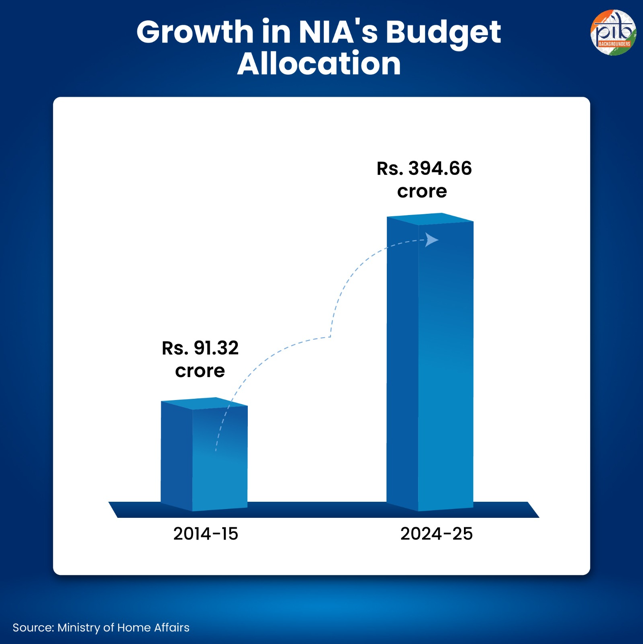
Since 2014, the Government has significantly strengthened the NIA's mandate, operational capabilities, and institutional infrastructure. NIA's budget allocation grew from Rs. 91.32 crore in 2014-15 to Rs. 394.66 crore in 2024-25. It is more than fourfold increase in a decade.
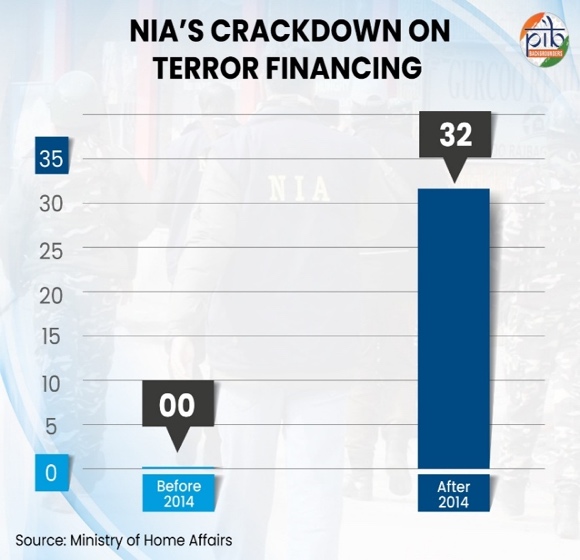
A nationwide network of Special NIA Courts has been established to expedite trials and improve conviction rates. 47 in States and 6 in the UTs. The agency has expanded its footprint through 21 branch offices across the country, supported by zonal offices in Jammu and Guwahati. NIA registered 32 cases of terror financing after 2014, whereas before 2014, not a single case was registered.
Capacity-building has been a major focus, with 108 in-house training programmes conducted since 2019, benefiting 4,471 officers. The establishment of the National Terror Database Fusion and Analysis Centre (NTDFAC) has enhanced data-driven investigations through advanced analytics, while closer coordination with the Directorate of Forensic Science Services (DFSS) has strengthened scientific evidence collection and forensic examination.
|
Did you know: NIA has now emerged as a globally renowned investigative agency, with a conviction rate of 92.70%. The highest among the anti-terror agencies worldwide.
|
Multi-Agency Centre (MAC) and Intelligence Integration
The Multi-Agency Centre (MAC), functioning under the Intelligence Bureau (IB), serves as India's apex platform for real-time intelligence sharing and coordination. It brings together 28 central and state agencies, including intelligence, security, defence, and law-enforcement organisations, to facilitate seamless exchange of counter-terrorism and national security information. Supporting the MAC are Subsidiary Multi-Agency Centres (SMACs) located across States and Union Territories, which process local intelligence inputs and ensure coordination with state police and other field agencies.
Over the last decade, India's intelligence fusion architecture has been significantly strengthened through the expansion and modernization of the MAC-SMAC network. The system now provides secure, real-time intelligence sharing with enhanced last-mile connectivity extending to remote districts and operational units. Recently, the network underwent a major technological upgrade backed by a capital investment of ₹500 crore. Enhanced hardware infrastructure, faster network capabilities, and Artificial Intelligence (AI) and Machine Learning (ML)-enabled analytical tools have substantially improved the speed, accuracy, and effectiveness of intelligence assessment and threat detection. These advancements have strengthened inter-agency coordination and enhanced India's ability to prevent and respond to emerging security threats.
|
Did you know: The Ministry of Home Affairs established the Cyber Multi-Agency Centre (CyMAC) on 22 January 2025 under the Multi-Agency Centre (MAC) framework. CyMAC serves as a dedicated platform for real-time coordination and intelligence sharing to address cybersecurity threats, cyber espionage, misuse of emerging technologies, and other cyber risks affecting India's national security.
|
National Intelligence Grid (NATGRID)
NATGRID is a secure intelligence-sharing platform that connects multiple government databases, including immigration, banking, telecom, and travel records, with authorized security and law-enforcement agencies. It enables real-time access to critical information, helping agencies identify suspicious individuals, uncover terror networks, track financing trails, and support faster, intelligence-led investigations. By integrating data from diverse sources, NATGRID has become a key pillar of India's counter-terrorism and national security architecture.
|
Did You Know: As of March 2026, NATGRID connects 11 Central User Agencies, police forces of all 28 States and 8 Union Territories, and 11 data-providing organisations through a secure intelligence-sharing platform. It is also developing the Organized Crime Network Database (OCND) to facilitate seamless information sharing between the NIA and State ATSs, while its advanced analytics tool GANDIVA enables multi-source data collection and intelligence analysis to support counter-terrorism and criminal investigations.
|
Crime and Criminal Tracking Network and Systems (CCTNS)
CCTNS has been rolled out nationally, enabling inter-state sharing of criminal and terror suspect data. It significantly reduces the information silos that had previously limited coordinated responses across State boundaries. The revamped CCTNS 2.0 with AI-powered ecosystem that connects all 17,798 police stations across India was launched in the year 2024.
|
Did You Know?
India is investing over ₹6,300 crore to modernise its police and security forces between 2021 and 2026, strengthening the country's counter-terrorism capabilities. Under the Assistance to States for Modernisation of Police (ASUMP) scheme, ₹4,846 crore has been allocated to equip state and UT police forces with modern weapons, surveillance technology, counter-IED equipment, forensic infrastructure, and advanced communication systems. Simultaneously, Modernisation Plan-IV (₹1,523 crore) is enhancing the operational readiness of Central Armed Police Forces through advanced surveillance systems and protective gear. These investments improve threat detection, intelligence-based operations, rapid response capabilities, and the ability to prevent and neutralize terrorist activities.
|
The strengthening of institutions has transformed India's counter-terrorism architecture into a more integrated, technology-driven, and intelligence-led system. Enhanced coordination, advanced analytical capabilities, and modernised enforcement mechanisms have significantly improved the nation's capacity to prevent, investigate, and respond to security threats.
Pillar 3: Operations against Cross-Border Terrorism — Shifts in Strategic Doctrine
For decades, India faced persistent cross-border terrorism sponsored and supported from across its borders. Since 2014, the country has adopted a more assertive and deterrence-based security doctrine, combining military precision, strategic signalling, and diplomatic measures to respond to terrorist attacks and safeguard national security.
The Surgical Strikes of 29 September 2016 marked a watershed moment in India's counter-terrorism strategy. In response to the Uri terrorist attack and credible intelligence on terrorist launch pads across the Line of Control (LoC), the Indian Army conducted precision strikes targeting terrorists preparing to infiltrate into India. The operation demonstrated India's willingness to take pre-emptive action against cross-border terrorism and established a new doctrine of imposing costs on those supporting and facilitating terrorist activities. The strikes signalled a clear shift from strategic restraint to a proactive and deterrence-based approach to safeguarding national security.

Following the Pulwama terrorist attack of 14 February 2019, India conducted a precision air strike on 26 February 2019 against a major Jaish-e-Mohammed (JeM) training facility in Balakot, Pakistan. Based on credible intelligence regarding imminent terrorist attacks, the operation targeted terrorist infrastructure and training camps while avoiding civilian casualties. The Balakot Air Strike marked a significant evolution in India's counter-terrorism doctrine, demonstrating its resolve to undertake pre-emptive action against terrorist threats and hold perpetrators of cross-border terrorism accountable.
In response to the Pahalgam terrorist attack of April 2025, India launched Operation Sindoor on 7 May 2025. The operation targeted terrorist infrastructure in Pakistan and Pakistan-Occupied Jammu and Kashmir. The operation demonstrated India's resolve to act against terrorist threats at their source. Operation Sindoor reinforced India's policy of swift, precise, and proportionate responses to cross-border terrorism.
These operations marked a fundamental shift in India's response to cross-border terrorism. They established a clear principle that terrorist attacks would invite swift, calibrated, and multidimensional consequences, strengthening deterrence and reinforcing India's commitment to protecting its citizens and sovereignty.
Pillar 4: Multilateral and Diplomatic Counter-Terror Architecture
Terrorism is a transnational threat that cannot be defeated through domestic action alone. Over the last decade, India has combined strong diplomacy with multilateral engagement to build global consensus against terrorism, disrupt terrorist funding networks, and strengthen international cooperation for security and justice.
Financial Action Task Force (FATF) Action
FATF is the world's premier inter-governmental body for combating money laundering and terrorist financing. Since becoming a member in 2010, India has actively used the FATF platform to strengthen global action against terror financing and expose state-sponsored terrorism.
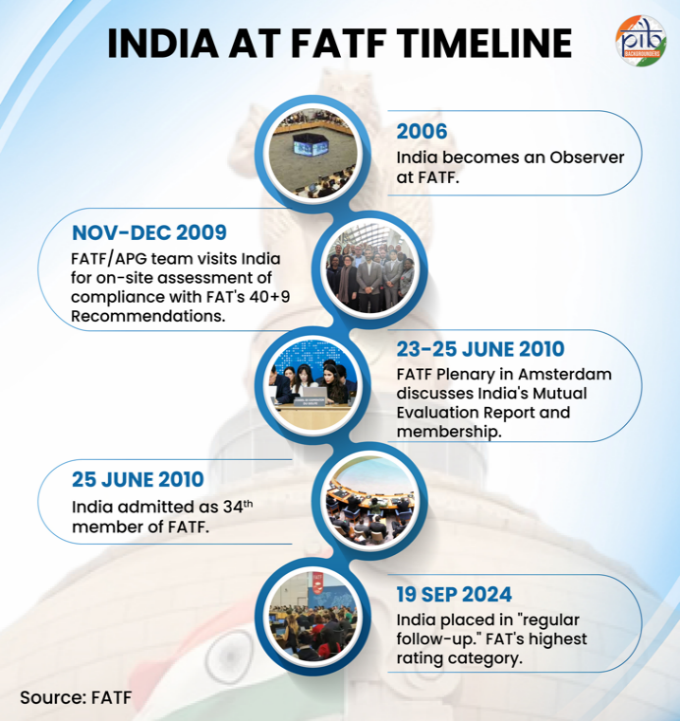
India consistently highlighted Pakistan's deficiencies in preventing financial support to terrorists, contributing to sustained international scrutiny of terrorist networks operating from its territory. At the same time, India strengthened its domestic anti-money laundering and counter-terror financing, emerging as a leading voice in global efforts to disrupt terrorist funding networks. The Government has constituted a Combating Financing of Terrorism Cell (CFT Cell) in the Ministry of Home Affairs to coordinate with the Financial Action Task Force (FATF), an inter-governmental international body dealing with anti-money laundering and CFT issues.
No Money for Terror Ministerial Conference
The ‘No Money for Terror’ (NMFT) Ministerial Conference, launched in Paris in April 2018 and continued in Melbourne in November 2019, provided a key platform for strengthening global cooperation against terror financing. At the Melbourne conference, India’s delegation, led by the Minister of State, called for the early adoption of the UN Comprehensive Convention on International Terrorism (CCIT) and advocated the impartial and non-politicized enforcement of Financial Action Task Force (FATF) standards.
India hosted the 3rd Conference in New Delhi (18–19 November 2022). Government set out India’s six-pillar counter-terror-financing strategy, strengthened legislation and monitoring, intelligence-sharing, property confiscation, curbs on misuse of new technologies, and international cooperation. It also highlighted the amended UAPA, a strengthened NIA, and reoriented financial intelligence.
Comprehensive Convention on International Terrorism (CCIT)
India originally proposed the Comprehensive Convention on International Terrorism (CCIT) at the UN General Assembly in November 1996 and continues to call for its early adoption to establish a universal legal framework against terrorism.
UN Security Council Designation of Pakistan Based terrorists
After over a decade of Chinese vetoes, India successfully secured the UN Security Council designation of JeM chief Masood Azhar as a global terrorist in May 2019. This was a landmark diplomatic victory enabling international travel bans, asset freezes, and arms embargoes.
Tahawwur Rana Extradition (2025)
A major breakthrough was achieved when 26/11 Mumbai attack accused Tahawwur Hussain Rana was extradited from the United States to India in April 2025, enabling the NIA to pursue fresh investigation into the full conspiracy behind the attack.
Bilateral and Multilateral Counter-Terrorism Cooperation
India has fully functional Joint Working Groups on Counter-Terrorism (JWG-CT) with 27 countries and 5 multi-lateral forums (SCO, BIMSTEC, BRICS, European Union (EU), QUAD-CTWG); and one Stand-Alone Dialogue with Tunisia.
|
Did You Know?
India deepened international counter-terror cooperation through dedicated Joint Working Groups (JWGs) with key partners. In 2024, India held its 20th India–US JWG on Counter Terrorism in Washington D.C. and its 16th India–UK JWG on Counter-Terrorism in New Delhi. These dialogues focused on terror funding, cross-border terrorism, online radicalisation, and emerging technology-related security threats.
|
Coordination With INTERPOL
BHARATPOL portal was launched on 7 January 2025. It connects the CBI (as INTERPOL's National Central Bureau for India) with all law enforcement authorities in India on a single platform, covering areas including transnational organised crime, narcotics trafficking, arms, cybercrime, economic fraud, child pornography, and terrorism.
|
Did you Know?
The Delhi Declaration on Countering the Use of New and Emerging Technologies for Terrorist Purposes was unanimously adopted by the United Nations Security Council's Counter-Terrorism Committee (CTC) on 29 October 2022, at its Special Meeting held in Mumbai and New Delhi, under India's Chairmanship of the CTC.
The Declaration focused on three principal threat areas misuse of unmanned aerial systems (drones), terrorist exploitation of information and communications technologies including social media platforms and payment technologies, and terrorism financing through digital channels.
It set out a framework of non-binding guiding principles to assist Member States in countering the digital terrorism threat, and mandated the drafting of recommendations to address terrorist exploitation of emerging technologies. The Declaration reaffirmed India's long-standing position that terrorism in all its forms constitutes one of the gravest threats to international peace and security.
|
India's diplomatic efforts have elevated counter-terrorism as a global priority and strengthened international accountability for terrorist actors and their sponsors. Through sustained engagement in multilateral forums and strategic partnerships, India has emerged as a leading voice in shaping the global counter-terrorism agenda.
Outcomes of 12 Years of Reform – Increased Trust, Greater Security
With sustained multi-dimensional steps and continued holistic anti-terror measures, the central government succeeded in bolstering the internal security environment and enhancing trust (Vishwas) among the 140 crore Indians in last 12 years. The measures put in place from 2014 onwards have yielded measurable results across every theatre of conflict. The nation witnessed fewer terror attacks and insurgent incidents, steep drops in civilian and security force casualties, and renewed development momentum.
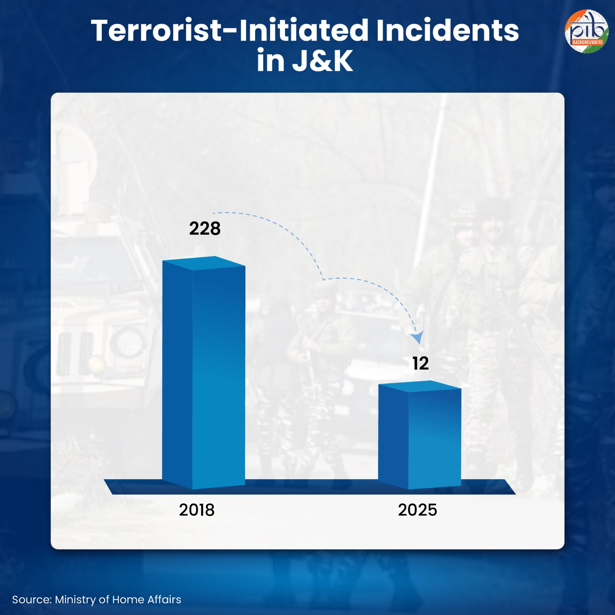
Following the abrogation of Article 370, Jammu and Kashmir has witnessed a remarkable improvement in security over the last decade. Terrorist incidents declined from 7,217 during 2004–2014 to 2,242 during 2014–2024. Moreover, terrorist-initiated incidents also dropped sharply from 228 in 2018 to just 12 in 2025, reflecting the growing effectiveness of India's counter-terrorism strategy and the restoration of peace and stability in the region.
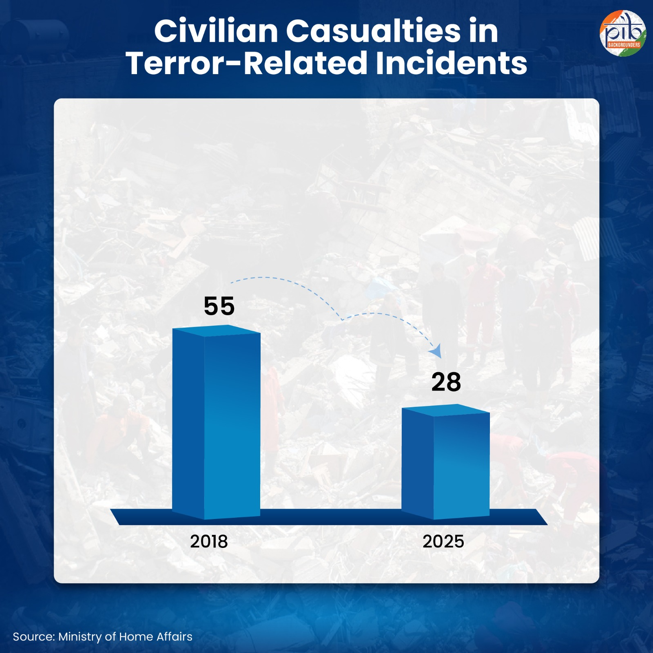
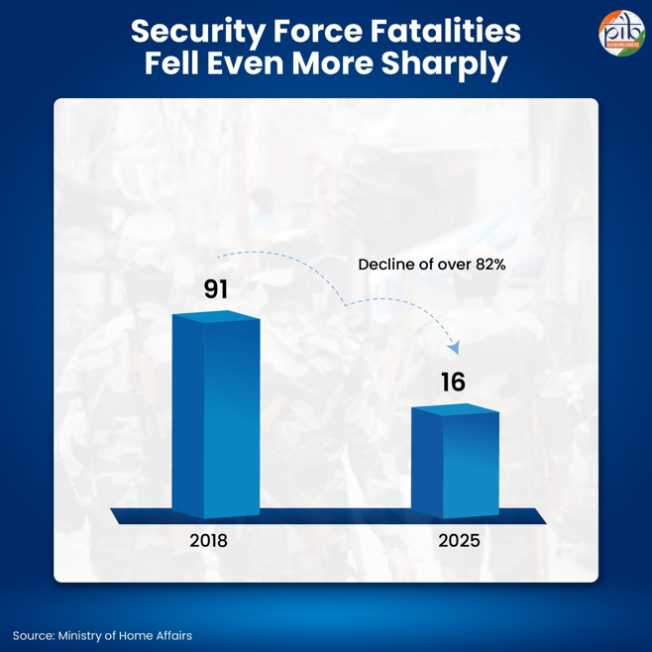
Civilian casualties in terror-related incidents declined from 55 in 2018 to 28 in 2025. Security force fatalities fell even more sharply, from 91 in 2018 to just 16 in 2025, a decline of over 82 per cent. The long-term trend is equally significant: while 1,060 security personnel lost their lives between 2004 and 2014, the number declined to 542 between 2015 and 2025, reflecting the growing effectiveness of counter-terrorism operations and force protection measures.
Stone-pelting incidents, which averaged around 2,654 annually between 2010 and 2014, declined by over 87 per cent by 2020 and have remained near-zero since 2022. Improved security conditions have enabled a revival of economic activity and public life across Jammu and Kashmir. Reflecting this progress, 63 major development projects worth approximately ₹80,000 crore were approved, of which over ₹51,000 crore has been invested and 53 projects have been fully completed.
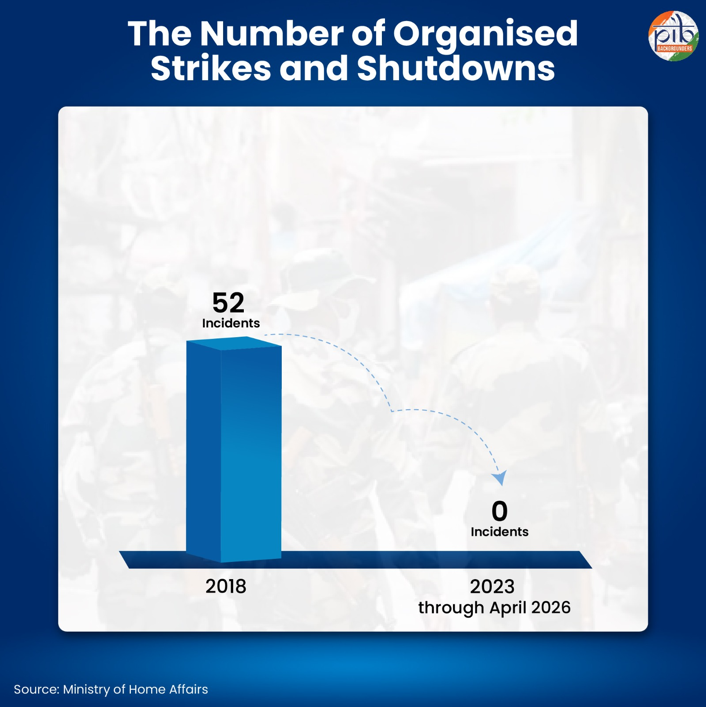
Public life in Jammu and Kashmir has witnessed a remarkable return to normalcy. The number of organised strikes and shutdowns declined from 52 incidents in 2018 to zero from 2023 through April 2026. Improved stability has also supported employment generation, with over 41,000 government jobs created between 2019 till May’2026 and self-employment opportunities extended to more than 9.81 lakh persons under Self-employment scheme in the last 4 years alone.
Jammu and Kashmir recorded over 2.3 crore tourist arrivals in 2024, the highest ever in its recorded history. This unprecedented influx of visitors reflects growing confidence in the region's security environment and stands as one of the clearest indicators of peace, stability, and normalisation on the ground.
Investment inflows into Jammu and Kashmir have accelerated markedly in recent years. While the region attracted approximately ₹8,000 crore of investment over seven decades, it received nearly ₹18,000 crore between 2016-17 and 2025-26 alone, reflecting growing investor confidence and an improving business environment.
Reduction of Terrorist activity in Hinterland - Prevention Through Pre-emption
Terrorist activity in India's hinterland has declined significantly over the last decade. A major factor has been the shift from reactive response to proactive prevention.
Stronger intelligence networks have improved threat detection. Better inter-agency coordination has enabled faster action. Technology-driven surveillance and targeted operations have helped disrupt terror plots before execution. This preventive approach has strengthened security in urban centres and reduced the risk of mass-casualty attacks.
The decade after the 2013 Hyderabad blasts witnessed the near-complete absence of major urban terrorist attacks. This contrasts sharply with the previous decade, which saw the Parliament attack, Mumbai train bombings, Hyderabad blasts, and the 26/11 attacks. Multiple ISIS-inspired plots were foiled through timely action by the NIA and state intelligence agencies. These operations demonstrated the growing effectiveness of India's intelligence-led counter-terrorism architecture.
As a result, terrorist attacks in the hinterland remained at very low levels between 2014 and 2018, with only isolated incidents reported. The sustained decline reflects improved preventive capabilities and stronger security coordination across the country.
|
Year
|
Number of Terrorist Attacks
|
Number of Civilians Killed
|
Number of Security Personnel Killed in Action
|
|
2014
|
03
|
04
|
--
|
|
2015
|
01
|
03
|
04
|
|
2016
|
01
|
01
|
07
|
|
2017
|
--
|
--
|
--
|
|
2018
|
01
|
03
|
--
|
Through sustained reforms and a whole-of-government approach, India has significantly strengthened internal security. Terror incidents, extremist violence, and casualties have declined sharply. Enhanced institutional capacity has improved public safety, supported economic development, and reinforced citizens' confidence in governance
Conclusion
Over the past twelve years, India has undertaken a comprehensive transformation of its counter-terrorism architecture, guided by a policy of zero tolerance towards terrorism. The Government has strengthened legal frameworks, modernised investigative institutions, and enhanced inter-agency coordination to ensure timely detection and disruption of threats. Agencies such as the NIA, IB, and state police forces have been empowered with advanced technology, expanded jurisdiction, and improved forensic and intelligence capabilities. Real-time data integration platforms and upgraded communication systems have further improved operational efficiency. At the same time, diplomatic and multilateral engagements have reinforced global cooperation against financing of terror networks and cross-border threats. These sustained efforts have significantly reduced terror incidents, improved internal security, and enhanced public confidence. The approach reflects a shift from reactive response to proactive prevention, ensuring that national security remains resilient, adaptive, and future-ready in the face of evolving challenges across domestic and international security environments, continuously strengthening resilience.
References
Ministry of Home Affairs (MHA)
Ministry of Defence
Ministry of External Affairs (MEA)
National Investigation Agency (NIA)
Enforcement Directorate (ED)
PIB Global Affairs
United Nations
Click to See PDF
***
PIB Research
(Release ID: 2275007)
Visitor Counter : 6544